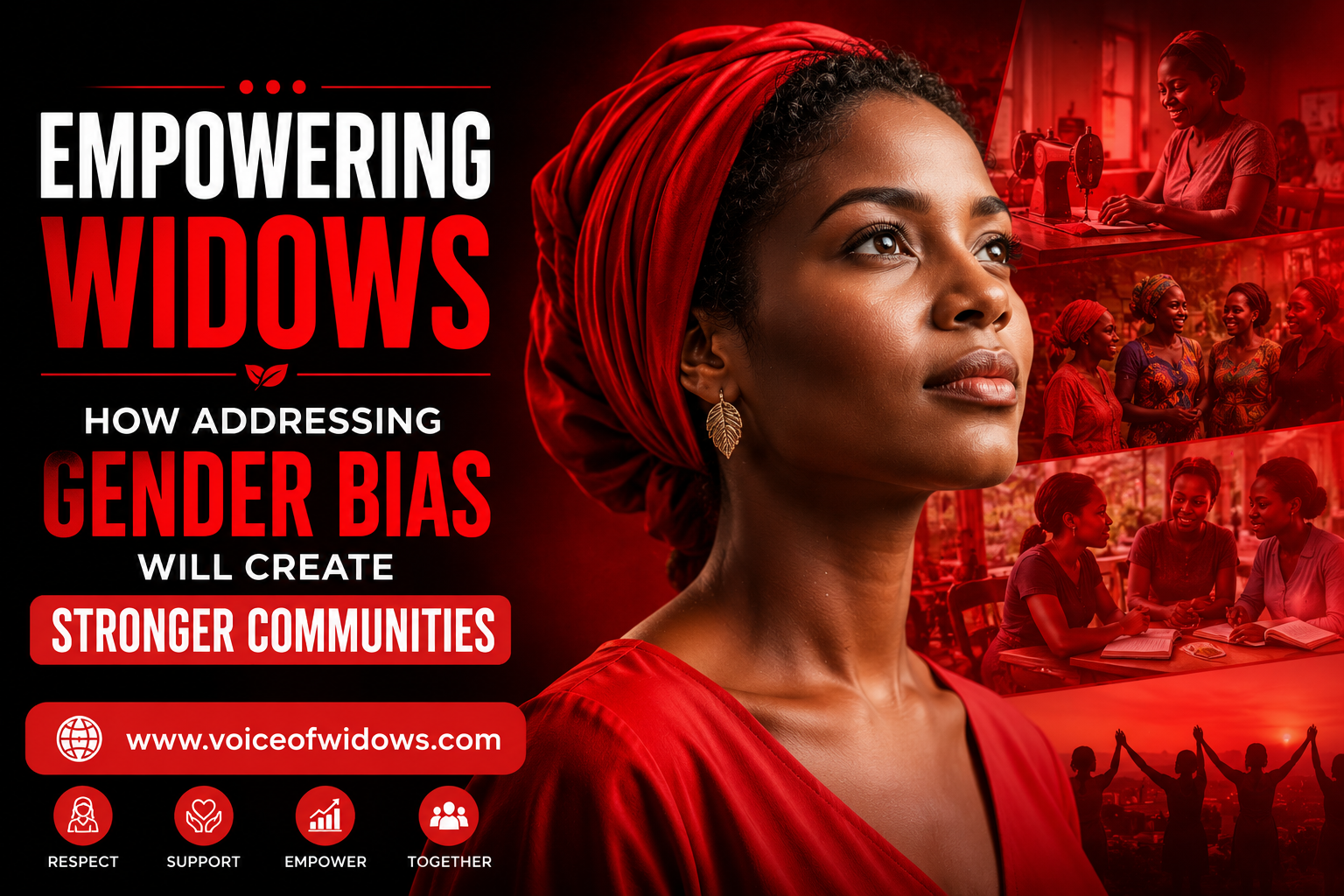
Empowering Widows: How Addressing Gender Bias Will Create Stronger Communities
There is a silent crisis that societies often overlook, yet it shapes generations: the marginalization of widows. Behind closed doors, countless women face emotional abandonment, financial insecurity, social exclusion, and cultural stigma the moment they lose their spouse. This is not just a personal tragedy; it is a structural issue rooted in deep gender bias that weakens entire communities.
When widows are disempowered, societies lose leadership, economic potential, emotional stability, and generational strength. When they are empowered, communities transform from within.
This is not charity. This is justice. And more importantly, it is a necessity for sustainable social development.
The Hidden Cost of Gender Bias Against Widows
Gender bias does not always appear loud or obvious. In many cultures, it exists through silence, exclusion, and tradition disguised as “norms.”
Widows are often:
- Denied inheritance or property rights
- Excluded from social participation and decision-making
- Forced into economic dependency
- Subjected to harmful cultural restrictions
- Left without access to education, employment, or healthcare support
This creates a cycle of poverty and vulnerability that extends beyond the individual. Children of widowed mothers often face disrupted education, emotional trauma, and limited opportunities. Communities, in turn, experience weakened social cohesion and reduced economic productivity.
Ignoring widows does not preserve tradition. It weakens the future.
Why Empowering Widows Strengthens Entire Communities
Empowerment is not just about financial independence. It is about restoring identity, dignity, and agency.
When widows are supported through education, employment opportunities, legal protection, and social inclusion, the impact multiplies:
1. Economic Growth Increases
Empowered widows contribute to the workforce, start small businesses, and support local economies. Their participation expands the productive base of society.
2. Children Become More Secure and Educated
A financially stable mother is more likely to ensure consistent schooling, better healthcare, and emotional stability for her children.
3. Social Stability Improves
Communities that include widows reduce stigma-driven isolation and build stronger support systems rooted in equality.
4. Gender Equality Advances
Breaking bias against widows challenges the broader structure of gender inequality affecting all women.
Empowering widows is not a niche cause. It is a foundation for national development.
The Emotional Reality No One Talks About
Beyond economics and policy, there is a deeply human layer often ignored.
Widowhood can bring:
- Sudden identity loss
- Social invisibility
- Emotional trauma without support systems
- Pressure to conform to restrictive traditions
- Loneliness even within family structures
Many widows describe not just grief for their partner, but grief for their place in society. They become invisible in spaces they once belonged to.
This emotional isolation is as damaging as financial hardship. A community that ignores emotional dignity cannot claim to be truly developed.
Breaking the Cycle of Gender Bias: Where Change Must Begin
Real transformation does not come from awareness alone. It requires structural and cultural change working together.
Legal Protection and Enforcement
Governments must ensure widows have equal rights to inheritance, property ownership, and employment protection. Laws without enforcement are ineffective promises.
Economic Empowerment Programs
Skill development, microfinance access, and entrepreneurship support can turn vulnerability into independence.
Community Education
Bias is often inherited behavior. Education campaigns must challenge harmful traditions while respecting cultural sensitivity.
Institutional Support Systems
Local support centers, counseling services, and legal aid must be accessible without stigma.
Inclusion in Decision-Making
Widows should not be passive recipients of aid but active participants in shaping policies that affect them.
Why This Issue Demands Urgent Attention Now
Delaying action on gender bias against widows does not maintain stability; it deepens inequality.
Every year of inaction results in:
- Lost economic productivity
- Increased poverty cycles
- Higher dependency burdens
- Continued generational trauma
- Widening gender inequality gaps
A society that ignores widows today will pay the price in weakened communities tomorrow.
The urgency is not theoretical. It is measurable in human lives and national development outcomes.
A Future Built on Inclusion, Not Exclusion
Imagine communities where widowhood is not a sentence to isolation, but a transition supported by dignity.
Imagine children growing up seeing resilience instead of stigma.
Imagine economies strengthened by the participation of women who were once excluded.
This future is possible, but only if societies choose inclusion over bias.
Empowering widows is not about changing their status. It is about correcting a long-standing imbalance that has limited entire societies.
Conclusion: Strong Communities Begin With Equal Humanity
At the core of every strong society is a simple truth: no group can be left behind without weakening the whole.
Widows represent resilience, experience, and untapped potential. Addressing gender bias against them is not just a moral responsibility—it is a strategic necessity for building stronger, more stable, and more compassionate communities.
The question is not whether change is needed. The question is how long we can afford to delay it.