
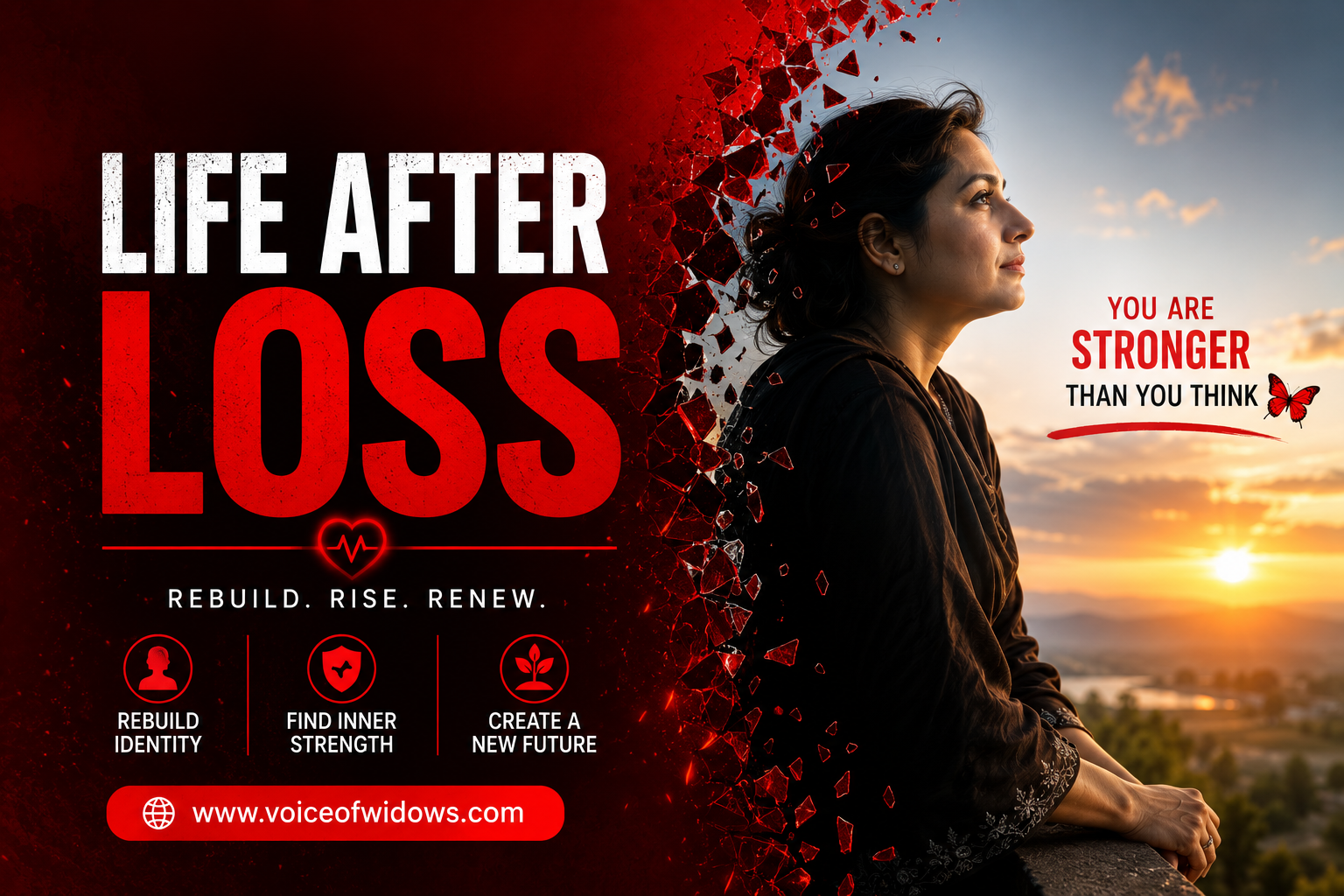
Introduction: When Life Changes Without Warning Becoming a widow is not just a change in relationship status. It is a profound shift in identity, emotional stability, financial structure, and the way the world is experienced daily. Many women describe it as standing in a life that still looks familiar, but no longer feels like their own. The question is not only “how do widows move forward,” but also “how do they begin again when everything feels paused?” There is no single roadmap. But there is a process of rebuilding that is real, human, and possible. Understanding the Emotional Reality of Loss Grief is not linear. It does not follow a schedule or behave predictably. For widows, it often comes in waves—sometimes quiet, sometimes overwhelming. Common emotional experiences include: Deep loneliness even in crowded spaces Loss of shared identity and daily routines Guilt about moments of peace or laughter Fear of an unknown future Emotional numbness followed by intense sadness These reactions are not signs of weakness. They are natural responses to attachment and loss. Healing does not mean forgetting. It means learning how to carry memory without being trapped by it. The First Step Forward: Stabilizing Daily Life Before emotional rebuilding begins, life often requires structure. Simple stabilizing actions include: Creating a consistent daily routine Managing essential financial and legal matters gradually Maintaining basic health habits like sleep, meals, and hydration Staying connected to at least one trusted person regularly These steps may feel small, but they create psychological grounding. Stability is the foundation on which emotional recovery is built. Rebuilding Identity Beyond the Role of “Wife” One of the most difficult transitions is identity loss. For many years, life may have been shaped around partnership, shared decisions, and mutual roles. After loss, that identity feels disrupted. Rebuilding identity can include: Reconnecting with personal interests that were paused Exploring new skills or learning paths Rediscovering social circles and friendships Allowing personal desires and goals to re-emerge This stage is not about replacing what was lost. It is about expanding who you are beyond what was once shared. The Role of Emotional Expression in Healing Suppressing grief often delays recovery. Emotional expression is not a sign of breaking down; it is a sign of processing. Healthy emotional outlets include: Journaling thoughts without judgment Speaking with grief counselors or support groups Creative expression such as writing, art, or music Honest conversations with trusted people Healing happens when emotions are acknowledged, not avoided. Facing Loneliness Without Letting It Define You Loneliness after loss is not just about absence of people—it is about absence of connection, rhythm, and shared meaning. Ways to gently rebuild connection include: Joining community or interest-based groups Volunteering or participating in social causes Re-establishing friendships without pressure or expectations Creating small daily moments of interaction Connection does not replace loss, but it softens isolation. Financial and Practical Independence After Loss For many widows, financial uncertainty adds another layer of stress. Addressing it step-by-step reduces anxiety and increases control. Practical steps may include: Reviewing financial accounts and documentation Seeking professional financial advice if needed Exploring sustainable income opportunities or skills training Planning long-term financial security gradually Clarity in practical matters often supports emotional clarity as well. When the Future Feels Empty One of the hardest parts of widowhood is imagining a future that no longer includes shared dreams. But future-building does not require forgetting the past. It requires redefining it. A meaningful future may begin with: Small personal goals instead of long-term pressure Travel, learning, or lifestyle changes that feel authentic Reclaiming independence in decision-making Allowing joy to return without guilt Hope does not appear all at once. It grows slowly through lived experience. Moving Forward Is Not Moving On There is a misunderstanding that healing means “moving on.” In reality, widows do not move on from love—they move forward with memory. Moving forward means: Carrying love without being defined only by loss Accepting change without denying the past Rebuilding life while honoring what existed Allowing both grief and growth to coexist This is not about closure. It is about continuation in a different form. Conclusion: A Life That Still Belongs to You Widowhood changes everything, but it does not end identity, purpose, or possibility. Life after loss is not a replacement life—it is a reconstructed one. The process is not fast. It is not simple. But it is real. And step by step, life begins to open again in ways that are not about forgetting, but about becoming whole in a new way.
The Widowed Resilience Scale: Navigating Loss with Strength and Grace
Losing a spouse is one of life’s most profound and challenging experiences. It can leave individuals feeling lost, overwhelmed, and unsure of how to move forward. However, amidst the pain and sorrow, many widows and widowers demonstrate incredible resilience, finding ways to cope, adapt, and thrive despite their loss. In this blog, we delve into the concept of resilience among the widowed population and introduce the Widowed Resilience Scale—a tool designed to measure and understand the various aspects of resilience in this demographic. Understanding Resilience in Widowhood: Resilience can be defined as the ability to bounce back from adversity, navigate challenges, and maintain a sense of well-being despite difficult circumstances. In the context of widowhood, resilience takes on a unique dimension. It encompasses emotional, social, and psychological factors that influence how individuals cope with grief, rebuild their lives, and find new sources of meaning and purpose. The Widowed Resilience Scale: The Widowed Resilience Scale (WRS) is a comprehensive assessment tool that aims to capture the multifaceted nature of resilience among widows and widowers. Developed by experts in psychology and bereavement, the WRS comprises various domains and sub-scales that explore different aspects of resilience: Emotional Resilience: This dimension assesses how individuals manage and express their emotions related to grief, sadness, anger, and acceptance. Social Resilience: Examining the social support networks, relationships, and interactions that contribute to a widow’s sense of connectedness and belonging. Coping Strategies: Identifying the coping mechanisms and strategies employed by widows to deal with stress, anxiety, and depression post-loss. Self-Efficacy: Measuring the individual’s belief in their ability to navigate challenges, make decisions, and adapt to life changes effectively. Meaning-Making: Exploring the process of finding new meaning, purpose, and direction in life after the loss of a spouse. Using the WRS: The Widowed Resilience Scale is designed for both research and clinical purposes. Researchers can utilize the scale to gather valuable data on resilience factors among widowed individuals, contributing to a better understanding of grief and adaptation processes. Mental health professionals and counselors can integrate the WRS into their practice to assess clients’ resilience levels, tailor interventions, and support them in their journey of healing and growth. Benefits of the Widowed Resilience Scale: Comprehensive Assessment: The WRS offers a comprehensive assessment of resilience, covering multiple dimensions relevant to widowhood. Personalized Support: By understanding an individual’s resilience profile, professionals can tailor support services and interventions to meet their specific needs. Research Insights: Data gathered through the WRS can contribute to research studies, inform best practices, and enhance the field of bereavement care. Empowering Widows and Widowers: Using the WRS empowers individuals by recognizing their strengths, fostering self-awareness, and promoting a sense of agency in their healing journey. Conclusion: The Widowed Resilience Scale represents a significant advancement in understanding and supporting widows and widowers through their grief and recovery process. By acknowledging the complexity of resilience and providing a structured framework for assessment, the WRS encourages a holistic approach to bereavement care. It underscores the resilience, strength, and potential for growth that exist within individuals facing profound loss, offering hope and empowerment in the face of adversity.