

Breaking the Chains of Gender Bias: A Call to End Inequality in Every Corner of Society Gender bias is not just a social flaw; it is a deeply rooted system that quietly shapes decisions, opportunities, and destinies. It hides in workplaces where promotions are uneven, in homes where expectations are unequal, in schools where confidence is distributed unfairly, and in cultures where voices are silenced before they are even heard. This is not a distant problem. It is happening in real time, in real places, affecting real lives. The urgency to address gender bias is no longer optional. It is a global necessity. Because every moment we delay, another generation grows up normalizing inequality as “just the way things are.” Understanding the Invisible Barrier Gender bias often does not appear as open discrimination. Instead, it shows up in subtle patterns: A qualified woman being overlooked for leadership roles A young boy discouraged from expressing emotion Unequal expectations in household responsibilities Pay gaps that persist despite equal effort These patterns build invisible barriers that shape self-worth and opportunity long before individuals even recognize them. Why Gender Bias Still Exists in a Modern World Despite progress, gender bias survives because it is deeply embedded in tradition, language, media, and workplace culture. It is passed down unconsciously, often without intent, making it harder to identify and even harder to challenge. The problem is not only outdated thinking, but also silent acceptance. When society stops questioning inequality, it starts normalizing it. The Real Cost of Ignoring Gender Bias The cost is not just social, it is economic, emotional, and generational. Businesses lose leadership potential and innovation Families inherit outdated roles that limit growth Children internalize restrictions before they understand choice Societies slow down progress by ignoring half their talent pool In simple terms, gender bias is not just unfair; it is inefficient and destructive to collective growth. How We Begin to Break the Chains Change does not begin with systems alone. It begins with awareness, conversation, and daily decisions. 1. Challenge everyday language Words shape perception. Replace stereotypes with neutral, respectful language that does not assign roles based on gender. 2. Redefine leadership and strength Leadership is not masculine or feminine. It is competence, empathy, vision, and action. 3. Educate early and consistently Children should learn equality as a foundation, not as an afterthought. What they learn early becomes their worldview later. 4. Build accountability in workplaces Fair hiring, equal pay audits, and transparent promotion systems are not optional—they are essential. 5. Speak when silence feels easier Change accelerates when bias is acknowledged instead of ignored. A Future Without Gender Bias Is Not Optional—It Is Necessary A society that removes gender bias does not just become fairer; it becomes stronger. It unlocks talent that was previously restricted, voices that were previously silenced, and potential that was previously ignored. The future will not ask whether we were comfortable. It will ask whether we were responsible. And the answer depends on what we choose today.

Bridging the Divide: Powerful Action Steps to Break Gender Bias and Build Truly Equal Communities That Cannot Be Ignored
Introduction: The Silent Divide We Keep Ignoring Gender bias is not always loud. It does not always appear as discrimination in headlines or visible conflict in public spaces. More often, it lives quietly inside hiring decisions, classroom expectations, workplace promotions, household roles, and even in everyday language. This silent imbalance slowly builds a divide that weakens communities from within. The urgency is real. Because when bias becomes normal, inequality becomes invisible. And what becomes invisible rarely gets fixed. This article is not theory. It is a practical roadmap to recognize, confront, and reduce gender bias in ways that actually change communities, not just conversations. Understanding Gender Bias Beyond Definitions Gender bias is not only about unfair treatment. It is about patterns that repeatedly favor one gender over another in opportunities, respect, pay, leadership, and social expectations. It shows up in subtle ways: Assuming leadership traits belong more to men Expecting caregiving roles mainly from women Unequal confidence given to identical ideas Different standards for success and failure When repeated across schools, workplaces, and homes, these patterns shape entire generations. Why This Issue Is Becoming More Urgent Today Modern societies often assume equality has already been achieved. But data and lived experiences suggest otherwise. Three major pressures are increasing urgency: Economic systems that still reward outdated gender roles Digital platforms that amplify stereotypes at scale Education and workplace gaps that persist despite awareness The result is a contradiction: more awareness, but not enough transformation. If communities do not actively correct bias, it becomes inherited behavior. The Real Cost of Ignoring Gender Bias Ignoring gender bias does not keep things “neutral.” It creates long-term damage: Reduced talent utilization in workplaces Lower economic productivity in communities Increased mental health stress from unequal expectations Loss of trust in institutions Generational repetition of inequality A community that ignores bias does not stay stable. It slowly weakens its own foundation. Actionable Steps to Reduce Gender Bias in Communities 1. Rebuild Awareness Through Daily Language Language shapes perception. Small phrases can reinforce big biases. Action steps: Avoid gender assumptions in roles and professions Use neutral language in professional and public communication Challenge stereotypes embedded in jokes and casual speech Change begins when language stops reinforcing inequality. 2. Redesign Education to Eliminate Early Bias Schools are where bias begins forming. Action steps: Encourage equal participation in STEM, leadership, and arts for all genders Train educators to recognize unconscious bias Present diverse role models across subjects When children grow without limits placed on identity, they build without limits on potential. 3. Build Fair Hiring and Workplace Systems Workplaces often carry inherited bias disguised as “culture fit.” Action steps: Standardize evaluation criteria for hiring and promotions Implement blind screening where possible Ensure equal access to leadership training Track gender representation in decision-making roles Fair systems reduce dependence on personal bias. 4. Share Domestic and Emotional Responsibilities Equally One of the strongest roots of bias is at home. Action steps: Normalize shared caregiving responsibilities Recognize unpaid emotional and domestic labor Encourage balanced family role distribution Equality at home strengthens equality everywhere else. 5. Strengthen Representation in Leadership Visibility changes perception. Action steps: Support women and underrepresented genders in leadership pipelines Create mentorship programs across genders Ensure decision-making bodies are balanced Representation is not symbolic. It is structural change. 6. Encourage Accountability in Institutions Bias survives when there is no measurement. Action steps: Introduce bias audits in organizations Publish transparency reports on gender equity Create safe reporting systems for discrimination What gets measured gets improved. The Emotional Reality: Why This Cannot Wait Behind every statistic is a real person: A qualified candidate overlooked. A student discouraged from dreaming bigger. A professional working twice as hard for half the recognition. Gender bias is not just a social issue. It is a human cost carried daily by individuals who are often expected to stay silent. Communities do not change when the problem is understood. They change when discomfort turns into action. What Real Change Looks Like Real progress is not instant. It is visible in: Classrooms where ambition is not gendered Offices where leadership is skill-based, not stereotype-based Homes where responsibility is shared, not assigned Societies where potential is not predicted by gender This is not an idealistic vision. It is a necessary one. Conclusion: The Point of No Return Every community is at a decision point. Either gender bias is actively reduced, or it continues shaping the future silently. The question is no longer whether we understand the issue. The real question is whether we are willing to change the systems that keep it alive. The divide will not close on its own. It will only close when action becomes consistent, uncomfortable, and collective.

Widow Women’s Hormonal Balance: Hidden Symptoms, Emotional Triggers, and Powerful Natural Solutions You Must Know Before It Gets Worse
Hormonal balance is not just a biological function, it is deeply connected to emotional stability, mental clarity, sleep quality, energy levels, and long-term well-being. For many women who have experienced widowhood, life transitions bring not only emotional stress but also significant internal physiological changes that often go unnoticed until symptoms become overwhelming. Stress, grief, lifestyle disruption, sleep irregularity, and emotional isolation can all influence the endocrine system. When the body remains under prolonged emotional strain, hormones such as cortisol, estrogen, progesterone, and serotonin can become unbalanced. This imbalance is not a weakness, but a natural response of the body to prolonged emotional pressure. Common hormonal imbalance symptoms in widow women that should not be ignored Hormonal changes do not happen overnight. They gradually manifest through subtle signals that are often mistaken for normal aging or stress. Key symptoms include: Persistent fatigue even after rest Mood swings, irritability, or sudden emotional sensitivity Sleep disturbances or insomnia Unexplained weight changes Low energy and loss of motivation Anxiety or feelings of emotional heaviness Irregular menstrual cycles (if applicable) Hair thinning or skin texture changes Difficulty concentrating or mental fog These symptoms are the body’s way of signaling that internal balance needs attention, not suppression. Why widowhood can affect hormonal health more than expected Emotional trauma and long-term grief can activate the body’s stress response system repeatedly. This leads to prolonged cortisol elevation, which may disrupt other hormone functions. Key contributing factors include: Chronic emotional stress and grief processing Reduced self-care routines after life changes Sleep cycle disruption due to emotional overthinking Nutritional inconsistency or appetite changes Social withdrawal and reduced physical activity Over time, these factors create a cycle where emotional strain and hormonal imbalance reinforce each other. Powerful natural solutions to restore hormonal balance Healing hormonal imbalance is not about quick fixes. It is about restoring rhythm, stability, and emotional grounding in daily life. 1. Stabilize daily routine The body heals faster when it has consistency. Fixed sleep and wake times help regulate cortisol and melatonin levels. 2. Focus on nutrient-rich foods Balanced meals with healthy fats, protein, leafy vegetables, and whole grains support hormone production and brain function. 3. Gentle physical movement Walking, yoga, or stretching improves blood circulation and reduces stress hormone levels naturally. 4. Emotional expression and support systems Suppressing grief can intensify hormonal disruption. Talking, journaling, or counseling helps release emotional pressure. 5. Improve sleep hygiene Reducing screen time before bed, maintaining a calm environment, and following a sleep routine helps restore hormonal rhythm. 6. Mind-body relaxation practices Breathing exercises, meditation, or prayer-based calmness techniques can significantly reduce cortisol overload. When to seek professional guidance If symptoms persist for long periods or begin to interfere with daily life, professional medical advice is important. Hormonal testing, nutritional assessment, and mental health support can help identify underlying imbalances more accurately. The deeper truth most people ignore Hormonal imbalance is not just a physical issue, it is often a reflection of emotional burden that has not been fully processed. Healing begins when both mind and body are supported together, not separately. Widow women often carry silent strength, but strength should not mean silent suffering. Recognizing early symptoms and taking action can prevent long-term health complications and restore quality of life.

The Foundation of Women’s Health and Well-Being: The Silent Truth Every Woman Must Understand Before It’s Too Late
The Foundation of Women’s Health and Well-Being: The Silent Truth That Shapes Every Stage of Life Introduction: Why Women’s Health Cannot Be DelayedWomen’s health is often treated as something to “manage later,” after work, family, and responsibilities settle down. But the truth is far more urgent. The foundation of women’s health is built early, silently, and continuously. Every choice related to nutrition, sleep, emotional balance, hormonal care, and lifestyle habits compounds over time. What many fail to realize is that small imbalances today can become major health challenges tomorrow. Fatigue, irregular cycles, mood fluctuations, weight changes, and stress are not random inconveniences. They are signals. Ignoring them is not strength; it is delay in awareness. The foundation of women’s health is not just physical. It is deeply emotional, hormonal, and psychological. When one pillar weakens, the entire structure becomes vulnerable. The Silent Pillars of Women’s Health Most People Overlook 1. Hormonal balance is the invisible control systemHormones regulate far more than reproduction. They influence mood, energy, sleep quality, metabolism, and cognitive clarity. When imbalance begins, it rarely announces itself loudly. Instead, it appears as fatigue, irritability, brain fog, or unexplained changes in the body. Understanding hormonal health is not optional. It is foundational. Without balance, even the best lifestyle efforts feel ineffective. 2. Emotional well-being is directly connected to physical healthStress is not just mental pressure. It is a biological trigger that impacts inflammation, immunity, digestion, and hormonal cycles. Chronic emotional strain slowly reshapes the body’s internal environment. Many women normalize stress as part of life. But long-term normalization leads to silent breakdown. Emotional health must be treated as a core pillar, not an afterthought. 3. Nutrition is not dieting, it is cellular communicationEvery bite of food sends instructions to the body. Poor nutrition does not just affect weight; it affects skin health, reproductive health, energy production, and long-term disease risk. Real nutrition is not about restriction. It is about nourishment that supports every system working in harmony. 4. Sleep is the body’s repair mechanismSleep is where restoration happens. Hormones reset, tissues repair, and the brain reorganizes. Without quality sleep, no amount of healthy eating or exercise can fully compensate. Yet sleep is often sacrificed the most. That trade-off silently weakens the foundation over time. Why Most Women Realize the Problem Too LateOne of the most dangerous misconceptions is that serious health issues appear suddenly. In reality, they develop quietly over years. The body adapts until it no longer can. By the time symptoms become disruptive, the imbalance has already been building in the background. This is why early awareness is not just helpful, it is critical. The foundation of women’s health must be built proactively, not reactively. Waiting for symptoms to become severe is the most expensive strategy in terms of health, energy, and quality of life. The Actionable Shift: How to Strengthen Your Health Foundation Today Start by listening to your body instead of ignoring itSymptoms are not interruptions. They are communication. Track patterns like fatigue, cycle changes, digestion issues, and mood shifts. Awareness is the first step toward correction. Prioritize consistency over intensityHealth is not built in extreme actions. It is built in daily repetition. A consistent sleep schedule, balanced meals, hydration, and movement matter more than occasional intense routines. Reduce hidden stress triggersNot all stress is visible. Overcommitment, digital overload, lack of boundaries, and emotional suppression all contribute to internal strain. Identifying these triggers is essential. Invest in preventive health awarenessRegular checkups, understanding your body’s baseline, and early intervention are not optional luxuries. They are long-term protective strategies. The Emotional Reality Behind Women’s HealthBehind every physical symptom is often an emotional story. Exhaustion can come from carrying too much responsibility. Hormonal imbalance can be influenced by chronic stress. Weight fluctuations can reflect internal hormonal signaling rather than lifestyle failure. This is why women’s health cannot be simplified into quick fixes. It requires understanding, patience, and respect for the body’s complexity. Ignoring this complexity leads to repeated cycles of frustration. Addressing it leads to long-term stability. Why Immediate Awareness Matters More Than EverModern lifestyles are faster, more demanding, and more stressful than ever before. The body is constantly adapting to external pressure. Without intentional care, imbalance becomes the default state. The urgency is not fear-based; it is reality-based. Every year of delay increases the difficulty of restoring balance. Taking action today does not require perfection. It requires awareness and consistency. Conclusion: Your Health Foundation Is Your FutureThe foundation of women’s health and well-being is not built in hospitals or during crises. It is built quietly in daily decisions. What you eat, how you rest, how you manage stress, and how you listen to your body determines your long-term quality of life. The most powerful shift is not doing more. It is understanding earlier. Health is not something to recover later. It is something to protect now.
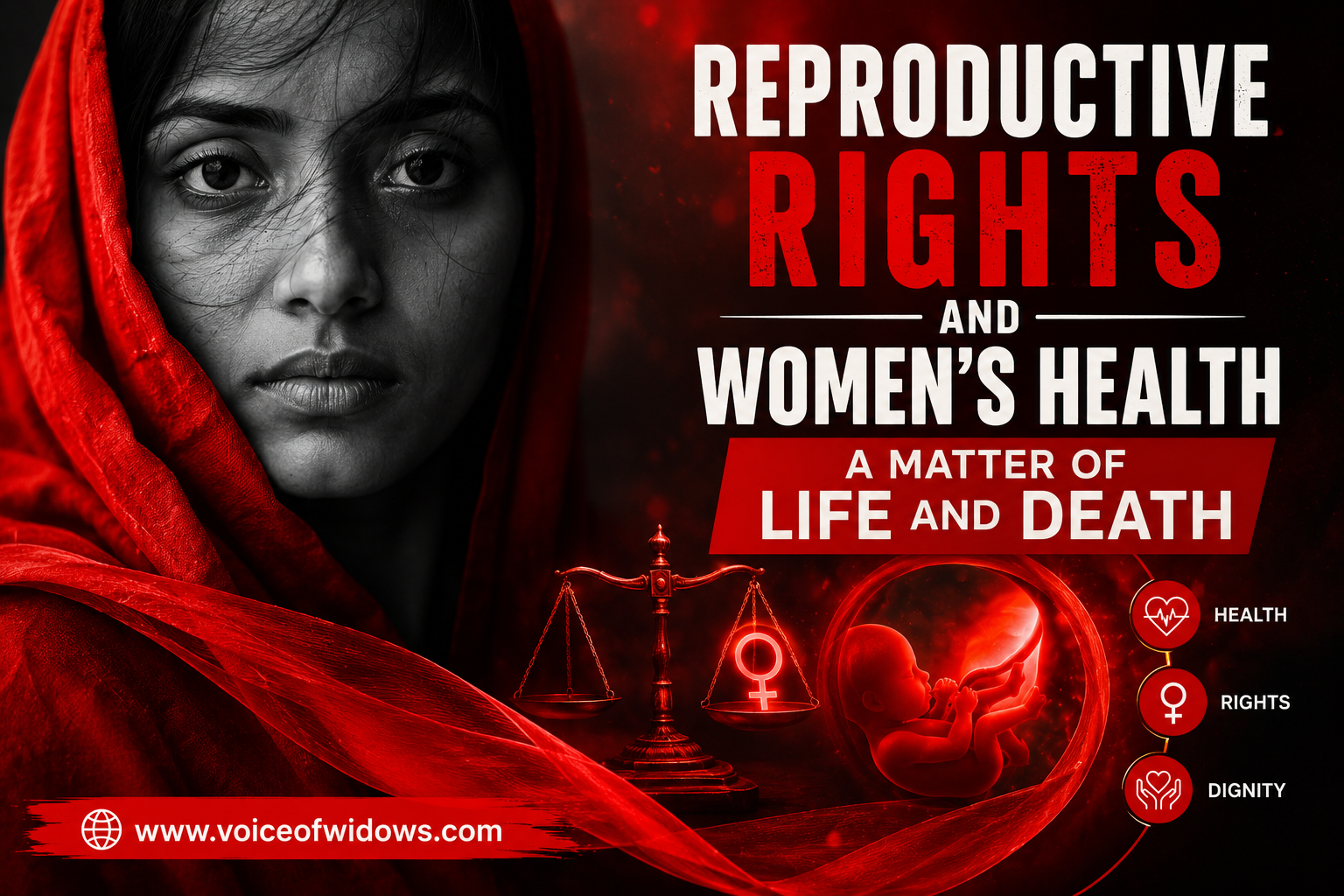
Reproductive Rights and Women’s Health: When Healthcare Becomes a Question of Survival, Not Choice
Introduction: A Silent Crisis the World Can No Longer Ignore Reproductive rights and women’s health are not abstract political debates. They are deeply human realities that determine whether a woman lives with dignity, suffers in silence, or survives at all. Across countries, communities, and healthcare systems, access to safe reproductive care remains uneven, delayed, restricted, or denied entirely. This is not just a policy issue. It is a matter of life and death. Every delay in care, every restriction in access, and every silence around women’s health compounds into a global crisis that affects families, economies, and generations yet to come. The Hidden Cost of Restricted Reproductive Healthcare When reproductive rights are limited, the consequences do not disappear. They multiply in the shadows. Women face higher risks of untreated complications, unsafe medical procedures, and long-term health damage. In many regions, lack of access to timely care leads to preventable deaths that could have been avoided with basic medical support. Behind every statistic is a life interrupted: a mother, a daughter, a worker, a student—someone whose future was altered not by illness alone, but by barriers to care. The real cost of restricted reproductive healthcare is not only medical. It is emotional, social, and generational. Women’s Health Is Not Optional Healthcare One of the most dangerous misconceptions in modern healthcare systems is the idea that women’s reproductive health is secondary or conditional. It is not. Reproductive health includes essential services such as maternal care, menstrual health management, fertility treatment, contraception access, and emergency medical intervention. When any of these are denied or delayed, the entire health system fails women at its most vulnerable points. A healthcare system that does not prioritize women’s reproductive health is not complete—it is incomplete by design. The Emotional Burden Behind Medical Barriers Beyond physical risks, there is an emotional toll that often goes unspoken. Women navigating restricted healthcare systems frequently experience fear, isolation, shame, and uncertainty. Decisions that should be medical become moralized, politicized, or stigmatized, forcing individuals to carry burdens no one should face alone. This emotional strain can lead to long-term mental health challenges, including anxiety, depression, and trauma responses tied to medical experiences. Healthcare should never feel like a battlefield. Yet for many women, it does. Why Delayed Care Becomes Dangerous Care In reproductive health, timing is critical. Delays in diagnosis or treatment can transform manageable conditions into life-threatening emergencies. Complications during pregnancy, untreated infections, and lack of access to emergency reproductive care are not rare exceptions—they are predictable outcomes in under-resourced or restricted systems. The danger is not always in the absence of medicine, but in the delay of it. The Global Inequality in Women’s Health Access Reproductive rights are not distributed equally across the world. In some regions, women have comprehensive access to healthcare, education, and preventive services. In others, they face legal, financial, or cultural barriers that limit even basic care. This inequality creates a widening gap where geography determines survival. A woman’s risk should not increase simply because of where she was born, but in reality, it often does. The Economic and Social Impact No One Can Ignore When women’s health is compromised, societies pay a high price. Healthy women contribute to stronger families, stable workplaces, and resilient economies. When reproductive healthcare fails, productivity declines, healthcare costs rise, and intergenerational poverty becomes harder to break. Investing in women’s health is not only a moral responsibility—it is a structural necessity for sustainable development. The Urgency of Policy Reform and Healthcare Reform There is an urgent need for systems that treat reproductive health as essential healthcare, not optional service. This includes: Ensuring timely access to reproductive medical care Expanding maternal healthcare infrastructure Removing barriers that delay emergency treatment Supporting comprehensive women’s health education Strengthening preventive care systems Policy reform is not about ideology. It is about preventing avoidable suffering and death. A Future Where Women’s Health Is Fully Recognized A better future is possible, but it requires acknowledgment of a simple truth: women’s reproductive health is foundational to human health. When women are healthy, societies are healthier. When women are protected, generations are protected. When care is accessible, survival becomes more likely than loss. The question is no longer whether this issue matters. The question is how long it will take for systems to act accordingly. Conclusion: A Matter of Life That Demands Action, Not Debate Reproductive rights and women’s health cannot remain trapped in cycles of discussion without implementation. Every delay in reform translates into real consequences for real people. This is not only about rights. It is about survival, dignity, and the fundamental responsibility of healthcare systems to protect life without discrimination or delay. The urgency is clear. The cost of inaction is already visible. What remains is whether action will match the scale of the crisis.

Reproductive Rights: The Key to Women’s Health and Equality That Will Define the Future of Human Freedom
Introduction: A Right That Defines Everything Else Reproductive rights are not a single issue. They are the foundation of women’s health, economic freedom, education access, and equal participation in society. When a woman has control over her reproductive choices, she has control over her life trajectory. When she does not, every other right becomes fragile. Across the world, this conversation is no longer theoretical. It is urgent, political, personal, and deeply human. It affects families, healthcare systems, workplaces, and entire economies. And yet, misinformation, stigma, and inequality continue to shape how these rights are understood and protected. This is not just about policy. It is about power, dignity, and survival. Why Reproductive Rights Matter More Than Ever At its core, reproductive rights include access to safe healthcare, contraception, maternal care, fertility support, and the right to make informed decisions without coercion or discrimination. These are not privileges. They are essential healthcare rights. When these rights are restricted, the consequences extend far beyond individual choice: Increased maternal health risks Higher rates of unsafe medical practices Interrupted education for young women Reduced workforce participation Intergenerational cycles of poverty When they are protected, societies see stronger economies, healthier families, and more stable communities. This is not ideology. This is evidence. The Hidden Cost of Losing Control Over Reproductive Health One of the most overlooked realities is the long-term economic and psychological impact of limited reproductive autonomy. A woman denied access to reproductive healthcare is more likely to: Leave education early Face financial instability Experience long-term health complications Depend economically on others Have fewer opportunities for leadership roles The ripple effect extends to children, households, and national productivity. What often goes unseen is the emotional burden. The stress of uncertainty, lack of choice, and restricted healthcare access can affect mental well-being for years, shaping confidence and long-term life outcomes. Equality Cannot Exist Without Reproductive Freedom Gender equality is often discussed in terms of education, workplace representation, and legal rights. However, reproductive freedom sits at the center of all of these. Without it, equality becomes incomplete. A woman cannot fully participate in society if she cannot make decisions about her own body. She cannot compete equally in the workplace if her health choices are controlled externally. She cannot achieve financial independence if her reproductive life is dictated by restriction or lack of access. True equality begins where bodily autonomy is respected. Healthcare, Not Controversy: Reframing the Conversation Reproductive health is medical care. It involves doctors, science, safety protocols, and ethical decision-making. Unfortunately, it is often treated as a cultural or political debate rather than a healthcare necessity. This shift in perception is critical. When reproductive health is framed correctly, it becomes clear that: Safe maternal care reduces mortality rates Contraception access improves public health outcomes Fertility services support families who want children Education around reproductive health reduces medical risks This is not about opinion. It is about healthcare systems functioning effectively and ethically. The Role of Education in Reproductive Empowerment One of the most powerful tools in advancing reproductive rights is education. Knowledge creates autonomy. Awareness creates protection. Understanding creates confidence. Comprehensive education includes: Understanding reproductive anatomy and health Awareness of contraceptive options Knowledge of maternal care rights Access to reliable healthcare guidance Emotional and psychological preparedness When individuals are educated, they make safer, more informed decisions. Societies that invest in reproductive education consistently see better health outcomes and stronger social stability. Global Inequality in Reproductive Access While some regions have advanced healthcare systems and strong protections, others still face significant barriers. These disparities create unequal life opportunities based on geography, income, and social systems. In many places, challenges include: Limited healthcare infrastructure Social stigma surrounding reproductive care Legal restrictions on reproductive choices Lack of trained medical professionals Economic barriers to access This inequality is not just a local issue. It is a global development challenge that affects migration, poverty cycles, and international health outcomes. The Economic Power of Reproductive Rights There is a strong economic argument for reproductive freedom that is often overlooked. When women have control over reproductive choices: Workforce participation increases National productivity rises Poverty rates decline Healthcare costs decrease Education levels improve Economies thrive when half of the population is empowered to contribute fully. Restricting reproductive rights does not only impact individuals; it impacts entire nations’ economic potential. The Emotional Reality Behind the Policy Debate Behind every policy discussion are real people facing real decisions. These decisions are often deeply emotional, involving health, family, safety, and future planning. Reproductive rights are tied to: Personal safety Mental health stability Family planning aspirations Career goals Long-term life security Ignoring this human dimension reduces the issue to abstraction. But at its core, this is about people’s lives and their ability to shape their own futures. What Real Progress Looks Like Progress is not defined by debate alone. It is defined by access, safety, and dignity. Real progress includes: Universal access to reproductive healthcare Accurate and stigma-free education Strong maternal healthcare systems Protection of patient privacy and autonomy Equal healthcare access regardless of income or location Progress happens when systems prioritize people over politics. The Urgency We Cannot Ignore The conversation around reproductive rights is not slowing down. In fact, it is becoming more critical as global populations grow and healthcare systems face increasing pressure. Delays in action lead to: Preventable health crises Increased inequality Economic losses Generational disadvantages This is not a distant issue. It is a present reality shaping millions of lives today. Conclusion: A Future Built on Choice and Dignity Reproductive rights are not separate from human rights. They are a core expression of them. When individuals have the power to make informed decisions about their reproductive health, societies become stronger, fairer, and more stable. The future of equality depends on how seriously this issue is treated today. Not tomorrow. Not eventually. Now.
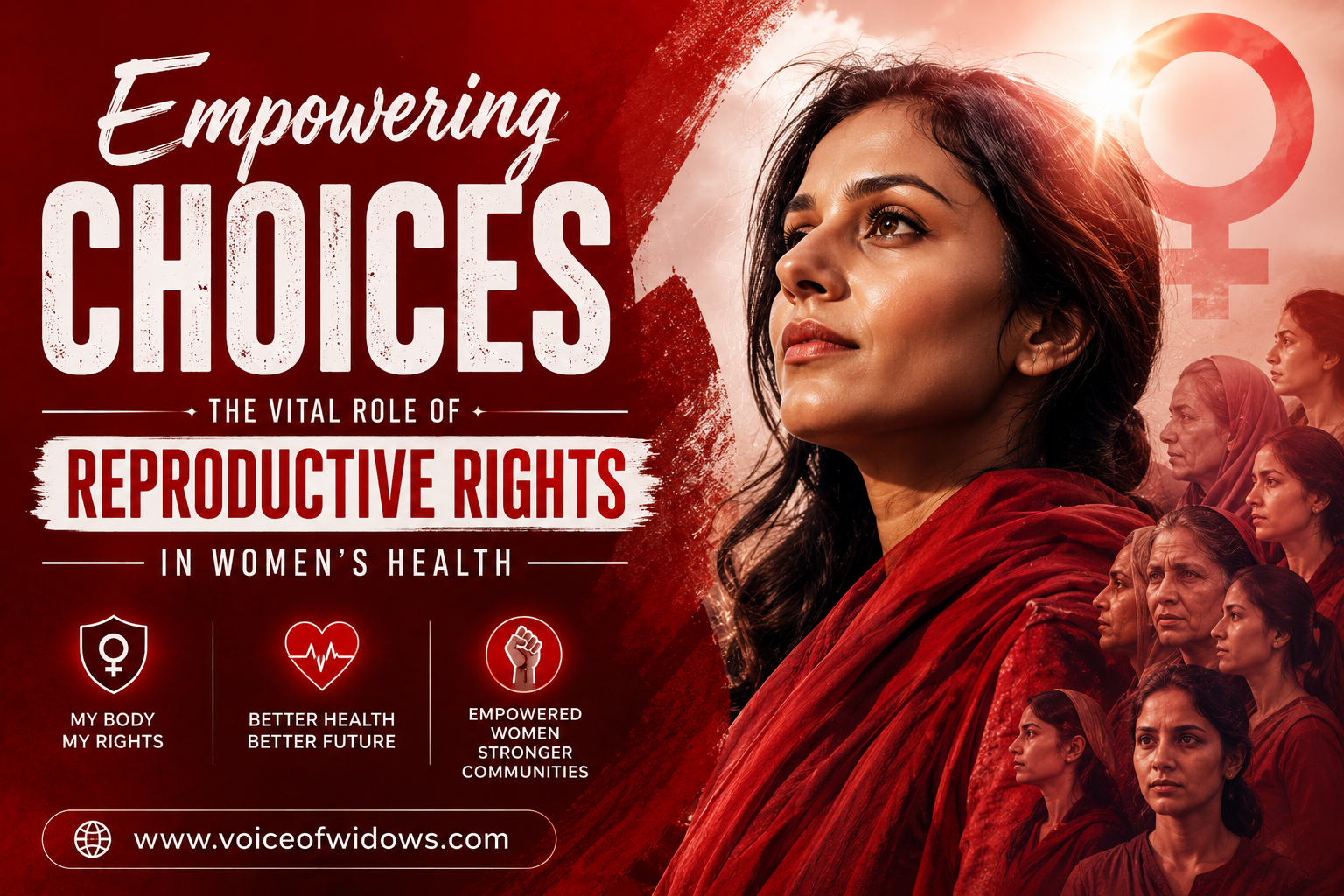
Empowering Choices: The Urgent Truth About Reproductive Rights and the Future of Women’s Health
Why reproductive rights are no longer just a debate, but a global health emergency Reproductive rights are not a distant political concept anymore. They sit at the center of women’s health, economic stability, education, and even survival. When a woman loses control over her reproductive choices, the impact does not stop at her body. It extends into her future, her family’s wellbeing, and the society she is part of. Across many regions, access to reproductive healthcare is becoming uncertain, uneven, or restricted. This creates a silent crisis that often goes unnoticed until it directly affects someone’s life. The urgency is real, and it is growing. This is not just about policy. It is about dignity, autonomy, and the right to make informed decisions about one’s own body. The hidden cost of losing control over reproductive health When reproductive rights are limited, the consequences are not abstract. They are measurable, emotional, and deeply personal. Women without access to reproductive healthcare often face: Increased risk of unsafe medical practices Higher maternal health complications Interrupted education and career paths Long-term financial instability Mental health challenges such as anxiety and trauma Each of these outcomes builds on the other, creating a cycle that is difficult to break. A single lack of access can reshape an entire life trajectory. The cost is not only individual. Families, communities, and economies also feel the ripple effect when women cannot safely plan their futures. Why reproductive health is central to overall wellbeing Reproductive health is not separate from general health. It is a foundation. A woman’s ability to access safe healthcare, contraception, prenatal care, and medical guidance directly influences: Physical wellbeing Emotional stability Educational opportunities Workforce participation Long-term health outcomes When reproductive healthcare is strong, societies become stronger. When it is restricted, inequalities widen. This is why global health experts consistently emphasize reproductive rights as essential healthcare, not optional care. The emotional reality behind reproductive decisions Beyond data and policy, there is a deeply human layer often ignored in public discussion. Every reproductive decision carries emotional weight. It involves hope, fear, planning, and uncertainty. Women are often forced to make these decisions under pressure, without adequate information, support, or medical access. The emotional burden includes: Fear of losing control over life choices Anxiety about future stability Social pressure and judgment Lack of safe medical guidance Isolation during critical decision-making moments These experiences are rarely visible, but they are widely lived. A society that ignores this emotional reality is only seeing part of the truth. The link between reproductive rights and economic independence Economic independence is strongly tied to reproductive autonomy. When women can decide if and when to have children, they are more likely to: Complete education Enter and remain in the workforce Build stable careers Achieve financial independence On the other hand, lack of reproductive control often leads to interrupted education and reduced earning potential over time. This is not just a personal issue. It directly influences national productivity and long-term economic growth. Why access is uneven across the world One of the most critical issues today is inequality in access. Even within the same country, access to reproductive healthcare can vary based on: Geography (urban vs rural areas) Income levels Education Cultural norms Healthcare infrastructure This uneven distribution creates a system where rights exist in theory but not always in practice. The result is a global patchwork of access, where a woman’s health outcomes may depend more on where she lives than what she needs medically. The role of education in reproductive empowerment Education is one of the strongest tools for protecting reproductive rights. When women and girls are educated about their bodies, health options, and medical choices, they are more likely to: Seek timely medical care Understand contraception options Make informed decisions Avoid preventable health risks However, in many places, reproductive education remains limited or stigmatized. This creates information gaps that can lead to long-term harm. Empowerment begins with knowledge. Why this issue demands immediate attention Reproductive rights are not a future concern. They are a present reality affecting millions every day. The urgency comes from: Rising restrictions in certain regions Limited healthcare infrastructure in vulnerable areas Increasing misinformation Growing inequality in access to care Ignoring this issue does not make it disappear. It only increases long-term harm. The more delayed the response, the deeper the consequences become. What meaningful change looks like Real change in reproductive health does not come from a single solution. It requires a combination of actions: Expanding access to healthcare services Improving reproductive education Strengthening medical infrastructure Ensuring safe and legal medical options Removing stigma around women’s health discussions Most importantly, it requires recognizing reproductive rights as essential human rights. A future shaped by choice, not limitation A society that protects reproductive rights is a society that invests in freedom, equality, and health. When women have full control over their reproductive decisions, the outcomes are clear: Healthier families Stronger economies Better education outcomes More stable communities Greater gender equality This is not a theoretical ideal. It is a proven reality where access is protected and prioritized. The future depends on how seriously we treat this issue today. Final reflection Reproductive rights are not about one issue or one group. They are about the fundamental right to make informed, safe, and autonomous choices about one’s own body. The urgency is not in the future. It is now. Every delay deepens inequality and widens the gap between those who have access and those who do not. Protecting reproductive rights means protecting life choices, dignity, and the foundation of women’s health itself.
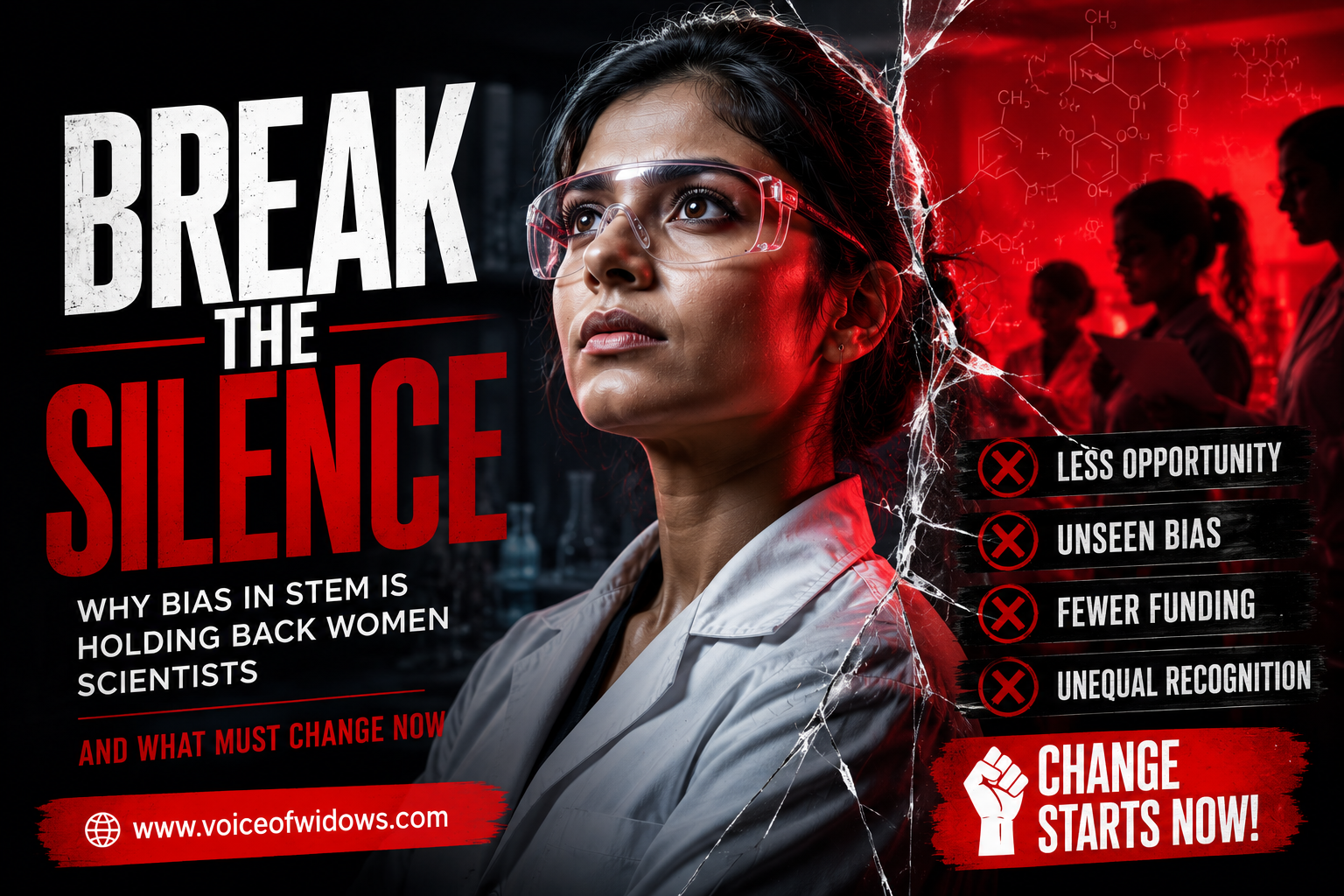
Break the Silence: Why Bias in STEM Is Holding Back Women Scientists and What Must Change Now
In laboratories, classrooms, research institutions, and innovation hubs across the world, a quiet imbalance still shapes outcomes that affect everyone. The question is no longer whether women belong in STEM fields—science, technology, engineering, and mathematics—but why systemic bias continues to limit their visibility, leadership, funding, and recognition. This is not just a conversation about equality. It is a conversation about lost innovation, delayed discoveries, and untapped human potential. The Hidden Barrier Behind Scientific Progress STEM fields are built on logic, evidence, and merit. Yet behind the data-driven surface lies a persistent human bias that influences hiring decisions, grant approvals, publication opportunities, and leadership promotions. Women scientists often face subtle but powerful barriers: Research contributions being undervalued or attributed to male colleagues Fewer opportunities for leadership roles in research projects Reduced access to funding and academic recognition Higher scrutiny for the same level of work Cultural expectations that discourage long-term STEM careers These challenges do not always appear as open discrimination. Instead, they operate quietly through systems, traditions, and unconscious bias that accumulate over time. Why This Issue Cannot Be Ignored Anymore When women are excluded or limited in STEM, the cost is not individual—it is global. Medical breakthroughs may be delayed because diverse perspectives are missing. Engineering solutions may lack inclusivity because design teams are not representative. Artificial intelligence systems risk inheriting bias when developed in homogeneous environments. The world does not just lose fairness—it loses better science. The urgency is clear: innovation depends on diversity of thought, and diversity cannot exist without inclusion. The Emotional Reality Behind the Data Behind every statistic is a story rarely told. A young researcher who leaves academia after repeated rejection despite publishing strong work.A brilliant engineer whose ideas are overlooked until repeated by a male colleague.A scientist who hesitates to apply for leadership roles because she has been conditioned to doubt her place. These are not isolated incidents. They reflect a pattern that discourages women from staying in STEM long enough to reach their full potential. And when talent leaves, science loses momentum. The Systemic Gaps That Sustain Bias To understand the problem, we must examine the system itself: Education Pipeline GapsGirls often receive less encouragement in math and science during formative years, shaping career confidence early. Workplace Culture BarriersMany STEM environments still lack inclusive policies, mentorship structures, and flexible career pathways. Funding InequalityStudies repeatedly show women receive less research funding and smaller grants compared to male counterparts with similar credentials. Visibility and Recognition GapWomen are underrepresented in keynote speaking roles, award nominations, and high-impact publications. Leadership RepresentationDecision-making bodies in scientific institutions remain disproportionately male-dominated. Each of these layers compounds the next, creating a cycle that is difficult to break without intentional intervention. What Empowerment in STEM Actually Looks Like Empowering women scientists is not about symbolic representation. It requires structural transformation. True empowerment includes: Transparent hiring and promotion processes Equal access to research funding and resources Mentorship programs connecting early-career and senior women scientists Active bias training across institutions Policies that support work-life balance without penalization Recognition systems that fairly evaluate contributions When these systems are in place, performance is no longer filtered through bias—it is evaluated through merit. The Business of Inclusion: Why Organizations Should Care Beyond ethics, there is a strong economic and innovation argument. Organizations with gender-diverse research teams consistently outperform less diverse counterparts in creativity, problem-solving, and product development. In STEM-driven industries, this translates directly into competitive advantage. In simple terms: excluding women from STEM is not just unfair—it is inefficient. Forward-thinking institutions are already investing in inclusive research environments because they understand a critical truth: the future of science depends on who gets to participate in it. A Turning Point: From Awareness to Action Awareness alone is not enough. The challenge now is execution. Educational institutions must redesign pathways that keep girls engaged in STEM from early education through university. Corporations and research bodies must audit internal systems for bias and actively correct disparities. Governments and funding agencies must enforce transparency in grants and leadership selection. Most importantly, individuals within STEM fields must recognize their role in either reinforcing or dismantling bias. Change does not happen in isolation. It happens through repeated, intentional decisions. The Future We Risk Losing Imagine a world where half of the brightest scientific minds are discouraged before they fully emerge. That is not a hypothetical—it is an ongoing reality shaped by bias. Now imagine the discoveries that never happen because of it. The medical treatments not developed. The technologies not invented. The environmental solutions delayed. The cost of exclusion is not theoretical. It is measurable in progress lost. Conclusion: A Scientific Revolution Still Waiting to Happen Bias in STEM is not a small flaw in an otherwise fair system. It is a structural issue that shapes the direction of global innovation. Empowering women scientists is not a trend or a symbolic gesture—it is a necessary correction for science to reach its true potential. The future of STEM depends on whether institutions choose to preserve outdated barriers or unlock the full spectrum of human intelligence. The choice is not abstract. It is happening now. And the impact will define the next century of discovery.

Why Women Researchers Face Higher Grant Rejection Rates and What the System Doesn’t Want You to Question
In the world of research funding, numbers often appear neutral. Grant applications are reviewed, scored, and either approved or rejected. But behind this seemingly objective system lies a pattern that is becoming increasingly difficult to ignore: women researchers experience disproportionately higher grant rejection rates in many academic and scientific funding systems. This is not just a statistical concern. It is a structural issue that affects innovation, slows scientific progress, and quietly reshapes who gets to define the future of knowledge. The Hidden Reality Behind Grant Rejections On paper, grant review processes are designed to be fair. Panels evaluate proposals based on originality, methodology, feasibility, and impact. Yet multiple studies across academic institutions and funding bodies reveal that proposals led by women are often judged more harshly, especially when evaluators are aware of the applicant’s identity. The problem is not always explicit bias. In many cases, it is subtle: tone perception, leadership assumptions, and credibility framing. Research proposals written by women are more likely to be described as “less ambitious” or “too cautious,” even when the scientific merit is identical to those written by men. This creates a quiet but persistent disadvantage that compounds over time. Why This Matters More Than It Seems Grant funding is not just money. It is access. It determines who gets labs, who builds teams, who publishes influential papers, and who becomes a leader in their field. When women researchers face higher rejection rates, the impact extends far beyond individual careers: Entire fields lose diversity of thought Research priorities become skewed Innovation potential is reduced Early-career women scientists are pushed out of academia The system does not just filter proposals. It shapes the future of science itself. The Emotional Cost Behind the Data Behind every rejected grant is not just a failed application but often years of preparation, unpaid intellectual labor, and emotional investment. Many women researchers report the same pattern: repeated rejection despite strong peer feedback, delayed career progression, and the constant pressure of needing to “prove” competence more than their male counterparts. Over time, this leads to what many describe as silent attrition—highly capable researchers leaving academia not because they lack ability, but because the system repeatedly signals that their work is less valued. The Structural Gaps Nobody Talks About The issue is not simply individual bias. It is embedded in structural layers: Review panels lacking gender diversity Evaluation criteria favoring traditionally “masculine-coded” research language Network-based funding advantages that exclude newcomers Citation and visibility gaps that influence perceived credibility Institutional inertia resisting reform Even when policies are introduced to improve fairness, implementation gaps often dilute their impact. What Needs to Change Now Solving this problem is not about lowering standards. It is about correcting distortion in evaluation. Funding systems must move toward: Blind review processes wherever possible Transparent scoring criteria and feedback Active monitoring of gender-based funding outcomes Training reviewers to recognize unconscious bias patterns Supporting early-career women researchers with targeted funding pathways Without these changes, the gap will continue to widen silently under the appearance of neutrality. The Bigger Question We Must Ask If science is meant to be the pursuit of truth, then we must ask an uncomfortable question: How much knowledge are we losing simply because the system is not seeing talent equally? The issue of grant rejection rates among women researchers is not just an equality issue. It is a scientific integrity issue. Because when half of the intellectual potential faces hidden barriers, the entire system operates below its true capacity. Change is not optional anymore. It is overdue.
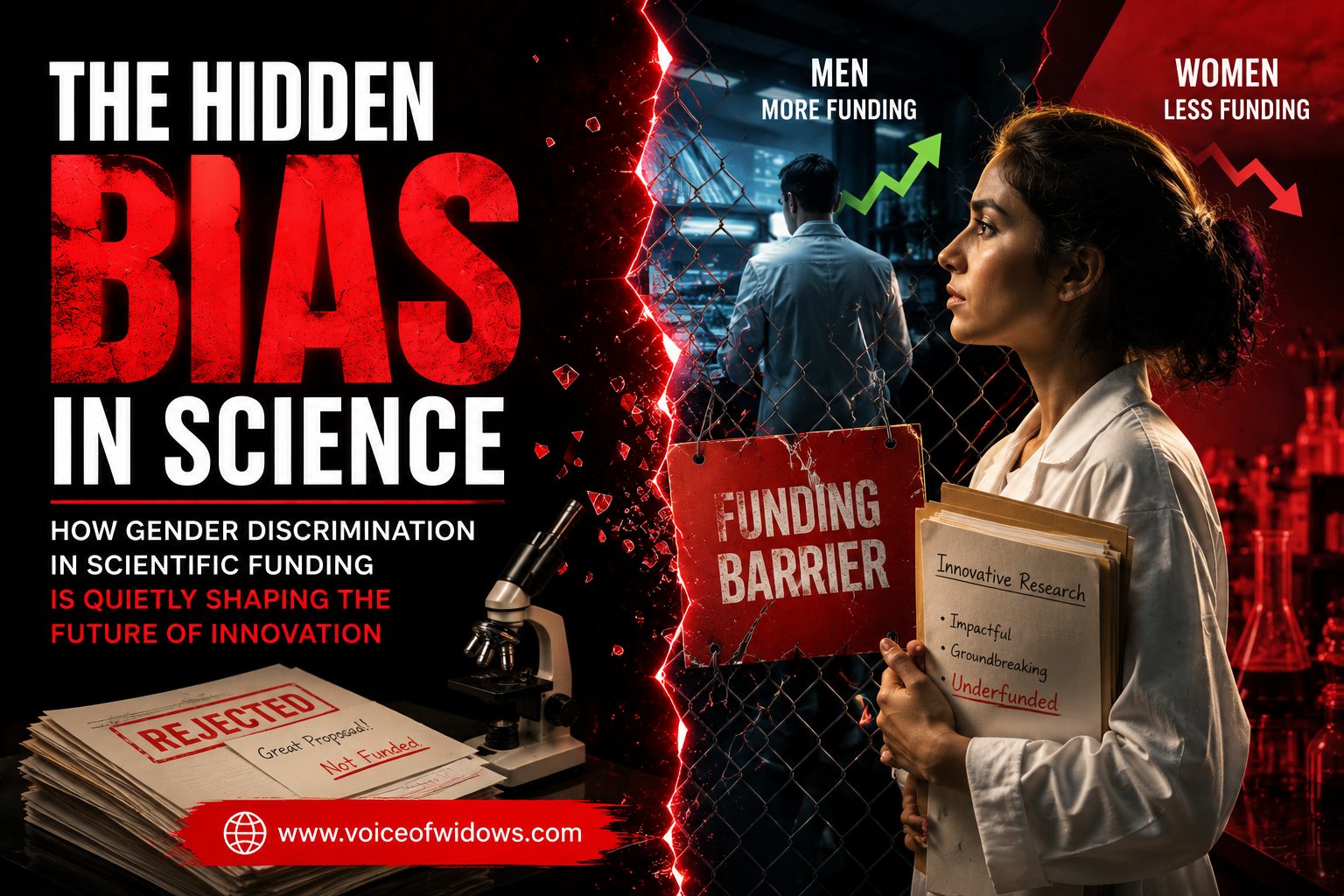
The Hidden Bias in Science: How Gender Discrimination in Scientific Funding Is Quietly Shaping the Future of Innovation
Introduction: When Talent Is Not Enough Science is supposed to be the purest form of meritocracy, where ideas compete and evidence decides outcomes. Yet behind the lab doors and grant review panels, a quieter reality persists: gender discrimination in scientific funding is still shaping who gets to discover, innovate, and lead. This is not just a fairness issue. It is a global innovation problem. Every underfunded researcher is a lost opportunity for breakthroughs in medicine, climate science, engineering, and technology. The question is no longer whether bias exists, but how deeply it is embedded in systems that decide the future of science itself. The Invisible Barrier in Research Funding Scientific funding is often perceived as objective. Proposals are reviewed, scored, and awarded based on merit. But research over the past decades consistently reveals patterns that challenge this belief. Women researchers, even when equally qualified, are less likely to receive large-scale grants, long-term funding, or leadership positions in high-budget projects. The disparity becomes more visible in fields traditionally dominated by men such as physics, engineering, and computational sciences. The issue is not always explicit discrimination. It is often subtle, structural, and embedded in evaluation criteria, unconscious bias, networking advantages, and historical inequalities. How Bias Quietly Enters Funding Systems Gender discrimination in scientific funding does not usually appear as open exclusion. Instead, it manifests through layered mechanisms: 1. Evaluation Bias Grant proposals written by women are sometimes judged more critically, with higher scrutiny on methodology and feasibility, while similar proposals from men are evaluated more leniently. 2. Network Advantage Funding decisions are influenced by professional networks. Historically male-dominated academic circles often provide better access to mentorship, collaborations, and informal endorsements. 3. Leadership Perception Projects led by men are more likely to be perceived as “high impact” or “high risk-high reward,” even when proposals are scientifically equivalent. 4. Career Interruptions Women scientists disproportionately experience career breaks due to caregiving responsibilities. Funding systems often fail to account for these disruptions, penalizing productivity gaps. The Real Cost: What Science Loses This issue is not limited to individual careers. It reshapes the direction of global research. When funding is unevenly distributed: Entire research perspectives are underrepresented Medical studies may overlook gender-specific biological differences Innovation pipelines become narrower and less diverse Scientific leadership remains unbalanced The result is not just inequality. It is inefficiency in global knowledge production. Why This Problem Persists in Modern Science Despite awareness, gender inequality in funding persists due to deeply rooted structural reasons: Institutional Inertia Funding bodies often rely on traditional evaluation frameworks that were not designed to detect bias. Lack of Accountability Few systems track long-term gender outcomes in funding distribution. Implicit Bias Even well-intentioned reviewers may unconsciously associate leadership and innovation with masculine traits. Competitive Pressure High competition for limited funding encourages conservative decision-making, which often favors established, traditionally dominant profiles. The Emotional Reality Behind the Data Behind every statistic is a researcher who has spent years building expertise, designing experiments, and pushing the boundaries of knowledge—only to face repeated rejection that cannot always be explained by merit alone. This creates a silent psychological toll: Reduced confidence in grant applications Lower participation in high-impact research bids Gradual withdrawal from competitive funding arenas Over time, this does not just affect individuals. It reshapes entire scientific communities. What Needs to Change: Building Fair Scientific Funding Systems Addressing gender discrimination in scientific funding requires more than awareness. It demands structural reform. 1. Blind Review Processes Removing identifying information from proposals can reduce unconscious bias during evaluation. 2. Transparent Funding Metrics Clear reporting of funding allocation by gender, discipline, and institution can expose hidden disparities. 3. Bias Training for Review Panels Regular training can help evaluators recognize and mitigate unconscious assumptions. 4. Support for Career Breaks Funding agencies must adapt criteria to fairly assess productivity across non-linear career paths. 5. Inclusive Leadership in Funding Bodies Diverse decision-making panels lead to more balanced funding outcomes. Why This Matters for the Future of Innovation Science is entering an era defined by complexity—climate change, artificial intelligence, global health crises. Solving these challenges requires every available mind. If funding systems continue to filter talent through biased structures, the world risks losing transformative discoveries simply because the system failed to recognize them in time. Equality in scientific funding is not a symbolic goal. It is a strategic necessity for global progress. Conclusion: A System Worth Redesigning Gender discrimination in scientific funding is not always visible, but its effects are deeply embedded in the trajectory of science itself. It determines which ideas survive, which researchers lead, and which innovations reach the world. A fair scientific ecosystem is not one that assumes bias does not exist, but one that actively designs against it. The future of science depends on whether institutions are willing to question long-standing norms and rebuild funding systems that recognize talent without distortion. Because when science becomes truly inclusive, innovation does not just improve—it accelerates.