
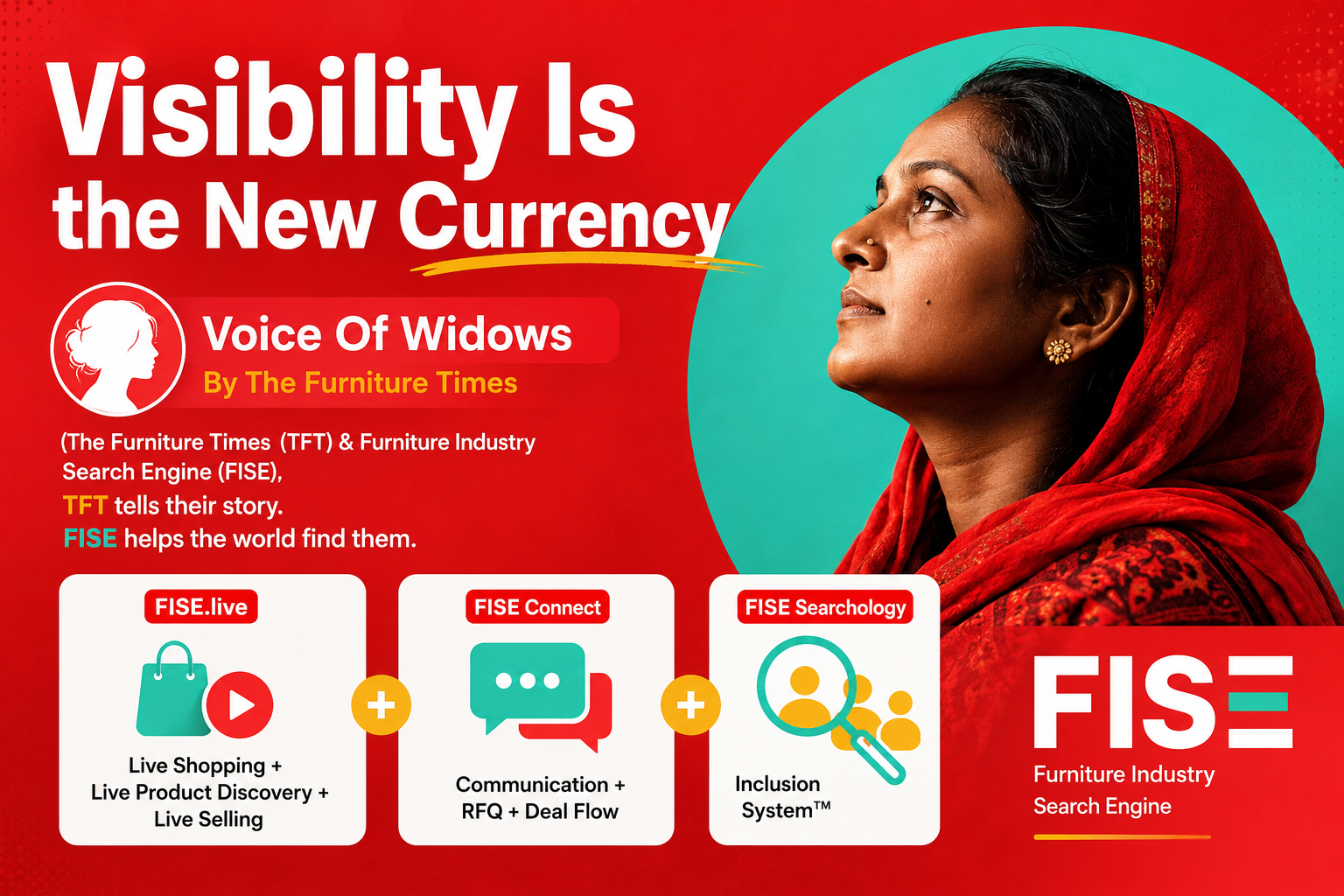
Visibility Is No Longer Optional. It Is Survival. It Is Currency. It Is Power. The world has quietly changed. Not through borders or industries, but through something far more invisible and far more powerful: visibility. Today, being skilled is not enough. Being talented is not enough. Even being exceptional is not enough. If you are not visible, you do not exist in the global marketplace. This is the harsh reality faced by millions of artisans, SMEs, grassroots creators, and overlooked communities across the world. Among them, one of the most silent yet powerful voices is emerging: Voice of Widows. Not as a symbol of limitation, but as a movement of reinvention, resilience, and economic awakening. Through The Furniture Times (TFT) and the Furniture Industry Search Engine (FISE), a new digital infrastructure is being shaped. One that does not just list businesses—but restores identity, dignity, and discoverability. The Collapse of Traditional Visibility Systems For decades, discovery was controlled by platforms that prioritized scale over story. Search engines ranked what was already popular. Marketplaces promoted what already sold. Algorithms rewarded visibility with more visibility, leaving behind millions of capable creators in silence. This created a global imbalance: Skilled artisans without reach SMEs without digital identity Grassroots creators without discoverability Communities without market access The result is not a lack of talent. It is a lack of visibility infrastructure. And that gap is now being challenged. Introducing FISE Searchology Inclusion System™ The FISE Searchology Inclusion System™ is not just another directory or listing tool. It is a global visibility engine designed with a radically different principle: Every creator deserves to be found. It is built as: A livelihood system that connects skills to opportunity A human impact system that restores economic dignity A search revolution that redefines discovery A digital identity movement for overlooked communities A global opportunity engine for SMEs and artisans Unlike traditional systems that reward popularity, FISE is designed to reward existence, relevance, and contribution. It does not ask, “Who is already visible?” It asks, “Who deserves to be seen?” The Role of The Furniture Times (TFT) and FISE LIVE The Furniture Times (TFT) is not just a publication. It is a narrative platform where unseen makers tell their stories, their struggles, and their craftsmanship journeys. FISE LIVE extends that narrative into a real-time discovery ecosystem where visibility becomes dynamic, searchable, and continuously evolving. Together, TFT and FISE form a dual engine: TFT tells the story FISE ensures the world finds it This combination transforms storytelling into discoverability, and discoverability into economic opportunity. Voice of Widows: Turning Silence Into Global Visibility Voice of Widows represents one of the most overlooked yet powerful communities in the world. Traditionally, widows in many societies face not only emotional loss but economic invisibility. Skills remain, experience remains, but access disappears. Through this movement, their work is no longer hidden. It becomes searchable. Discoverable. Valuable. In the FISE ecosystem, identity is not erased by circumstance. Instead, it is reconstructed through visibility architecture. This is not charity. This is structural inclusion. Why Visibility Has Become the New Currency In the digital economy, currency is no longer only money. It is attention. It is search presence. It is algorithmic recognition. Visibility now determines: Who gets customers Who gets partnerships Who gets funding Who gets opportunity Without visibility, even the most skilled remain economically disconnected. FISE transforms this imbalance by making visibility an accessible asset rather than a privileged outcome. The Global Impact: From Local Workshops to Global Search Results Imagine a small furniture maker in a rural town. Under traditional systems, their reach is limited to local buyers. Under FISE Searchology Inclusion System™, their identity becomes searchable globally. A buyer searching anywhere in the world can discover: Their craft Their story Their specialization Their social impact This is not just digital transformation. This is economic redistribution through search inclusion. The Urgency of Now: Why This Cannot Wait The world is moving into an era where AI-driven search, generative engines, and discovery systems will decide who is visible and who is invisible. If inclusion systems are not built now, inequality in visibility will deepen further. Entire communities risk being permanently excluded from digital economies. FISE is not positioned as a future idea. It is positioned as an urgent infrastructure response. Because visibility delayed is opportunity denied. From Listing to Living Ecosystem Traditional systems treat creators as entries in a database. FISE treats them as living economic entities. Each profile is not static. It evolves with: Work history Craft specialization Community impact Search relevance Narrative identity This makes visibility not a one-time event, but a continuous lifecycle. Conclusion: The Future Belongs to the Seen We are entering a world where invisibility is no longer neutral. It is a disadvantage. And systems that ignore inclusion will define who participates in the global economy and who does not. The combination of Voice of Widows, The Furniture Times (TFT), and FISE Searchology Inclusion System™ represents more than innovation. It represents correction. A correction of visibility. A correction of opportunity. A correction of economic silence. The future will not be defined by who works the hardest. It will be defined by who is found.

If You’re Not Searchable, You Don’t Exist: How FISE Is Rewriting the Future for SMEs, Artisans, Makers and Forgotten Creators
The Silent Crisis Destroying Millions of Businesses Worldwide A heartbreaking reality is unfolding across the world. Talented artisans are creating masterpieces nobody sees. Small furniture businesses are closing despite incredible craftsmanship. Local makers are disappearing from markets they helped build. Widows trying to sustain their families through handmade products are struggling because the digital world cannot find them. In today’s economy, invisibility is poverty. If people cannot discover your business online, your products become irrelevant no matter how extraordinary they are. If search engines do not recognize your existence, opportunities pass you by every single day. This is where the revolution begins. Through the powerful mission of Voice Of Widows, The Furniture Times (TFT), and the Furniture Industry Search Engine (FISE), a new era of digital inclusion is emerging. An era where forgotten creators become globally discoverable. An era where search becomes survival. An era where visibility becomes dignity. FISE Searchology Inclusion System™ is not another directory. It is not another marketplace. It is not another empty promise. It is a global visibility engine designed to give SMEs, artisans, makers, grassroots creators, and underserved entrepreneurs the one thing the digital economy has unfairly denied them for years: The power to be found. Why Most Small Businesses Are Invisible Online Millions of businesses believe they have a marketing problem. The truth is far more dangerous. They have a discoverability problem. A business without visibility is like a shop hidden in a desert. No matter how good the product is, people cannot buy what they cannot find. Search engines now control global opportunity. When someone searches for handcrafted furniture, local interior products, ethical makers, custom décor, sustainable artisans, or small-scale manufacturers, only searchable businesses appear. Everyone else disappears. This digital divide is crushing grassroots businesses across industries. Small enterprises often lack: Search optimization knowledge Technical infrastructure Visibility systems Digital authority Search indexing strategies Content discoverability AI-search compatibility Global exposure opportunities The result is devastating. Large corporations dominate visibility while small creators struggle in silence. FISE was created to change that imbalance forever. What Is FISE Searchology Inclusion System™ FISE Searchology Inclusion System™ is a groundbreaking global visibility ecosystem created to help SMEs, artisans, furniture makers, creators, grassroots entrepreneurs, and underserved businesses become discoverable across modern digital search environments. It functions as: A livelihood system A human impact system A search revolution A digital identity movement A global opportunity engine This mission goes far beyond listings. FISE empowers businesses to build searchable digital identities that help them appear in: Search engines AI-generated search results Voice searches Industry discovery systems Global buyer searches Smart recommendation ecosystems Furniture and manufacturing visibility channels This is the future of discoverability. And the businesses entering early will dominate tomorrow’s digital economy. TFT And Voice Of Widows: Turning Stories Into Survival Behind every small business is a human story. A widow trying to rebuild life after unimaginable loss. A craftsman preserving generations of tradition. A family business fighting against extinction. A local furniture maker competing against industrial giants. The Furniture Times (TFT) understands something many platforms ignore: People do not just buy products. They connect with stories. Voice Of Widows and TFT are helping transform overlooked human journeys into visible global narratives. Their mission is not simply commercial. It is deeply humanitarian. TFT tells their story. FISE helps the world find them. That single difference changes everything. Because visibility creates: Customers Partnerships Trust Economic survival Global recognition Industry credibility Long-term sustainability Searchability is no longer optional. It is the foundation of economic existence. The New Reality: AI Search Is Replacing Traditional Discovery The internet is changing faster than most businesses realize. People are no longer only typing into search engines. They are now asking AI systems questions like: Who are the best sustainable furniture makers? Where can I find handmade interior products? Which artisan brands support ethical manufacturing? What local furniture companies are globally trusted? Who are the emerging creators in the furniture industry? If your business is not structured for discoverability, AI systems may never mention you. That means your competitors become the answer while your business remains invisible. FISE Searchology Inclusion System™ helps bridge this dangerous gap by positioning SMEs and creators for discoverability in the age of intelligent search. This is not just about websites anymore. This is about digital existence. Why Furniture Businesses Need Search Visibility Immediately The furniture industry is undergoing a massive transformation. Consumers now search for: Sustainable furniture Handmade furniture Ethical sourcing Custom interiors Regional craftsmanship Small-batch manufacturing Local artisan products Cultural design authenticity Buyers want meaning behind products. They want identity. They want trust. Businesses that fail to position themselves digitally will lose visibility to competitors that understand discoverability systems. FISE creates a structured pathway for furniture businesses and makers to become searchable, visible, and discoverable across global digital ecosystems. This can unlock: International buyers Export opportunities Media visibility Strategic collaborations Retail partnerships Investor attention AI-powered discoverability Long-term search authority The Hidden Economic Cost Of Being Invisible Every day a business remains unsearchable, opportunities disappear silently. Potential customers move elsewhere. Industry recognition never arrives. Search engines prioritize competitors. AI platforms ignore the brand. Revenue potential collapses before the business even gets a chance to compete. This is one of the biggest hidden economic crises affecting SMEs worldwide. FISE addresses this problem directly by helping creators build discoverable digital identities that strengthen long-term visibility and authority. Because in the future economy, discoverability equals opportunity. Search Is No Longer Technical — It Is Human Searchability is not just about algorithms. It is about people trying to survive, grow, and create meaningful futures. When a small artisan becomes searchable: Families benefit Communities grow Local economies strengthen Cultural craftsmanship survives Independent creators gain dignity Forgotten industries regain life This is why FISE is more than technology. It is a human inclusion movement. The digital economy has excluded millions for too long. FISE is opening the door again. The Businesses That Will Win The Next Decade The next generation of successful businesses will not simply
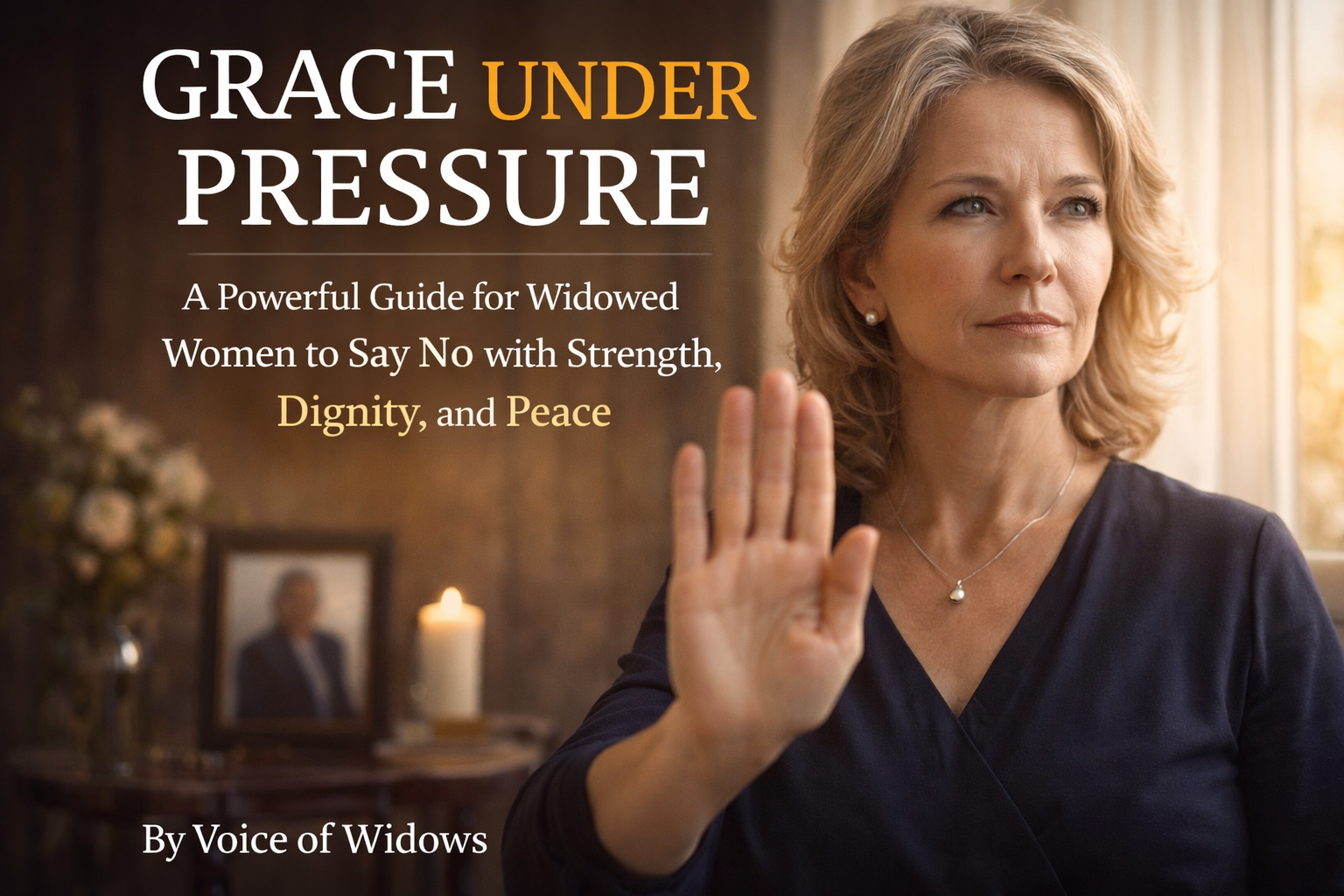
Grace Under Pressure: A Powerful Guide for Widowed Women to Say No with Strength, Dignity, and Peace
In a world that often expects women to carry endless responsibilities, saying “no” can feel like breaking an unspoken rule. For a widowed woman, this pressure can be even heavier. People may assume you are available, resilient beyond limits, or obligated to help because of your life situation. But here is the truth you must hold onto: your time, energy, and emotional well-being are not public property. They are sacred. This is not just an article. This is your permission slip. This is your turning point. Why Saying No Matters More Than Ever After loss, your life shifts in ways others may never fully understand. You are rebuilding, healing, surviving—and possibly still showing up for others. But constantly saying yes when your heart is tired creates silent damage. Every unnecessary yes is a hidden no to your own healing. You are not here to exhaust yourself trying to meet every expectation. You are here to protect your peace and rebuild your life with intention. The Emotional Barrier: Why It Feels So Hard Let’s be real. Saying no is not just about words—it’s about emotions. Fear of being judged Fear of losing relationships Fear of seeming weak or unkind Pressure to prove strength after loss But understand this deeply: strength is not in saying yes to everything. Strength is in knowing when to stop. A Smooth, Respectful Process to Say No Without Guilt Here is a simple, graceful framework you can follow anytime you need to decline work or requests: 1. Acknowledge with Respect Start by appreciating the person or opportunity. Example:“Thank you so much for thinking of me…” This shows kindness without commitment. 2. Be Honest but Boundaried You don’t need to over-explain your life. Keep it clear and grounded. Example:“At this point in my life, I need to be mindful of my commitments and energy.” 3. Say No Clearly Avoid confusing language. Be firm, yet gentle. Example:“I won’t be able to take this on right now.” No long justifications. No guilt-driven explanations. 4. Offer an Alternative (Optional, Not Obligatory) Only if you genuinely want to. Example:“You might want to consider reaching out to someone else who can fully commit.” 5. Close with Grace End positively, keeping the relationship intact. Example:“I truly appreciate your understanding and wish you the best with it.” Ready-to-Use Message Templates Use these whenever you feel unsure: Professional Decline:“Thank you for reaching out to me. I truly appreciate the opportunity. However, I won’t be able to commit to this at the moment as I am focusing on my current priorities. I hope you understand.” Soft Emotional Boundary:“I value your trust in me, but I need to prioritize my personal space and well-being right now. I won’t be able to take this on.” Firm but Kind:“I won’t be able to do this, but I sincerely wish you success with it.” The Inner Shift You Must Make This is where transformation happens. Stop asking:“Will they be upset?” Start asking:“Will I be at peace?” Because peace is your new priority. Not approval. Not validation. Not overextending. Urgency You Cannot Ignore If you continue saying yes out of guilt: You will burn out emotionally You will delay your healing You will lose control over your time You will silently suffer But if you start saying no with clarity: You regain control You rebuild self-respect You protect your mental health You create space for meaningful opportunities This is not a small change. This is a life shift. You Are Allowed to Choose Yourself Being a widow does not mean becoming endlessly available.It does not mean sacrificing your boundaries.It does not mean carrying everyone else’s expectations. It means you have already carried enough. Now, it’s time to carry yourself—with strength, dignity, and self-respect. Final Thought Every time you say no with grace, you are not closing a door—you are protecting your future. You are not rejecting people.You are choosing yourself. And that is powerful.

Emotional Safety in Marriage: The Invisible Foundation That Decides Whether Love Survives or Slowly Dies
Marriage is not destroyed in one loud argument.It rarely ends in one dramatic betrayal. It weakens quietly. It fades in silence. It cracks when two people who once felt like home start feeling like strangers. At the center of every thriving marriage is one powerful, often ignored force: emotional safety. And the uncomfortable truth is this — without emotional safety, love cannot grow. It only survives on the surface. If you care about your marriage, your future, your family, this is not something to casually scroll past. This is something to pause and think about deeply. Because emotional safety is not optional.It is essential. What Is Emotional Safety in Marriage? Emotional safety in marriage means this: You can be fully yourself without fear. It means: You can express your feelings without being mocked. You can admit mistakes without being shamed. You can disagree without being threatened. You can be vulnerable without being attacked. Emotional safety is the confidence that your spouse will not use your weaknesses against you. It is the certainty that even in conflict, you are respected. Many couples think love alone is enough. It is not. Love without emotional safety turns into anxiety.Love without emotional safety turns into performance.Love without emotional safety becomes exhausting. Why Emotional Safety Matters More Than You Think You can have: Financial stability Physical attraction Social approval Beautiful wedding photos And still feel deeply alone inside your marriage. That loneliness often comes from one missing element: emotional security. When emotional safety is absent: Communication becomes defensive. Small issues turn into major fights. Vulnerability disappears. Resentment builds silently. Intimacy declines. Trust weakens. Eventually, one or both partners emotionally withdraw. And once emotional withdrawal becomes a habit, rebuilding connection becomes extremely difficult. This is why emotional safety is not a luxury topic. It is a survival topic. Signs Your Marriage Lacks Emotional Safety Be honest with yourself. Ask: Do I hesitate before sharing my true feelings? Am I afraid my partner will overreact? Do arguments often turn into personal attacks? Do I feel unheard or dismissed? Do I feel more peaceful alone than with my spouse? Do I hide parts of myself to avoid conflict? If you answered yes to several of these, emotional safety may already be compromised. Ignoring it will not fix it. Time does not heal emotional damage.Intentional effort does. What Emotional Safety Looks Like in a Healthy Marriage In emotionally safe marriages: Disagreements are handled with respect. Apologies are genuine, not forced. Listening happens without interruption. Feelings are validated, even when opinions differ. Boundaries are honored. Criticism focuses on behavior, not character. Partners feel secure enough to say: “I was wrong.”“I am struggling.”“I need help.”“I felt hurt.” And they know those words will not be weaponized later. That is real security.That is real partnership. The Emotional Cost of Unsafe Marriages When emotional safety disappears, people begin to: Shut down emotionally Seek validation elsewhere Avoid deep conversations Stay silent to keep peace Develop anxiety around their spouse Over time, this creates emotional distance. And emotional distance is more dangerous than conflict. Conflict means there is still engagement.Silence often means the connection is dying. If you feel your marriage becoming emotionally cold, do not minimize it. Cold marriages rarely warm themselves without effort. How to Build Emotional Safety in Marriage This is where responsibility begins. If you want emotional safety in your marriage, action is required. 1. Stop weaponizing vulnerability If your partner shares something personal, never use it later during an argument. Once vulnerability is punished, it rarely returns. 2. Practice regulated communication Avoid: Name-calling Bringing up past mistakes repeatedly Mocking Sarcasm during serious conversations Words do not disappear. They imprint. 3. Validate before you defend Instead of immediately arguing your point, try: “I understand why you feel that way.” Validation does not mean agreement.It means acknowledgment. 4. Apologize without ego A real apology sounds like: “I hurt you. That was wrong. I will work on it.” Not: “I am sorry you felt that way.” One builds safety.The other builds distance. 5. Protect private conversations Do not expose your partner’s weaknesses to friends or family. Marriage needs confidentiality to feel secure. Emotional Safety and Intimacy: The Direct Connection Physical intimacy thrives in emotional security. When a spouse feels emotionally attacked, criticized, or dismissed, desire naturally decreases. You cannot expect closeness when someone feels emotionally unsafe. Emotional connection fuels: Trust Physical affection Open communication Long-term commitment Without safety, intimacy becomes mechanical or disappears entirely. Why This Conversation Is Urgent Divorce does not begin in court.It begins in emotional neglect. Many marriages end not because of dramatic betrayal, but because emotional safety slowly eroded. People grow tired of walking on eggshells.They grow tired of not being heard.They grow tired of feeling alone in a relationship. If you recognize even small cracks in emotional safety, do not delay repair. Waiting makes rebuilding harder. The earlier you act, the stronger your foundation can become. A Hard Question to Reflect On Ask yourself honestly: Does my spouse feel emotionally safe with me? Not:Do I provide financially?Do I stay loyal?Do I fulfill responsibilities? But: Do they feel safe expressing pain?Do they feel safe disagreeing?Do they feel safe being imperfect? If the answer is uncertain, that is your starting point. Marriage Is Not About Winning Arguments It is about protecting connection. You can win every argument and still lose your marriage. You can prove every point and still destroy emotional safety. Real strength in marriage is not dominance.It is emotional maturity. And emotional maturity builds emotional safety. Final Reflection: Does Emotional Safety Really Matter? Yes. It determines: Whether love grows or fades Whether communication heals or harms Whether intimacy deepens or disappears Whether two people feel like partners or opponents Emotional safety is not dramatic.It is not flashy.It is not visible in wedding photos. But it is the silent force that determines whether your marriage survives pressure, conflict, and time. Do not wait for crisis. Start building emotional safety today. Listen better.Speak kinder.Apologize faster.Protect vulnerability. Because once emotional
From Silence to Strength: How Women Achieved Equality and Why the Fight Still Demands Action
How did women achieve equality?Women achieved equality through centuries of resistance, sacrifice, courage, organized movements, legal battles, education, economic participation, and relentless voices that refused to stay silent. Equality was not handed over. It was demanded. It was fought for. It was earned. But equality is not a finished story. It is still being written. This article explores how women achieved equality, the movements that changed history, the global impact of those struggles, and why the responsibility now belongs to this generation. The Long Road From Exclusion to Empowerment For centuries, women across the world were denied fundamental rights. They were excluded from voting, owning property, accessing higher education, leading businesses, and participating in politics. In many societies, their identities were legally tied to fathers or husbands. The idea of gender equality did not begin with modern campaigns. It began in quiet resistance — women educating themselves in secret, leading revolutions behind the scenes, organizing communities, and challenging unfair systems. Real change started when voices became movements. The Rise of the Women’s Suffrage Movement One of the most defining milestones in women’s equality was the women’s suffrage movement. In countries like the United States, the United Kingdom, and New Zealand, women organized massive campaigns demanding the right to vote. The ratification of the 19th Amendment in 1920 in the United States granted women the right to vote. In 1893, New Zealand became the first self-governing country to allow women to vote in national elections. These victories were not peaceful gifts. Women were arrested. Mocked. Imprisoned. Some were force-fed during hunger strikes. Yet they continued. The right to vote was not just about ballots. It was about recognition. It was about being seen as full citizens. Education: The Foundation of Equality Education became the most powerful weapon in achieving gender equality. When women gained access to schools and universities, everything changed. Educated women entered professions previously closed to them — law, medicine, science, journalism, business leadership. Knowledge dismantled stereotypes that claimed women were intellectually inferior. Today, in many parts of the world, women outperform men academically. Yet in some regions, girls still struggle for access to basic education. This proves equality requires constant vigilance. When you educate a woman, you elevate a generation. Workplace Rights and Economic Independence Economic independence was another turning point. During world wars, women filled industrial jobs while men were deployed. They proved competence beyond traditional domestic roles. Later movements demanded equal pay for equal work, maternity protections, anti-discrimination laws, and workplace safety reforms. The feminist movements of the 1960s and 1970s amplified demands for equal employment opportunities and reproductive rights. Policies began to shift. Laws began to protect. Yet today, the global gender pay gap still exists. Leadership representation remains unequal. Equality in law does not always mean equality in practice. Global Human Rights and International Recognition The global conversation around women’s equality intensified in the 20th century. Organizations like United Nations formally recognized women’s rights as human rights. The Convention on the Elimination of All Forms of Discrimination Against Women (CEDAW), adopted in 1979, became an international bill of rights for women. International Women’s Day, celebrated every March 8, became a global reminder that equality is a collective mission, not a regional issue. Women’s equality moved from being a “women’s issue” to a human development priority. How Social Movements Changed Culture In recent decades, digital activism accelerated change. Movements such as #MeToo exposed systemic abuse and demanded accountability across industries. Social media gave ordinary women extraordinary power. Stories that once remained hidden became global headlines. Culture shifted. Conversations about consent, workplace harassment, representation, and inclusion became mainstream. Equality was no longer whispered. It was trending. Key Factors That Helped Women Achieve Equality To answer clearly and directly: Women achieved equality through: Organized social movements and activism Legal reforms and constitutional amendments Access to education and literacy Economic participation and entrepreneurship Political representation and voting rights International human rights frameworks Media visibility and digital advocacy Collective solidarity across generations Each factor built on the other. Equality was never a single event. It was a chain reaction of courage. Is Equality Fully Achieved Today? This is the urgent question. In many countries, women lead corporations, governments, and global institutions. Female presidents, prime ministers, scientists, athletes, and entrepreneurs are reshaping leadership models. Yet: Gender pay gaps persist Violence against women remains widespread Representation in top political offices is still limited Access to education and healthcare remains unequal in many regions Equality has advanced, but it is not universal. The fight is not over. Why This Generation Must Care You are living in the results of someone else’s sacrifice. The rights women enjoy today — voting, working, studying, owning property, speaking freely — were paid for by generations who endured humiliation, imprisonment, and discrimination. Progress can move forward. But it can also move backward. History proves one thing: rights unprotected can be rights undone. Gender equality is not just about women. It is about economic growth, social stability, innovation, and justice. Countries with higher gender equality show stronger economic performance and better social outcomes. This is not only a moral issue. It is a development issue. What Action Looks Like Today If you are asking, “What can I do?” — here is the answer: Support equal pay policies Encourage girls’ education Challenge gender stereotypes in daily conversations Promote women into leadership roles Advocate for safe workplaces Vote for policies that protect human rights Teach the next generation about equality Equality grows where awareness lives. The Emotional Truth Behind every law passed was a woman who refused silence.Behind every right gained was a story of resistance.Behind every opportunity today stands a legacy of courage. Equality was not achieved in comfort. It was achieved in confrontation. And the question is no longer how women achieved equality. The question now is:Will we protect it?Will we expand it?Will we defend it when it is challenged? History is watching.
The Silent Struggle: Daily Challenges Faced by Single Parents and How to Overcome Them
Being a single parent is often portrayed as a simple role, but the reality is far from it. Every day, millions of single parents around the world wake up to a whirlwind of responsibilities, juggling careers, child-rearing, household management, and emotional well-being. This journey, while full of love and devotion, is also marked by stress, sacrifice, and constant decision-making under pressure. 1. Financial Pressure That Never SleepsOne of the most overwhelming challenges single parents face is financial strain. Unlike two-parent households where responsibilities and expenses are shared, single parents often bear the full burden of bills, childcare costs, education, and unexpected emergencies. This constant financial juggling creates stress and anxiety that can affect both the parent and the child. The urgency to secure a stable income can push single parents into long working hours, sometimes sacrificing personal health and time with their children. 2. Emotional Overload and IsolationSingle parents frequently battle emotional exhaustion. Handling the mental load of parenting alone—deciding what’s best for the child, maintaining discipline, and managing personal emotions—can be isolating. Feelings of loneliness often creep in when friends and family are unavailable, or societal judgment adds pressure. Emotional support becomes crucial, yet many single parents struggle to find a safe space to share their worries without feeling guilty. 3. Time Management and Life BalanceManaging time is another relentless challenge. From school drop-offs to work meetings, medical appointments, and household chores, single parents often feel like they are on a non-stop treadmill. There’s little room for personal rest or self-care, making burnout a common reality. Children notice their parent’s stress, which can impact family dynamics and the emotional health of the household. Finding practical strategies to balance work and life is essential, but often requires creative thinking and community support. 4. Social Stigma and JudgmentSociety often places invisible expectations on single parents, questioning their ability to provide or judging their choices. This stigma can create unnecessary pressure, making parents feel undervalued or criticized for circumstances that are often beyond their control. Breaking free from judgment and building confidence in parenting decisions is a continuous and empowering process. 5. Parenting Challenges Without a PartnerParenting alone comes with unique challenges. Single parents must make decisions without a co-parent’s perspective, handle discipline on their own, and provide emotional support to children who may also feel the void of a missing parent. This can be emotionally taxing, especially during critical phases of a child’s growth. The ability to remain patient, consistent, and nurturing, while also managing personal stress, is a skill single parents continuously develop. How Single Parents Can Overcome Daily Challenges – Build a Support Network: Surround yourself with friends, family, or support groups who can offer emotional and practical assistance. Sharing responsibilities, even occasionally, can dramatically reduce stress. – Prioritize Self-Care: Single parents must remember that taking care of themselves is not selfish. Adequate rest, nutrition, exercise, and time for hobbies improve resilience and parenting effectiveness. – Financial Planning and Assistance: Budgeting wisely, seeking financial advice, or applying for community aid programs can ease financial stress. Small, consistent steps toward financial stability can create long-term security. – Open Communication With Children: Explaining situations age-appropriately to children helps them understand and cope with family dynamics. It builds trust, empathy, and stronger bonds. – Professional Guidance: Counseling or coaching, both for personal well-being and parenting strategies, can provide actionable insights to navigate the complexities of single parenting. ConclusionBeing a single parent is not a choice but a courageous journey filled with love, challenges, and growth. Recognizing the daily struggles while actively seeking solutions empowers both parent and child. Every effort counts, and no parent should feel alone in this battle. With support, planning, and self-care, single parents can not only survive but thrive, creating a positive environment where their children flourish.

Raising A Life Alone: The Silent Strength, Sacrifice, And Unbreakable Courage Of A Single Parent
The struggle of a single parent is not loud, but it is relentless.It unfolds quietly before sunrise and long after the world has gone to sleep. It lives in alarm clocks that ring too early, meals stretched too thin, and hearts that carry both exhaustion and fierce love at the same time. This is not just a story of hardship. This is a story of resilience, responsibility, and an everyday bravery that rarely gets applause. Single parenthood is not a choice for many. It is a situation shaped by loss, separation, survival, or circumstance. Yet once inside it, there is no pause button. There is no backup shift. There is only the parent and the child, navigating life together with limited hands and unlimited responsibility. The emotional weight no one prepares you for A single parent carries more than bills and schedules. They carry emotional pressure that never fully rests. Every decision feels heavier because there is no second voice in the room. From education choices to health concerns, from discipline to encouragement, the responsibility is singular and absolute. Loneliness often hides behind strength. Many single parents smile in public while silently worrying at night. Am I doing enough. Am I enough. Did I make the right decision. These questions echo constantly, yet the next morning still demands action, energy, and hope. Financial strain that shapes daily life Money is not just a concern. It is a daily calculation. Rent, food, school fees, medical needs, transportation, and emergencies compete for limited income. One unexpected expense can disrupt months of planning. Single parents often sacrifice personal needs without hesitation. New clothes, rest, health checkups, and dreams are postponed so children do not feel the impact. This financial pressure does not weaken them. It sharpens their survival instincts. But it should never be ignored or minimized. Time poverty and constant exhaustion Time becomes the rarest resource. Balancing work, childcare, household duties, and emotional presence leaves little room for rest. There are no shared night shifts. No one else to take over when sickness hits or energy collapses. Burnout is common, yet many single parents keep going because stopping is not an option. They function on discipline, love, and determination, even when their bodies beg for rest. The invisible guilt single parents carry Even while doing everything possible, guilt often follows. Guilt for missing school events due to work. Guilt for being tired. Guilt for not giving children the ideal family structure society promotes. But children do not measure love by numbers. They measure it by presence, consistency, and care. A single parent who shows up every day builds emotional security stronger than any perfect image. Strength built in silence Single parents become problem solvers, planners, nurturers, and protectors all at once. They learn skills they never expected to master. They develop emotional intelligence quickly because they must. Their children often grow up witnessing responsibility, empathy, and resilience firsthand. This lived example becomes a powerful lesson that no textbook can replace. Why this struggle demands attention now Ignoring the challenges of single parents creates generational consequences. When support systems fail, stress transfers to children. When society overlooks these families, inequality deepens. Single parents do not need sympathy. They need understanding, policy support, workplace flexibility, community inclusion, and respect. Every institution that interacts with families must ask one simple question. Are we making this easier or harder for a single parent to survive. What single parents need today They need flexible work environments that respect caregiving realities. They need affordable childcare and accessible healthcare. They need emotional support systems that reduce isolation. Most importantly, they need recognition that their role is not incomplete, broken, or lesser. A call to act, not just to feel If you are a single parent reading this, your struggle is valid and your strength is real. Asking for help is not weakness. Rest is not failure. You are building a life under pressure, and that deserves respect. If you are not a single parent, your awareness matters. Support policies that protect families. Offer understanding instead of judgment. Create spaces where single parents are seen, heard, and supported. The struggle of a single parent is not a personal failure.It is a social responsibility.It is a shared challenge.And it is a testament to human resilience when love refuses to give up.
Unbreakable Hearts and Relentless Strength: The Silent Battles and Triumphs of Single Motherhood
The unseen weight single mothers carry every single day Single motherhood is not a phase. It is not a temporary inconvenience. It is a full-time reality built on sacrifice, resilience, and quiet courage. Behind every school run, late-night work shift, unpaid bill, and exhausted smile is a woman carrying responsibilities meant for two or more people, alone. Society often celebrates strength in loud ways, but the strength of a single mother is silent. It shows up at dawn when she wakes before her children to plan the day. It shows up at night when fear, uncertainty, and fatigue collide, yet she keeps going because stopping is not an option. This is not just a story about struggle. It is a call to see, understand, and act. Financial pressure that never pauses Money is not just a concern for single mothers. It is a constant presence, shaping every decision. One income must stretch across rent, food, school fees, healthcare, childcare, transport, and emergencies that never announce themselves in advance. Every unexpected expense becomes a crisis. A sick child can mean missed work. Missed work can mean lost income. Lost income can mean falling behind, and catching up feels impossible. Yet many single mothers become financial strategists without training. They budget with precision, prioritize with discipline, and sacrifice their own needs first. New clothes, rest, healthcare, and dreams are postponed so children can have stability. This pressure does not build character. It drains energy, health, and hope. And it demands urgent attention from communities, employers, and policymakers. Emotional labor that no one applauds Single mothers do more than provide. They regulate emotions, manage conflicts, offer comfort, discipline with care, and become both protector and nurturer. They carry their children’s fears, questions, and heartbreaks while hiding their own. There is no one to share decisions with. No one to say you are doing the right thing. No one to step in when exhaustion hits its peak. The mental load is relentless and invisible. Loneliness becomes a quiet companion. Even surrounded by people, many single mothers feel unseen and unheard. They are expected to be strong, but rarely asked how they are truly coping. Ignoring this emotional toll is dangerous. Mental health support is not optional. It is essential. Social judgment and harmful narratives Single mothers face judgment that cuts deep. Assumptions are made about their choices, morality, and capabilities. Their success is minimized. Their struggles are blamed on personal failure rather than systemic gaps. These narratives do real damage. They isolate women who already feel overwhelmed. They discourage seeking help. They normalize neglect instead of responsibility from society. Single motherhood is not a weakness. It is a circumstance shaped by loss, separation, abuse, widowhood, or choice. Every story is different, and none deserve shame. The impact on children and the hidden fear mothers carry Single mothers often worry not about themselves, but about what their children might miss. Time. Presence. Opportunities. A second parent. They fear being stretched too thin. They fear burnout. They fear failing the people they love most. Yet research and real life show something powerful. Children raised by supported, emotionally available single mothers can thrive. Love, stability, and security matter more than household structure. Supporting a single mother is supporting the future of a child. Why urgency matters now more than ever Rising living costs, unstable job markets, and limited childcare options have made single motherhood harder than ever. Delaying action means deepening inequality, poverty, and emotional harm. Urgency is not panic. Urgency is responsibility. Employers must create flexible, fair workplaces. Governments must strengthen childcare, healthcare, and housing support. Communities must replace judgment with assistance. Families must step in instead of stepping away. And single mothers must be empowered, not pitied. A call to action that cannot wait If you are a single mother, your struggle is real and valid. Seeking support is not weakness. It is wisdom. Your well-being matters as much as your children’s. If you know a single mother, do more than admire her strength. Offer practical help. Listen without fixing. Advocate when she is too tired to speak. If you shape policies, platforms, or workplaces, build systems that recognize real lives, not ideal ones. Single motherhood does not need sympathy. It needs support, respect, and action. Because when a single mother is supported, an entire generation stands stronger.

To the Single Mom: You Were Never Meant to Carry the World Alone
A Letter of Truth, Strength, and Liberation Dear Single Mom, This is for you, the woman who wakes before the sun and sleeps long after everyone else has closed their eyes. This is for you, the one who wipes tears, ties shoelaces, packs lunches, pays bills, solves problems, and still manages to show up with a brave face. Society often tells you that you must be everything at once, but that message is unfair, heavy, and deeply unrealistic. You are strong, but strength does not mean silence. You are capable, but capability does not mean isolation. You are resilient, but resilience does not mean you must suffer alone. The narrative that single mothers must “do it all” is not empowerment, it is exhaustion dressed up as praise. And it is time to challenge that story. You Are Not a Burden, You Are a Builder Every day you are building lives, character, dreams, and stability for your children. That is not small work, it is sacred work. Yet the world often overlooks your effort, minimizing your struggles while expecting perfection from you. That is not fair, and you deserve better. Being a single mom does not mean you are broken, failed, or incomplete. It means you stepped up when circumstances changed. You chose responsibility over escape. You chose love over fear. That choice alone makes you extraordinary. The Danger of “Doing It All” Alone When you try to carry everything by yourself, you risk burnout, anxiety, and emotional depletion. You may feel guilty asking for help, but asking for support is not weakness, it is wisdom. No one is meant to survive life alone, not even superheroes. You do not need to prove your worth through suffering. You do not need to collapse in silence to be respected. You are allowed to rest, to ask, to share, to cry, to speak up, and to be supported. Your Children Need a Healthy You, Not a Perfect You Your children do not need a flawless mother, they need a present, peaceful, and emotionally well mother. When you allow yourself to receive help, you teach them an important life lesson, that community matters, vulnerability is human, and love is not a solo journey. A calm mother raises calmer children. A supported mother raises secure children. A mother who values herself raises children who value themselves. You Are More Than Survival, You Are Meant for Growth Your story does not end with struggle. It evolves into growth, opportunity, and purpose. You are allowed to dream again, to build a career, to pursue education, to nurture friendships, and to invest in your own happiness. Your identity is not limited to motherhood. You are also a woman with talents, passions, ideas, and a future that deserves attention. A Call to Action for Every Single Mom Reading This Stop carrying guilt that is not yours. Stop shrinking your voice. Stop believing that asking for help makes you less. Start seeking support, building community, and protecting your mental health. Reach out to another single mom, join support groups, talk to a counselor, lean on trusted family members, and most importantly, be kinder to yourself. Your life is not a punishment, it is a mission. Your challenges are not your shame, they are your testimony. And your future is not defined by your past, it is shaped by your courage today.

From Loss to Leadership: Voice of Widows and The Furniture Times Unite to Redefine CSR with Purpose, Power, and Lasting Impact
Some partnerships are strategic. Some are symbolic. And then there are partnerships that change lives.The collaboration between Voice of Widows – Turning Sorrows into Strength and The Furniture Times belongs to the rare third category. This is not just a Corporate Social Responsibility feature. This is a public commitment to humanity, dignity, and long-term empowerment. It is a declaration that business influence, when guided by conscience, can rewrite destinies. Voice of Widows is not a campaign. It is not charity. It is a movement born from pain and rebuilt through purpose.Across societies, widows are often left behind in silence, burdened not only by grief but by social neglect, economic vulnerability, and invisibility. Voice of Widows exists to confront that reality head-on. It transforms loss into leadership by creating pathways where widows are not pitied, but empowered. Where they are not dependent, but independent. Where their identity is not defined by what they lost, but by what they can build. The Furniture Times, as a leading voice in industry and innovation, choosing to feature Voice of Widows as a CSR partner is both powerful and timely.It sends a clear message that responsibility does not end at profit margins. It begins with people. By amplifying this initiative, The Furniture Times has used its platform not just to inform, but to inspire action, awareness, and accountability across industries. At the heart of Voice of Widows is a simple but radical belief: empowerment begins with opportunity, not sympathy.Rather than offering short-term relief, the initiative focuses on sustainable change. Through structured skill development programs, vocational training, entrepreneurship guidance, and livelihood creation, widows are equipped to rebuild their lives with confidence and economic stability. This approach ensures dignity is preserved, self-worth is restored, and futures are secured. Training without mentorship fails. Support without access collapses. Voice of Widows understands this deeply.That is why the initiative integrates mentorship, market exposure, and income-generating pathways into its model. Women are not only trained but guided. Not only supported but trusted. This ecosystem enables widows to transition from survival to self-reliance, from uncertainty to ownership. What makes this initiative exceptional is its refusal to let silence continue.Voice of Widows creates space for unheard voices to be acknowledged. It restores agency where society has imposed limitations. It nurtures resilience where vulnerability once lived. This is empowerment that is practical, emotional, and transformative. The Furniture Times featuring this initiative is more than recognition. It is reinforcement.It reinforces the idea that media platforms have moral power. That industries can influence social narratives. That CSR, when done right, is not about optics but outcomes. This collaboration stands as an example to brands, corporations, and institutions that real impact comes from aligning visibility with values. The urgency of this work cannot be overstated.Every day, countless widows face economic hardship, social exclusion, and limited opportunities. Delaying action means delaying dignity. Ignoring the issue means enabling inequality. Voice of Widows responds to this urgency with structure, vision, and measurable impact, proving that transformation is possible when intention meets execution. This partnership is a thank you, but it is also a call to action.A call to businesses to rethink CSR as a responsibility, not a requirement. A call to leaders to invest in long-term empowerment, not temporary solutions. A call to society to listen, support, and stand beside women who are ready to rise, if only given the chance. Voice of Widows is turning sorrows into strength. The Furniture Times has chosen to amplify that strength. Together, they are shaping a future where loss does not define a woman’s destiny, and empowerment is not an exception, but a standard. This is how change looks when purpose leads. This is how voices become movements. This is how responsibility becomes legacy.