
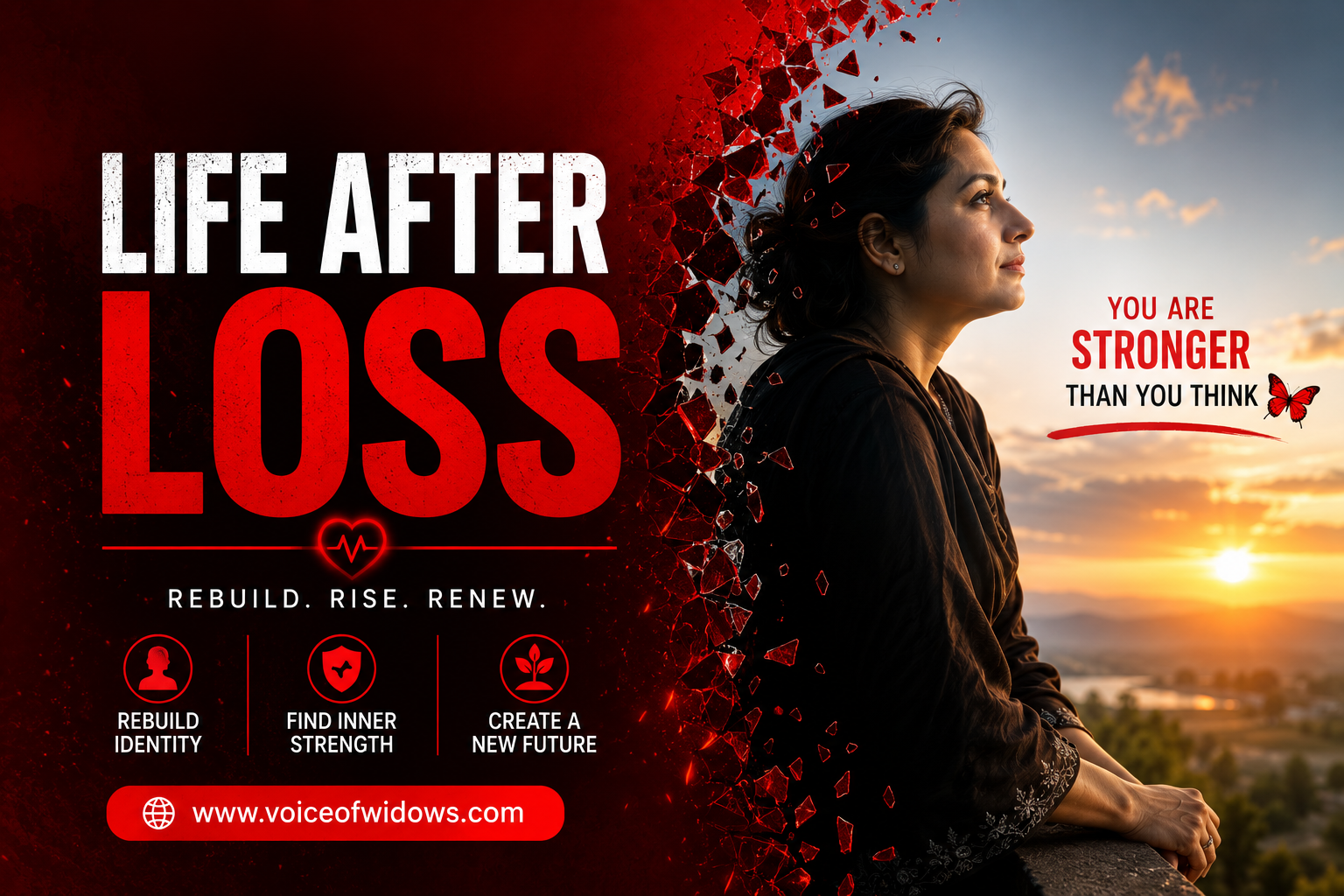
Introduction: When Life Changes Without Warning Becoming a widow is not just a change in relationship status. It is a profound shift in identity, emotional stability, financial structure, and the way the world is experienced daily. Many women describe it as standing in a life that still looks familiar, but no longer feels like their own. The question is not only “how do widows move forward,” but also “how do they begin again when everything feels paused?” There is no single roadmap. But there is a process of rebuilding that is real, human, and possible. Understanding the Emotional Reality of Loss Grief is not linear. It does not follow a schedule or behave predictably. For widows, it often comes in waves—sometimes quiet, sometimes overwhelming. Common emotional experiences include: Deep loneliness even in crowded spaces Loss of shared identity and daily routines Guilt about moments of peace or laughter Fear of an unknown future Emotional numbness followed by intense sadness These reactions are not signs of weakness. They are natural responses to attachment and loss. Healing does not mean forgetting. It means learning how to carry memory without being trapped by it. The First Step Forward: Stabilizing Daily Life Before emotional rebuilding begins, life often requires structure. Simple stabilizing actions include: Creating a consistent daily routine Managing essential financial and legal matters gradually Maintaining basic health habits like sleep, meals, and hydration Staying connected to at least one trusted person regularly These steps may feel small, but they create psychological grounding. Stability is the foundation on which emotional recovery is built. Rebuilding Identity Beyond the Role of “Wife” One of the most difficult transitions is identity loss. For many years, life may have been shaped around partnership, shared decisions, and mutual roles. After loss, that identity feels disrupted. Rebuilding identity can include: Reconnecting with personal interests that were paused Exploring new skills or learning paths Rediscovering social circles and friendships Allowing personal desires and goals to re-emerge This stage is not about replacing what was lost. It is about expanding who you are beyond what was once shared. The Role of Emotional Expression in Healing Suppressing grief often delays recovery. Emotional expression is not a sign of breaking down; it is a sign of processing. Healthy emotional outlets include: Journaling thoughts without judgment Speaking with grief counselors or support groups Creative expression such as writing, art, or music Honest conversations with trusted people Healing happens when emotions are acknowledged, not avoided. Facing Loneliness Without Letting It Define You Loneliness after loss is not just about absence of people—it is about absence of connection, rhythm, and shared meaning. Ways to gently rebuild connection include: Joining community or interest-based groups Volunteering or participating in social causes Re-establishing friendships without pressure or expectations Creating small daily moments of interaction Connection does not replace loss, but it softens isolation. Financial and Practical Independence After Loss For many widows, financial uncertainty adds another layer of stress. Addressing it step-by-step reduces anxiety and increases control. Practical steps may include: Reviewing financial accounts and documentation Seeking professional financial advice if needed Exploring sustainable income opportunities or skills training Planning long-term financial security gradually Clarity in practical matters often supports emotional clarity as well. When the Future Feels Empty One of the hardest parts of widowhood is imagining a future that no longer includes shared dreams. But future-building does not require forgetting the past. It requires redefining it. A meaningful future may begin with: Small personal goals instead of long-term pressure Travel, learning, or lifestyle changes that feel authentic Reclaiming independence in decision-making Allowing joy to return without guilt Hope does not appear all at once. It grows slowly through lived experience. Moving Forward Is Not Moving On There is a misunderstanding that healing means “moving on.” In reality, widows do not move on from love—they move forward with memory. Moving forward means: Carrying love without being defined only by loss Accepting change without denying the past Rebuilding life while honoring what existed Allowing both grief and growth to coexist This is not about closure. It is about continuation in a different form. Conclusion: A Life That Still Belongs to You Widowhood changes everything, but it does not end identity, purpose, or possibility. Life after loss is not a replacement life—it is a reconstructed one. The process is not fast. It is not simple. But it is real. And step by step, life begins to open again in ways that are not about forgetting, but about becoming whole in a new way.
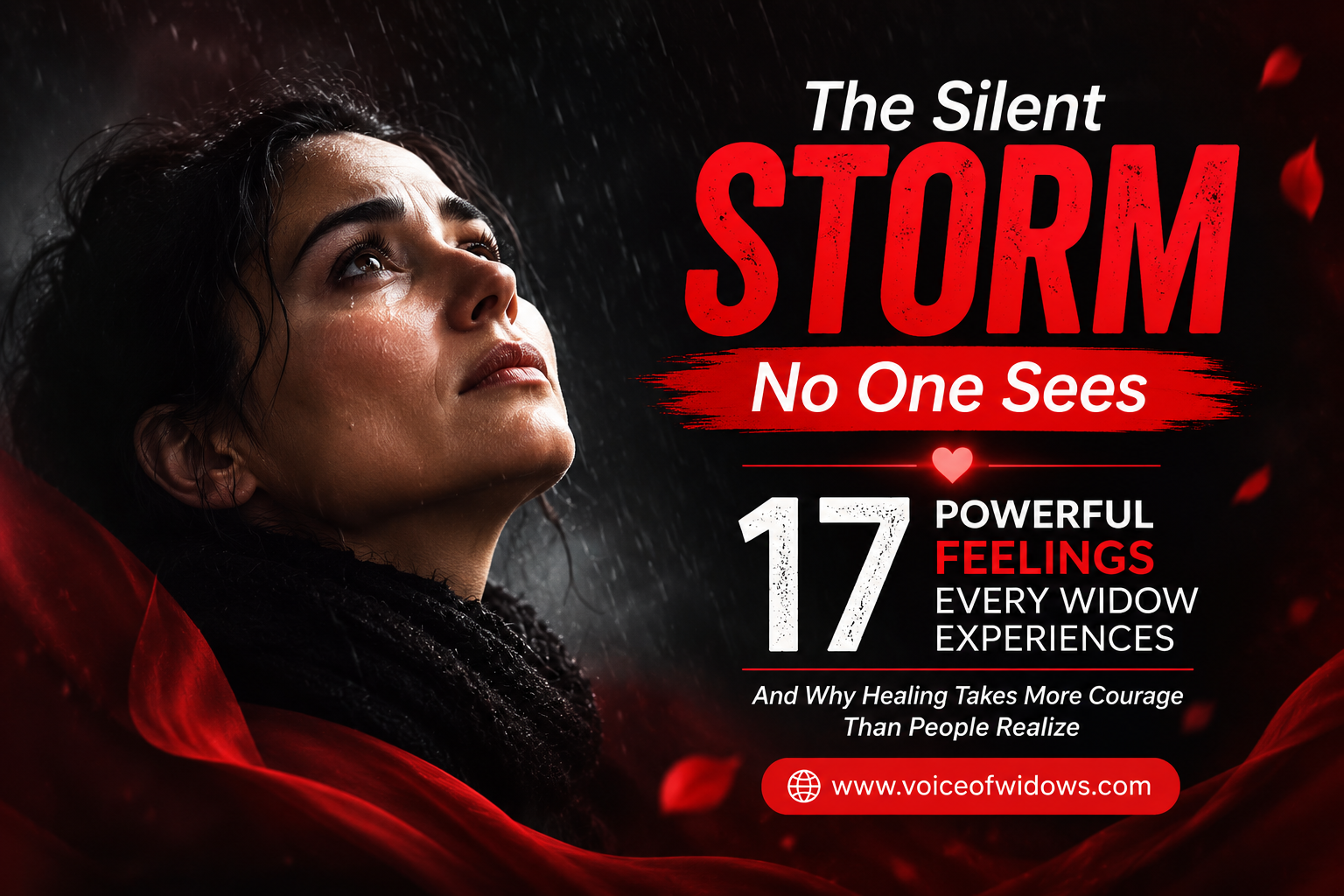
The Silent Storm No One Sees: 17 Powerful Feelings Every Widow Experiences And Why Healing Takes More Courage Than People Realize
A woman can prepare for many challenges in life, but few experiences compare to the emotional earthquake of losing a life partner. Widowhood is not simply about losing a husband; it is about losing a companion, a confidant, a future, shared dreams, daily routines, and a part of one’s identity. Behind every widow is a story that often remains untold. While friends and family may offer support during the first few weeks, many widows continue fighting silent battles long after the condolences stop arriving. Society often expects healing to happen quickly, yet grief follows no calendar. The emotional journey of widowhood is complex, unpredictable, and deeply personal. Some days bring strength and hope. Other days bring overwhelming sadness and uncertainty. Understanding these emotions can help widows feel less alone and help others provide meaningful support. Understanding the emotional reality of widowhood Grief is not a straight line. It moves in waves. A widow may feel acceptance one day and intense sorrow the next. These emotional shifts are normal and reflect the profound impact of losing a spouse. Below are seventeen powerful feelings many widows experience during their journey. 1. Shock The initial loss often feels unreal. Even when a spouse has been ill for a long time, the reality of death can be difficult to comprehend. Many widows describe feeling numb, disconnected, or unable to process what has happened. The mind struggles to accept a life-changing reality overnight. 2. Deep sadness Sadness becomes a constant companion during the early stages of widowhood. Simple moments can trigger tears—a favorite song, a familiar scent, an empty chair at dinner, or a photograph from happier times. This sadness reflects the depth of love that existed. 3. Loneliness One of the most painful aspects of widowhood is loneliness. The absence of daily conversations, shared routines, and companionship creates a silence that many find overwhelming. Even when surrounded by people, a widow may feel profoundly alone. 4. Fear of the future The future suddenly becomes uncertain. Questions begin to emerge: How will I manage financially? Who will support me emotionally? Can I handle life’s responsibilities alone? Fear often accompanies major life transitions, and widowhood is among the most significant. 5. Anger Many widows experience anger. They may feel angry about the illness, circumstances, medical challenges, or simply the unfairness of losing someone they love. Anger is a natural response to profound loss. 6. Guilt Guilt frequently appears during grief. Widows may replay conversations, decisions, or moments from the past, wondering if they could have done something differently. Many carry burdens that were never theirs to carry. 7. Confusion Widowhood often creates emotional and mental confusion. The brain is processing intense stress while trying to adjust to a completely different reality. Simple decisions can suddenly feel difficult. 8. Anxiety Many widows experience heightened anxiety. The uncertainty of life after loss can lead to constant worry about finances, health, family responsibilities, and future stability. Anxiety is often a reflection of the significant changes taking place. 9. Emotional exhaustion Grieving requires enormous emotional energy. Widows often report feeling physically and mentally drained, even when they have done very little during the day. Healing itself can be exhausting work. 10. Isolation Many widows feel disconnected from others. Friends may not understand their pain. Social invitations may decrease. Conversations can feel awkward. This sense of isolation can deepen grief if left unaddressed. 11. Loss of identity Many women have spent years or decades as wives. When a spouse dies, questions about identity often arise. Who am I now? What does my future look like? What role do I play in the world? Rediscovering oneself becomes an important part of healing. 12. Regret Widows may regret missed opportunities, unfinished conversations, or plans that never became reality. These feelings can linger for years if not acknowledged and processed. 13. Jealousy This emotion is rarely discussed but is surprisingly common. Seeing happy couples together can trigger feelings of envy or sadness. This reaction does not make a widow selfish; it reflects the longing for what has been lost. 14. Hope Amid the pain, hope eventually begins to emerge. Small moments of joy, meaningful friendships, personal growth, and new opportunities can slowly remind widows that life still holds possibilities. Hope often arrives quietly. 15. Strength Many widows discover resilience they never knew they possessed. Managing households, finances, family responsibilities, and personal healing reveals an inner strength that often surprises them. Strength is not the absence of pain; it is moving forward despite it. 16. Gratitude Over time, gratitude can coexist with grief. Many widows begin appreciating the memories, lessons, and years shared with their spouse. The pain of loss remains, but appreciation for the love experienced becomes stronger. 17. Acceptance Acceptance does not mean forgetting. It means acknowledging reality while continuing to live meaningfully. A widow learns that she can carry love and loss together. Acceptance represents a new chapter rather than an ending. Why understanding widowhood matters Millions of women around the world navigate widowhood every year. Yet many continue suffering in silence because society often misunderstands grief. People may encourage widows to “move on” before they are ready. Others may avoid discussing the loss altogether. Both responses can leave widows feeling unheard and unsupported. Understanding these emotions creates compassion. It reminds us that healing takes time and that every widow’s journey is unique. How widows can begin rebuilding their lives While grief never completely disappears, many widows find ways to move forward with purpose and hope. Some helpful steps include: Seeking emotional support from trusted friends and family. Joining widow support groups. Practicing self-care and self-compassion. Creating healthy daily routines. Pursuing new interests and personal goals. Allowing themselves permission to heal at their own pace. Honoring memories while embracing future possibilities. The goal is not to forget the person who was lost. The goal is to learn how to carry that love into the next chapter of life. The hidden truth about widowhood The strongest widows are not those who never
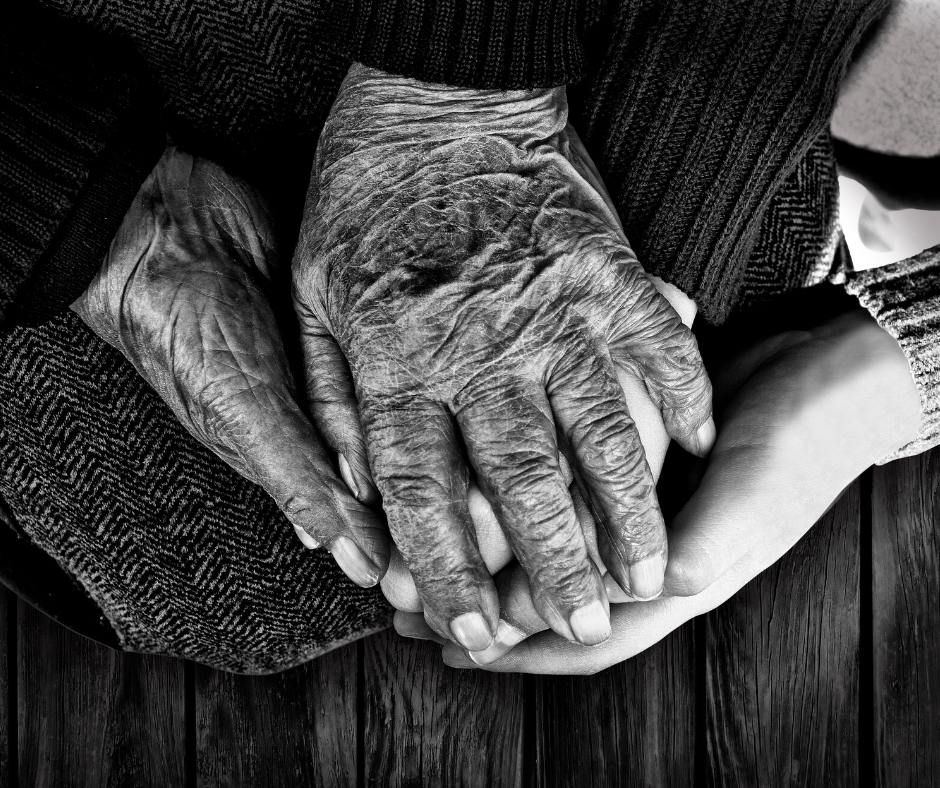
Unveiling the Challenging Plight of Widows: Advocacy Through The Voice of Widows
In the tapestry of human experience, few threads are as intricately woven with sorrow and resilience as that of widowhood. Yet, despite its prevalence across cultures and continents, the plight of widows often remains shrouded in silence, overlooked by mainstream discourse and policy agendas. Today, we lift the veil on this often-neglected demographic, exploring the challenges they face and shedding light on the critical role of advocacy groups like “The Voice of Widows.” Widowhood, with its profound emotional and practical challenges, is an experience that transcends borders and socio-economic divides. Whether in bustling metropolises or remote villages, widows grapple with grief, financial instability, social stigma, and legal hurdles. In many societies, widows find themselves marginalized, stripped of agency, and relegated to the fringes of community life. One of the most pressing challenges widows face is economic vulnerability. The loss of a spouse often plunges them into financial uncertainty, especially if they lack access to education, employment opportunities, or inheritance rights. In patriarchal societies, widows may find themselves dispossessed of property and assets, leaving them destitute and dependent on the goodwill of relatives or charity. Moreover, social stigmatization compounds the already heavy burden of widowhood. Cultural norms and taboos surrounding widowhood can lead to ostracism, discrimination, and even violence. Widows may be blamed for their husband’s death, labeled as cursed, or subjected to harmful traditional practices like widow cleansing or forced remarriage. Such indignities not only erode their sense of self-worth but also hinder their ability to rebuild their lives. Legal barriers further exacerbate the challenges faced by widows. In many jurisdictions, discriminatory laws and customs deny widows the right to inherit property, access healthcare, or make decisions about their own lives. Without legal protections, widows are vulnerable to exploitation, coercion, and abuse, perpetuating a cycle of disadvantage for generations to come. Amidst these formidable challenges, organizations like “The Voice of Widows” emerge as beacons of hope and change. By amplifying the voices of widows and advocating for their rights, these groups strive to dismantle systemic barriers and foster inclusive societies. Through community outreach, education, and policy advocacy, they empower widows to assert their rights, access essential services, and reclaim their dignity. “The Voice of Widows” embodies this spirit of resilience and solidarity, providing a platform for widows to share their stories, seek support, and demand justice. Through grassroots initiatives and partnerships with policymakers, they champion legal reforms, social programs, and economic opportunities tailored to the needs of widows. By fostering networks of mutual support and solidarity, they challenge the isolation and invisibility that often accompany widowhood. As we navigate the complex terrain of widowhood, let us heed the voices of those who have walked this path. Let us recognize the inherent dignity and resilience of widows, and commit ourselves to building a world where no widow is left behind. Through collective action and advocacy, we can ensure that the plight of widows receives the attention and compassion it deserves, transforming grief into empowerment and solidarity. In conclusion, the journey of widowhood is fraught with challenges, but it is also marked by strength, resilience, and the enduring power of community. By standing in solidarity with widows and amplifying their voices, we can create a more just and inclusive world for all.