Introduction: A Story That Rarely Gets Told
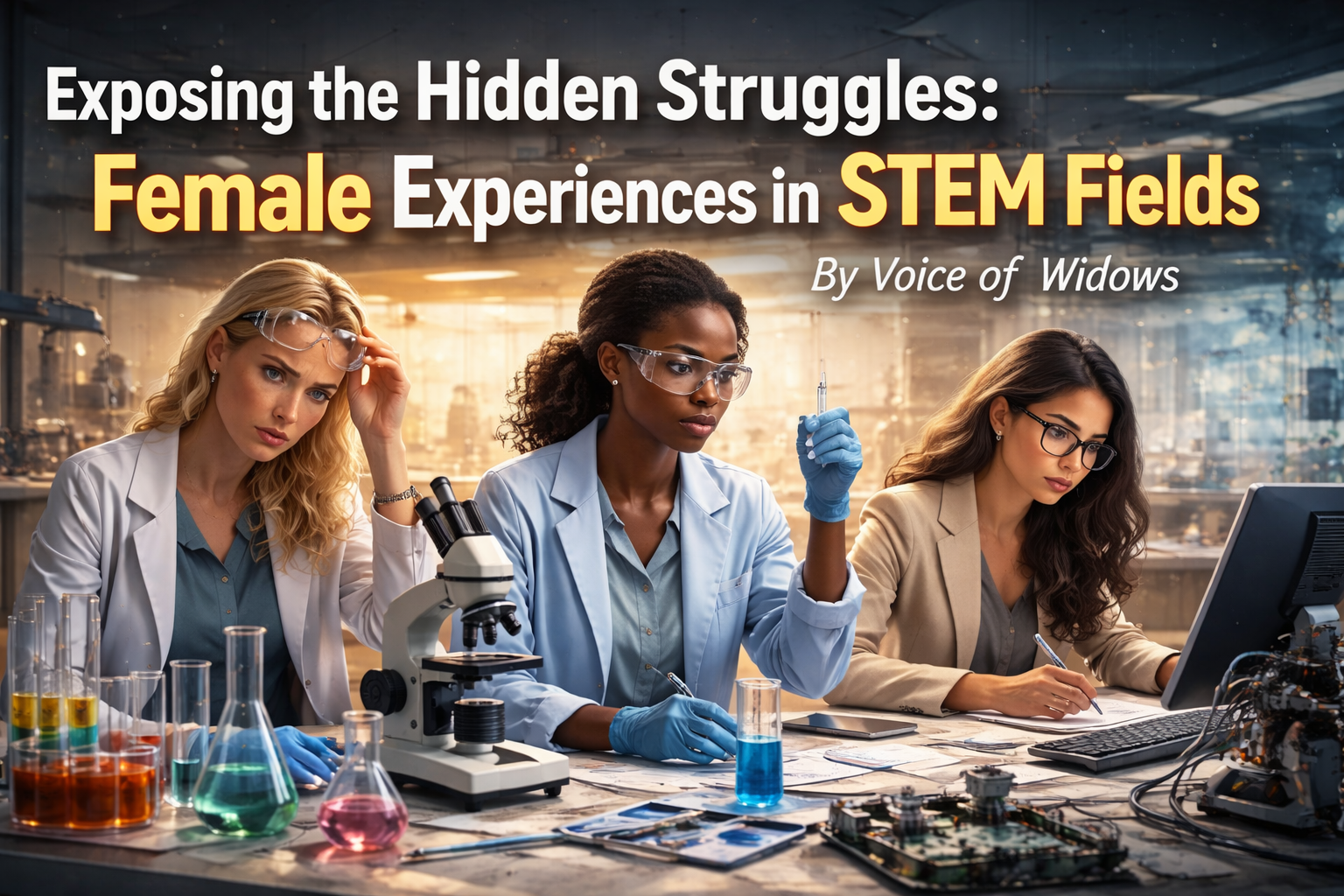
Behind every scientific breakthrough, technological innovation, and engineering marvel, there exists a group whose voices have often been overlooked—women in STEM fields. Science, Technology, Engineering, and Mathematics (STEM) are celebrated as the engines of modern progress, yet the lived experiences of women within these industries reveal a far more complex and challenging reality.
This article uncovers the hidden struggles, emotional battles, systemic barriers, and silent resilience of women in STEM. It is not just a story of inequality—it is also a story of strength, innovation, urgency, and transformation that the world can no longer afford to ignore.
The Silent Reality Behind STEM Success Stories
When we see headlines about groundbreaking discoveries or revolutionary technologies, we rarely see the full picture of who is behind them. Women in STEM often work in environments where they must consistently prove their competence beyond their male counterparts.
Despite qualifications, skills, and achievements, many women face subtle bias in hiring, promotion, and recognition. These biases are not always loud or obvious—they are often hidden in everyday interactions, overlooked ideas, and missed opportunities.
The urgency here is clear: innovation is being shaped in environments that are not fully inclusive, and this directly impacts global progress.
Barriers That Still Exist in Modern STEM Industries
Even in today’s rapidly advancing world, women in STEM face persistent structural challenges:
1. Representation Gap
Women remain underrepresented in engineering, computer science, and advanced research roles. This lack of representation often leads to isolation and limited mentorship opportunities.
2. Workplace Bias
Subtle assumptions about leadership ability, technical competence, and decision-making authority continue to influence workplace dynamics.
3. Unequal Recognition
In many cases, contributions by women are less likely to be credited or highlighted in collaborative environments.
4. Career Progression Challenges
Fewer women reach senior leadership positions in STEM organizations, creating a cycle of underrepresentation at decision-making levels.
5. Work-Life Pressure Expectations
Women often face unrealistic expectations to balance high-performance careers with societal expectations outside the workplace.
These barriers are not just personal challenges—they are systemic inefficiencies that weaken the global STEM ecosystem.
The Emotional Cost: Beyond Data and Statistics
Behind every statistic is a human story. Many women in STEM report feelings of self-doubt, isolation, and the pressure of constant validation. The emotional labor of “proving oneself” repeatedly can be exhausting.
Imposter syndrome is not uncommon, even among highly successful professionals. Women often find themselves questioning whether their achievements are truly earned or simply tolerated.
This emotional burden silently affects creativity, confidence, and long-term career sustainability.
If ignored, the STEM world risks losing brilliant minds not because of lack of talent, but because of lack of support.
Why This Matters More Than Ever
We are living in an era driven by artificial intelligence, biotechnology, climate engineering, and space exploration. The decisions being made today will shape the future of humanity.
If half the population continues to face barriers in contributing fully to STEM, then global innovation is inherently incomplete.
Diversity is not just a moral requirement—it is a scientific advantage. Studies consistently show that diverse teams produce more innovative, accurate, and effective solutions.
The urgency is not symbolic; it is strategic. The future of science depends on inclusivity.
Stories of Strength and Silent Resilience
Despite challenges, women in STEM continue to break barriers every day. They are researchers discovering new treatments, engineers designing sustainable infrastructure, data scientists shaping artificial intelligence, and mathematicians solving complex global problems.
Their resilience is not just inspiring—it is transformative. Many have become mentors, advocates, and pioneers for the next generation.
Each success story is a reminder that capability is never the issue—opportunity is.
The Turning Point: What Needs to Change Immediately
To address these challenges, systemic change is not optional—it is urgent.
Organizations must:
– Build transparent hiring and promotion systems
– Actively support mentorship programs for women in STEM
– Ensure equal recognition for contributions in teams
– Create safe, inclusive, and bias-aware work environments
– Encourage leadership pathways for women in technical fields
Educational institutions must:
– Encourage girls early to pursue STEM subjects
– Remove stereotypes that limit subject choices
– Provide real-world exposure to STEM careers
Society must:
– Challenge outdated gender assumptions in technical fields
– Celebrate women scientists, engineers, and technologists as role models
– Normalize female leadership in innovation-driven industries
The Future of STEM Depends on Inclusion
The future of STEM is not just about faster computers or smarter machines—it is about smarter systems of people. Inclusion is not an optional upgrade; it is the foundation of sustainable innovation.
Every time a woman is encouraged, supported, and recognized in STEM, the world gains another perspective, another solution, and another breakthrough.
The urgency is undeniable: the global innovation race cannot afford to exclude talent based on gender.
Conclusion: A Call to Awareness and Action
The hidden struggles of women in STEM are not isolated stories—they are widespread realities that shape the direction of global progress. Addressing them is not just about fairness; it is about unlocking human potential at its fullest scale.
The question is no longer whether change is needed. The question is how quickly we are willing to act before more talent is lost to silence, bias, and burnout.