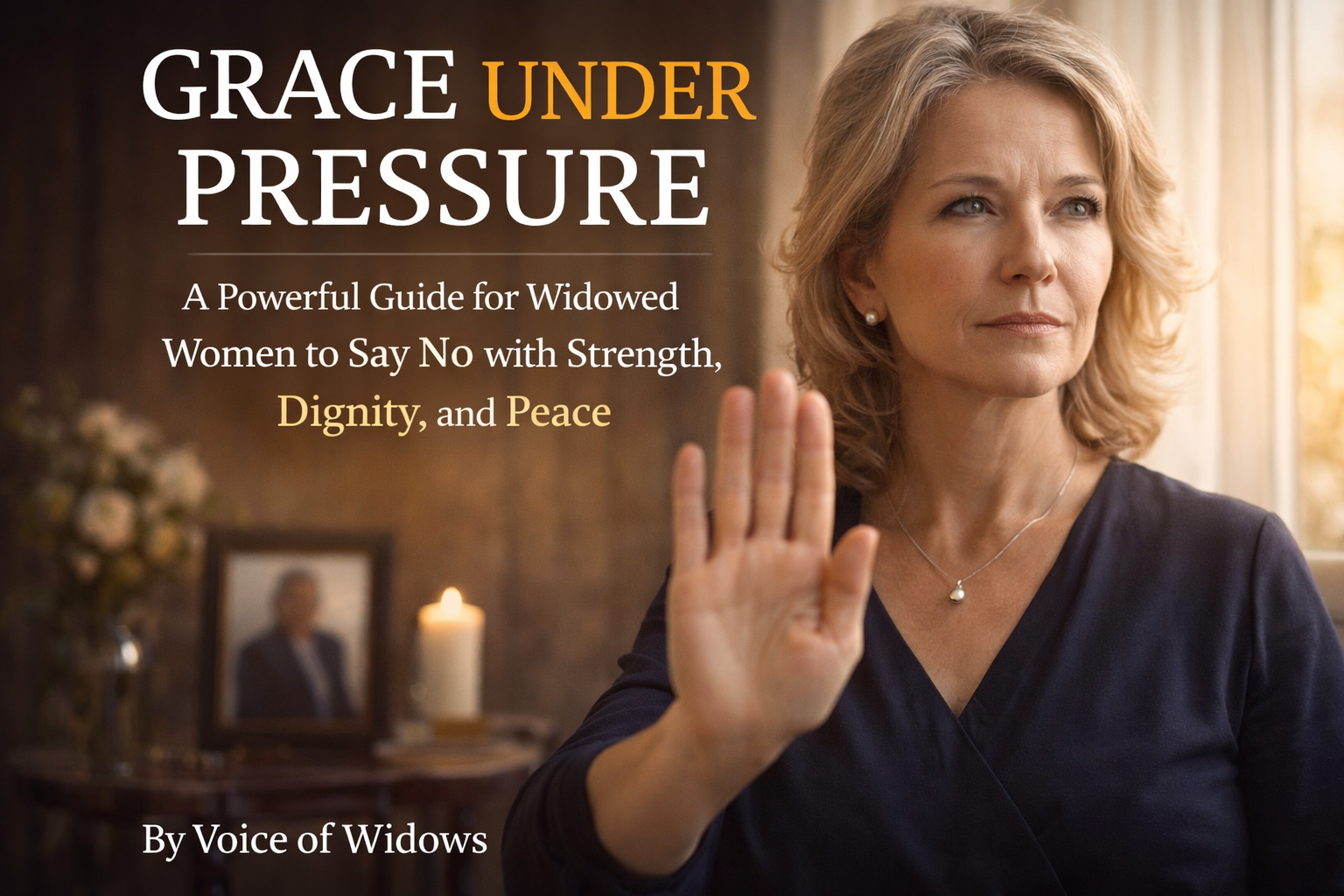
In a world that often expects women to carry endless responsibilities, saying “no” can feel like breaking an unspoken rule. For a widowed woman, this pressure can be even heavier. People may assume you are available, resilient beyond limits, or obligated to help because of your life situation. But here is the truth you must hold onto: your time, energy, and emotional well-being are not public property. They are sacred.
This is not just an article. This is your permission slip. This is your turning point.
Why Saying No Matters More Than Ever
After loss, your life shifts in ways others may never fully understand. You are rebuilding, healing, surviving—and possibly still showing up for others. But constantly saying yes when your heart is tired creates silent damage.
Every unnecessary yes is a hidden no to your own healing.
You are not here to exhaust yourself trying to meet every expectation. You are here to protect your peace and rebuild your life with intention.
The Emotional Barrier: Why It Feels So Hard
Let’s be real. Saying no is not just about words—it’s about emotions.
- Fear of being judged
- Fear of losing relationships
- Fear of seeming weak or unkind
- Pressure to prove strength after loss
But understand this deeply: strength is not in saying yes to everything. Strength is in knowing when to stop.
A Smooth, Respectful Process to Say No Without Guilt
Here is a simple, graceful framework you can follow anytime you need to decline work or requests:
1. Acknowledge with Respect
Start by appreciating the person or opportunity.
Example:
“Thank you so much for thinking of me…”
This shows kindness without commitment.
2. Be Honest but Boundaried
You don’t need to over-explain your life. Keep it clear and grounded.
Example:
“At this point in my life, I need to be mindful of my commitments and energy.”
3. Say No Clearly
Avoid confusing language. Be firm, yet gentle.
Example:
“I won’t be able to take this on right now.”
No long justifications. No guilt-driven explanations.
4. Offer an Alternative (Optional, Not Obligatory)
Only if you genuinely want to.
Example:
“You might want to consider reaching out to someone else who can fully commit.”
5. Close with Grace
End positively, keeping the relationship intact.
Example:
“I truly appreciate your understanding and wish you the best with it.”
Ready-to-Use Message Templates
Use these whenever you feel unsure:
Professional Decline:
“Thank you for reaching out to me. I truly appreciate the opportunity. However, I won’t be able to commit to this at the moment as I am focusing on my current priorities. I hope you understand.”
Soft Emotional Boundary:
“I value your trust in me, but I need to prioritize my personal space and well-being right now. I won’t be able to take this on.”
Firm but Kind:
“I won’t be able to do this, but I sincerely wish you success with it.”
The Inner Shift You Must Make
This is where transformation happens.
Stop asking:
“Will they be upset?”
Start asking:
“Will I be at peace?”
Because peace is your new priority. Not approval. Not validation. Not overextending.
Urgency You Cannot Ignore
If you continue saying yes out of guilt:
- You will burn out emotionally
- You will delay your healing
- You will lose control over your time
- You will silently suffer
But if you start saying no with clarity:
- You regain control
- You rebuild self-respect
- You protect your mental health
- You create space for meaningful opportunities
This is not a small change. This is a life shift.
You Are Allowed to Choose Yourself
Being a widow does not mean becoming endlessly available.
It does not mean sacrificing your boundaries.
It does not mean carrying everyone else’s expectations.
It means you have already carried enough.
Now, it’s time to carry yourself—with strength, dignity, and self-respect.
Final Thought
Every time you say no with grace, you are not closing a door—you are protecting your future.
You are not rejecting people.
You are choosing yourself.
And that is powerful.