Introduction: A Silent Crisis the World Can No Longer Ignore
Reproductive rights and women’s health are not abstract political debates. They are deeply human realities that determine whether a woman lives with dignity, suffers in silence, or survives at all. Across countries, communities, and healthcare systems, access to safe reproductive care remains uneven, delayed, restricted, or denied entirely.
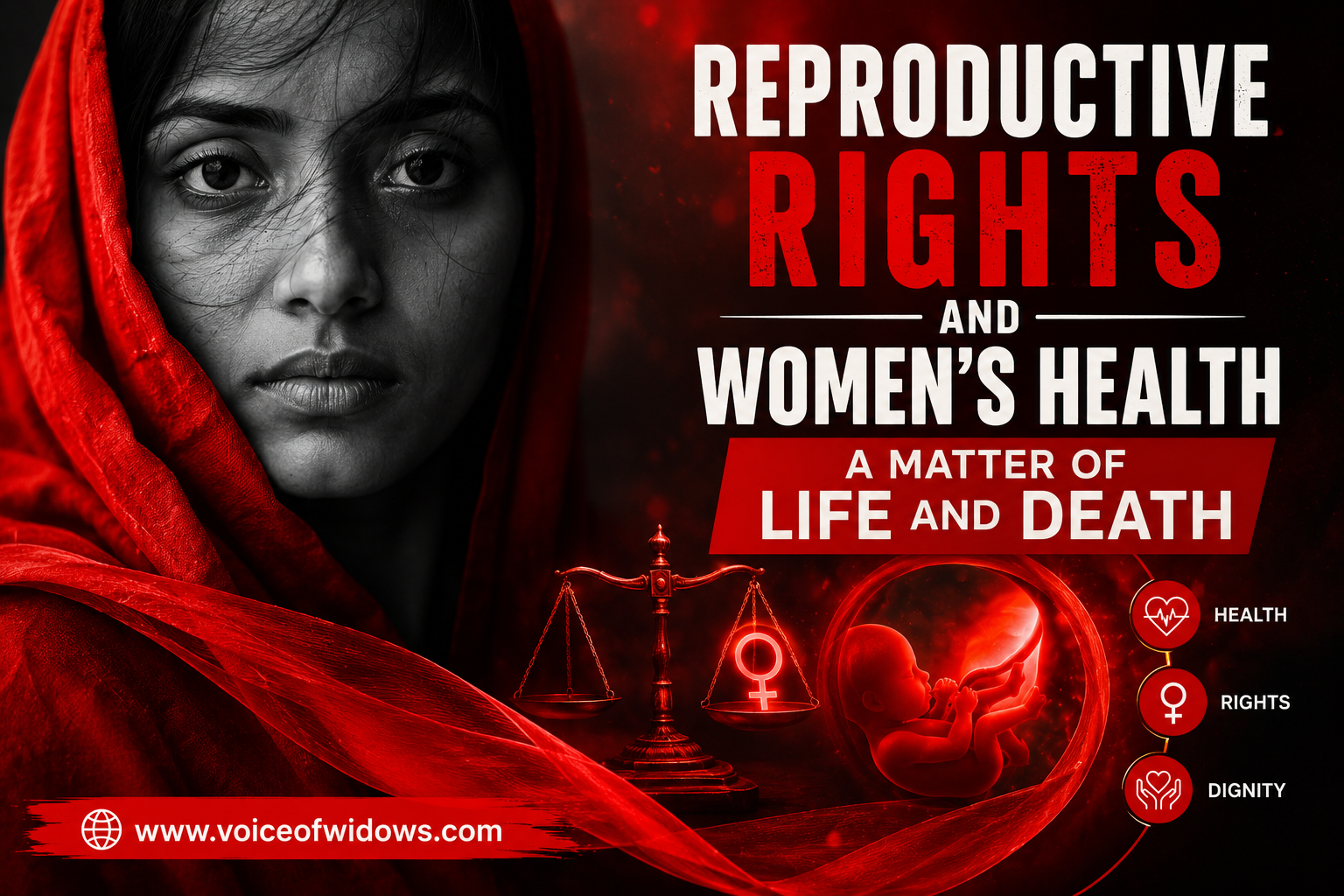
This is not just a policy issue. It is a matter of life and death.
Every delay in care, every restriction in access, and every silence around women’s health compounds into a global crisis that affects families, economies, and generations yet to come.
The Hidden Cost of Restricted Reproductive Healthcare
When reproductive rights are limited, the consequences do not disappear. They multiply in the shadows.
Women face higher risks of untreated complications, unsafe medical procedures, and long-term health damage. In many regions, lack of access to timely care leads to preventable deaths that could have been avoided with basic medical support.
Behind every statistic is a life interrupted: a mother, a daughter, a worker, a student—someone whose future was altered not by illness alone, but by barriers to care.
The real cost of restricted reproductive healthcare is not only medical. It is emotional, social, and generational.
Women’s Health Is Not Optional Healthcare
One of the most dangerous misconceptions in modern healthcare systems is the idea that women’s reproductive health is secondary or conditional.
It is not.
Reproductive health includes essential services such as maternal care, menstrual health management, fertility treatment, contraception access, and emergency medical intervention. When any of these are denied or delayed, the entire health system fails women at its most vulnerable points.
A healthcare system that does not prioritize women’s reproductive health is not complete—it is incomplete by design.
The Emotional Burden Behind Medical Barriers
Beyond physical risks, there is an emotional toll that often goes unspoken.
Women navigating restricted healthcare systems frequently experience fear, isolation, shame, and uncertainty. Decisions that should be medical become moralized, politicized, or stigmatized, forcing individuals to carry burdens no one should face alone.
This emotional strain can lead to long-term mental health challenges, including anxiety, depression, and trauma responses tied to medical experiences.
Healthcare should never feel like a battlefield. Yet for many women, it does.
Why Delayed Care Becomes Dangerous Care
In reproductive health, timing is critical. Delays in diagnosis or treatment can transform manageable conditions into life-threatening emergencies.
Complications during pregnancy, untreated infections, and lack of access to emergency reproductive care are not rare exceptions—they are predictable outcomes in under-resourced or restricted systems.
The danger is not always in the absence of medicine, but in the delay of it.
The Global Inequality in Women’s Health Access
Reproductive rights are not distributed equally across the world.
In some regions, women have comprehensive access to healthcare, education, and preventive services. In others, they face legal, financial, or cultural barriers that limit even basic care.
This inequality creates a widening gap where geography determines survival. A woman’s risk should not increase simply because of where she was born, but in reality, it often does.
The Economic and Social Impact No One Can Ignore
When women’s health is compromised, societies pay a high price.
Healthy women contribute to stronger families, stable workplaces, and resilient economies. When reproductive healthcare fails, productivity declines, healthcare costs rise, and intergenerational poverty becomes harder to break.
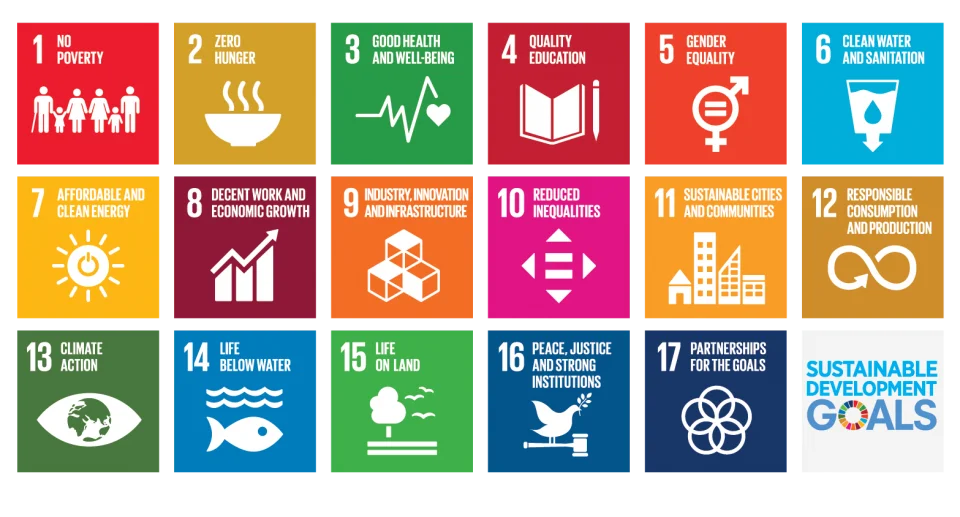
Investing in women’s health is not only a moral responsibility—it is a structural necessity for sustainable development.
The Urgency of Policy Reform and Healthcare Reform
There is an urgent need for systems that treat reproductive health as essential healthcare, not optional service.
This includes:
Ensuring timely access to reproductive medical care
Expanding maternal healthcare infrastructure
Removing barriers that delay emergency treatment
Supporting comprehensive women’s health education
Strengthening preventive care systems
Policy reform is not about ideology. It is about preventing avoidable suffering and death.
A Future Where Women’s Health Is Fully Recognized
A better future is possible, but it requires acknowledgment of a simple truth: women’s reproductive health is foundational to human health.
When women are healthy, societies are healthier. When women are protected, generations are protected. When care is accessible, survival becomes more likely than loss.
The question is no longer whether this issue matters. The question is how long it will take for systems to act accordingly.
Conclusion: A Matter of Life That Demands Action, Not Debate
Reproductive rights and women’s health cannot remain trapped in cycles of discussion without implementation. Every delay in reform translates into real consequences for real people.
This is not only about rights. It is about survival, dignity, and the fundamental responsibility of healthcare systems to protect life without discrimination or delay.
The urgency is clear. The cost of inaction is already visible. What remains is whether action will match the scale of the crisis.