
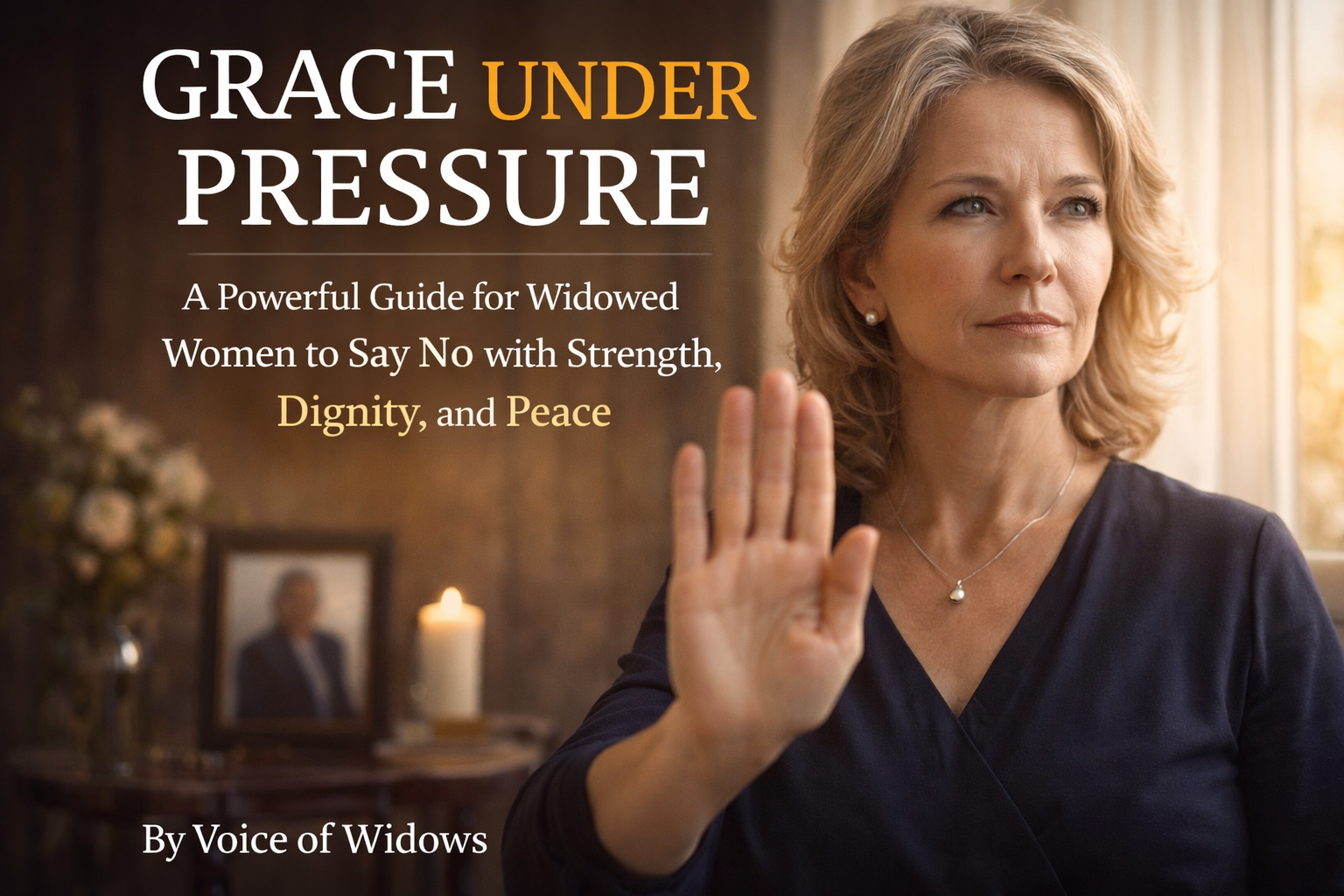
In a world that often expects women to carry endless responsibilities, saying “no” can feel like breaking an unspoken rule. For a widowed woman, this pressure can be even heavier. People may assume you are available, resilient beyond limits, or obligated to help because of your life situation. But here is the truth you must hold onto: your time, energy, and emotional well-being are not public property. They are sacred. This is not just an article. This is your permission slip. This is your turning point. Why Saying No Matters More Than Ever After loss, your life shifts in ways others may never fully understand. You are rebuilding, healing, surviving—and possibly still showing up for others. But constantly saying yes when your heart is tired creates silent damage. Every unnecessary yes is a hidden no to your own healing. You are not here to exhaust yourself trying to meet every expectation. You are here to protect your peace and rebuild your life with intention. The Emotional Barrier: Why It Feels So Hard Let’s be real. Saying no is not just about words—it’s about emotions. Fear of being judged Fear of losing relationships Fear of seeming weak or unkind Pressure to prove strength after loss But understand this deeply: strength is not in saying yes to everything. Strength is in knowing when to stop. A Smooth, Respectful Process to Say No Without Guilt Here is a simple, graceful framework you can follow anytime you need to decline work or requests: 1. Acknowledge with Respect Start by appreciating the person or opportunity. Example:“Thank you so much for thinking of me…” This shows kindness without commitment. 2. Be Honest but Boundaried You don’t need to over-explain your life. Keep it clear and grounded. Example:“At this point in my life, I need to be mindful of my commitments and energy.” 3. Say No Clearly Avoid confusing language. Be firm, yet gentle. Example:“I won’t be able to take this on right now.” No long justifications. No guilt-driven explanations. 4. Offer an Alternative (Optional, Not Obligatory) Only if you genuinely want to. Example:“You might want to consider reaching out to someone else who can fully commit.” 5. Close with Grace End positively, keeping the relationship intact. Example:“I truly appreciate your understanding and wish you the best with it.” Ready-to-Use Message Templates Use these whenever you feel unsure: Professional Decline:“Thank you for reaching out to me. I truly appreciate the opportunity. However, I won’t be able to commit to this at the moment as I am focusing on my current priorities. I hope you understand.” Soft Emotional Boundary:“I value your trust in me, but I need to prioritize my personal space and well-being right now. I won’t be able to take this on.” Firm but Kind:“I won’t be able to do this, but I sincerely wish you success with it.” The Inner Shift You Must Make This is where transformation happens. Stop asking:“Will they be upset?” Start asking:“Will I be at peace?” Because peace is your new priority. Not approval. Not validation. Not overextending. Urgency You Cannot Ignore If you continue saying yes out of guilt: You will burn out emotionally You will delay your healing You will lose control over your time You will silently suffer But if you start saying no with clarity: You regain control You rebuild self-respect You protect your mental health You create space for meaningful opportunities This is not a small change. This is a life shift. You Are Allowed to Choose Yourself Being a widow does not mean becoming endlessly available.It does not mean sacrificing your boundaries.It does not mean carrying everyone else’s expectations. It means you have already carried enough. Now, it’s time to carry yourself—with strength, dignity, and self-respect. Final Thought Every time you say no with grace, you are not closing a door—you are protecting your future. You are not rejecting people.You are choosing yourself. And that is powerful.

Shattering the Silence: The Unspoken Stigma Against Widows And Why It Must End Now
There is a powerful truth many societies still refuse to face: when a woman loses her husband, she is often forced to lose her identity too. The world may speak of compassion, but too often widows are quietly pushed to the margins—judged, pitied, excluded, and blamed for a tragedy they never chose. This stigma is ancient, but it lives loudly in the present. And until we confront it, millions of women will continue to suffer in silence. Widowhood is not only loss. For many women, it becomes a lifetime sentence of isolation. They are labeled instead of understood. They are watched instead of supported. They are questioned instead of comforted. In some communities, widows are told to dim their light, limit their happiness, and live in the shadow of grief indefinitely—as if joy becomes forbidden once their marital status changes. This is not culture. This is injustice. Where Does This Stigma Come From? The stigma against widows is rooted in fear, control, and harmful tradition. In many parts of the world, a woman’s worth has long been tied to marriage. When her husband dies, society treats her as incomplete, unsafe, or even unlucky. Some widows are denied inheritance. Some are stripped of dignity and choice. Some are silently punished for simply surviving. Widowhood should never equal guilt. Yet many women are made to feel responsible for what happened. And the tragedy deepens when children are involved. A grieving mother is expected to be strong, stable, and silent—all at the same time. But who supports her? The Emotional Cost No One Sees Widows experience a double grief: the loss of their partner and the loss of their place in society. Friends disappear. Invitations stop. People whisper. Judgment replaces compassion. And slowly, confidence fades. Imagine walking through life with your identity constantly questioned. Imagine being told you should “know your limits.” Imagine being treated as fragile, yet expected never to fall apart. This is the reality for too many widows. We Must Change This Now Widows do not need pity. They need power, dignity, and opportunity. They deserve: Respect. Inclusion. Financial independence. Emotional safety. Community support. Freedom to rebuild. Every widow is still a woman with dreams, skills, passion, and purpose. Her story did not end. It transformed. And we, as a society, must transform with it. It Starts With Us Speak up when you see discrimination. Include widows in conversations, celebrations, and decisions. Empower them with education, employment, and legal protection. Treat widowhood as a life transition — not a life sentence. When we uplift widows, we uplift families. When we restore their dignity, we restore humanity. Changing mindset is not optional. It is urgent. To Every Widow Reading This You are not defined by loss. You are not a burden. You are not invisible. Your strength is real. Your story matters. Your future is still bright. And you deserve a world that stands beside you — not against you. The Movement Begins With Awareness And Action Let this be the beginning of a louder conversation. A conversation that challenges stereotypes. A conversation that protects dignity. A conversation that finally breaks the silence. Because the stigma against widows should never have existed — and together, we can end it.