

Why Are Widowed Women Still Living in Fear? A woman loses her husband, and in a single moment, her entire world changes. Along with grief, many widows inherit something they never asked for: fear. Fear of financial uncertainty. Fear of social judgment. Fear of loneliness. Fear of exploitation. Fear of an uncertain future. In a world that speaks loudly about equality and progress, millions of widowed women still live silently behind closed doors, carrying emotional wounds and anxieties that society often refuses to acknowledge. The question we must ask ourselves is not whether widows are suffering. The real question is this: Why are widowed women still living with fear in the twenty-first century? The Grief That Never Fully Leaves Losing a life partner is one of the most painful experiences a human being can endure. Marriage is not merely a legal relationship. It is companionship, support, shared responsibilities, dreams, and emotional security. When a husband dies, a widow does not simply lose a spouse. She often loses her closest friend, her emotional anchor, and in many cases, her financial protector. While people around her slowly return to their normal lives, she continues fighting battles that nobody can see. Many widows spend years learning how to survive emotionally while carrying grief that never completely disappears. Financial Fear Becomes a Daily Reality For countless widowed women, financial insecurity becomes an immediate and frightening challenge. Many suddenly become solely responsible for: Paying bills Raising children Managing debts Handling legal documentation Maintaining a household Securing education for their children Women who previously depended on their husbands’ income may find themselves facing overwhelming responsibilities without adequate financial resources. This uncertainty creates constant anxiety. Questions repeatedly enter their minds: How will I support my family? Will I lose my home? Can I afford my children’s education? What happens if I become sick? Financial fear is one of the biggest reasons widowed women continue to live with constant stress and insecurity. Social Stigma Still Exists Despite social progress, widowhood remains surrounded by misconceptions in many communities. Some widows experience exclusion from social events. Some face unwanted pity. Others are unfairly blamed for circumstances beyond their control. Many feel invisible. Even more painful is when society begins to define a woman entirely by her loss rather than recognizing her strengths, abilities, and identity. A widow should never be treated as someone whose life has ended. She is still a mother, daughter, professional, leader, entrepreneur, friend, and valuable member of society. Yet social attitudes often make widows feel isolated and vulnerable. The Fear of Loneliness Loneliness can become one of the deepest wounds of widowhood. After years of sharing everyday experiences with a partner, silence suddenly fills the home. Simple moments become painful reminders: Eating alone Making decisions alone Celebrating milestones alone Facing illness alone Many widows admit that nights are often the hardest because grief becomes louder in silence. Humans are designed for connection, and prolonged loneliness can significantly affect emotional well-being and overall quality of life. Raising Children Alone Creates Enormous Pressure Widowed mothers frequently carry responsibilities that once belonged to two people. They become providers. They become protectors. They become emotional support systems. They become decision-makers. They become both mother and father. The pressure can be overwhelming. Many mothers suppress their own pain because they believe they must remain strong for their children. Yet inside, they continue living with fear and uncertainty. Fear of Exploitation and Vulnerability Widowed women can become targets of exploitation. Some face financial manipulation. Others encounter property disputes. Some experience workplace discrimination. Others struggle with harassment or coercive situations. When emotional vulnerability meets economic insecurity, fear naturally increases. Every society has a responsibility to protect widowed women from abuse, exploitation, and discrimination. No woman should have to fear becoming vulnerable simply because she lost her spouse. Mental Health Challenges Are Often Ignored The emotional impact of widowhood extends far beyond sadness. Many widows experience: Depression Anxiety Sleep difficulties Chronic stress Emotional exhaustion Loss of confidence Unfortunately, mental health support remains inaccessible or socially discouraged in many communities. People often tell widows to be strong and move on. But healing does not happen according to a schedule. Grief demands compassion, understanding, and support. Ignoring emotional pain only deepens suffering. Why Society Must Pay Attention Now Widowed women are not asking for sympathy. They are asking for dignity. They are asking for equal opportunities. They are asking for understanding. They are asking for security. They are asking for the freedom to rebuild their lives without fear. Every family, institution, and community has a role to play. Support systems should include: Emotional counseling Financial education Employment opportunities Legal assistance Community support networks Protection against discrimination Access to healthcare and mental health resources When widowed women are empowered, entire families and communities become stronger. The Conversation We Can No Longer Ignore The fear experienced by widowed women is not a personal failure. It is often the result of social neglect, inadequate support systems, and persistent stereotypes. The measure of a compassionate society is not how it treats people during moments of celebration. It is how it supports individuals during their darkest hours. Widowed women deserve more than sympathy. They deserve respect. They deserve opportunities. They deserve security. Most importantly, they deserve to live without fear. Perhaps the real question is not why widowed women are still afraid. The real question is this: What are we doing today to ensure that no widow has to face tomorrow alone?
Forever Hope: The Unbreakable Power of Living Through Life’s Darkest Storms When Giving Up Feels Easier Than Moving Forward
Life is not always kind. There are moments when the weight of responsibilities feels unbearable. There are days when dreams collapse, relationships break apart, opportunities disappear, and uncertainty clouds every path ahead. In these moments, many people begin to question their purpose, their strength, and even their future. Yet amid the darkness, there is one force that continues to shine. Hope. Hope is not merely a feeling. It is not wishful thinking or blind optimism. Hope is the quiet determination that whispers, “Keep going,” when everything around you says otherwise. Throughout history, humanity has survived wars, economic crises, personal tragedies, illnesses, and unimaginable hardships because hope continued to exist. It became the bridge between suffering and healing, between failure and success, between despair and renewal. Why Hope Matters More Than Ever Modern life moves at an exhausting pace. Social pressures, financial worries, career uncertainty, health concerns, family responsibilities, and emotional struggles affect millions of people daily. Many individuals feel trapped in situations they never expected. They compare themselves to others and wonder why success seems easier for everyone else. The truth is that every successful person has faced moments when they wanted to quit. The difference is that they chose hope over surrender. Hope provides the emotional fuel that keeps people moving forward when results are not immediate. It allows individuals to see possibilities beyond current circumstances. Without hope, challenges become permanent prisons. With hope, challenges become temporary chapters. The Reality of Life’s Struggles Every human being experiences struggle. Some struggle financially. Some struggle emotionally. Some struggle physically. Others struggle spiritually. Pain does not discriminate based on age, status, education, wealth, or background. Life can change overnight. A job can disappear. A relationship can end. A diagnosis can arrive unexpectedly. A dream can fail despite years of effort. These moments often leave people asking difficult questions. Why is this happening? Will things ever improve? Can I survive this? The answer is yes. Not because the journey will be easy, but because human beings possess extraordinary resilience when they choose to hold onto hope. Hope Is Strongest When Circumstances Are Weakest It is easy to feel hopeful when everything is going well. The real test comes during adversity. Hope becomes meaningful when outcomes are uncertain. Anyone can believe when success is guaranteed. The strongest hope emerges when nothing appears to be working. It is the student who continues studying after repeated failures. It is the entrepreneur who builds again after losing a business. It is the patient who continues fighting despite difficult treatments. It is the parent who sacrifices endlessly for their family despite overwhelming challenges. These individuals demonstrate a powerful truth: Hope is not the absence of struggle. Hope is the decision to keep moving despite struggle. Small Steps Create Extraordinary Transformations Many people wait for dramatic breakthroughs. However, lasting transformation usually begins with small decisions. One more attempt. One more application. One more conversation. One more prayer. One more day. The greatest achievements in history were built through consistent progress rather than instant success. Every step forward matters. Every effort counts. Every moment of persistence builds momentum toward a brighter future. Hope teaches us that progress does not have to be perfect to be meaningful. Finding Light During Difficult Seasons When facing hardship, people often focus exclusively on what is missing. Hope encourages a different perspective. Instead of focusing on loss, hope searches for opportunity. Instead of dwelling on failure, hope seeks lessons. Instead of surrendering to fear, hope chooses courage. This shift does not ignore reality. Rather, it empowers individuals to face reality while believing that better outcomes remain possible. The future is rarely determined by today’s circumstances. Many of life’s greatest success stories began during periods that appeared hopeless. The Connection Between Hope and Faith For many people, faith strengthens hope. Faith provides confidence that struggles have purpose, even when the reasons are not immediately visible. Faith reminds us that seasons change. Storms pass. Pain heals. Doors open. Opportunities emerge. The combination of hope and faith creates extraordinary resilience. Together, they enable people to endure challenges that might otherwise seem impossible. Why Giving Up Is Often the Greatest Mistake Many people quit just before their breakthrough. They stop pursuing goals because results are delayed. They abandon dreams because obstacles appear overwhelming. They surrender because progress feels invisible. Yet success often arrives after periods of uncertainty. Growth frequently occurs beneath the surface long before visible results appear. Just because progress cannot be seen does not mean progress is not happening. The seed grows underground before it breaks through the soil. Likewise, personal growth often occurs long before external success becomes visible. Building a Life Anchored in Hope Hope can be strengthened intentionally. Surround yourself with positive influences. Spend time with people who inspire growth. Focus on solutions rather than obstacles. Celebrate small victories. Practice gratitude. Maintain faith during uncertainty. Most importantly, remember that every difficult chapter eventually ends. No storm lasts forever. No darkness remains permanent. No struggle defines an entire life story. Forever Hope: A Message for Anyone Who Feels Lost Today If you are facing difficulties right now, remember this: Your current situation is not your final destination. The challenges you face today are not permanent. Your setbacks do not determine your future. Your failures do not define your worth. Your struggles do not erase your potential. There is still hope. There is still purpose. There is still possibility. And there is still time to create a better tomorrow. Keep believing. Keep growing. Keep moving forward. Because hope has changed countless lives before, and it can transform yours as well. The future belongs to those who refuse to surrender when circumstances become difficult. Hold onto hope. Protect it. Nurture it. Live by it. Because sometimes hope is the very thing that carries us through life’s darkest moments until we finally reach the light waiting ahead. Forever hope is not simply a phrase. It is a way of living. It is a choice. And it may
The Silent Storm No One Sees: 17 Powerful Feelings Every Widow Experiences And Why Healing Takes More Courage Than People Realize
A woman can prepare for many challenges in life, but few experiences compare to the emotional earthquake of losing a life partner. Widowhood is not simply about losing a husband; it is about losing a companion, a confidant, a future, shared dreams, daily routines, and a part of one’s identity. Behind every widow is a story that often remains untold. While friends and family may offer support during the first few weeks, many widows continue fighting silent battles long after the condolences stop arriving. Society often expects healing to happen quickly, yet grief follows no calendar. The emotional journey of widowhood is complex, unpredictable, and deeply personal. Some days bring strength and hope. Other days bring overwhelming sadness and uncertainty. Understanding these emotions can help widows feel less alone and help others provide meaningful support. Understanding the emotional reality of widowhood Grief is not a straight line. It moves in waves. A widow may feel acceptance one day and intense sorrow the next. These emotional shifts are normal and reflect the profound impact of losing a spouse. Below are seventeen powerful feelings many widows experience during their journey. 1. Shock The initial loss often feels unreal. Even when a spouse has been ill for a long time, the reality of death can be difficult to comprehend. Many widows describe feeling numb, disconnected, or unable to process what has happened. The mind struggles to accept a life-changing reality overnight. 2. Deep sadness Sadness becomes a constant companion during the early stages of widowhood. Simple moments can trigger tears—a favorite song, a familiar scent, an empty chair at dinner, or a photograph from happier times. This sadness reflects the depth of love that existed. 3. Loneliness One of the most painful aspects of widowhood is loneliness. The absence of daily conversations, shared routines, and companionship creates a silence that many find overwhelming. Even when surrounded by people, a widow may feel profoundly alone. 4. Fear of the future The future suddenly becomes uncertain. Questions begin to emerge: How will I manage financially? Who will support me emotionally? Can I handle life’s responsibilities alone? Fear often accompanies major life transitions, and widowhood is among the most significant. 5. Anger Many widows experience anger. They may feel angry about the illness, circumstances, medical challenges, or simply the unfairness of losing someone they love. Anger is a natural response to profound loss. 6. Guilt Guilt frequently appears during grief. Widows may replay conversations, decisions, or moments from the past, wondering if they could have done something differently. Many carry burdens that were never theirs to carry. 7. Confusion Widowhood often creates emotional and mental confusion. The brain is processing intense stress while trying to adjust to a completely different reality. Simple decisions can suddenly feel difficult. 8. Anxiety Many widows experience heightened anxiety. The uncertainty of life after loss can lead to constant worry about finances, health, family responsibilities, and future stability. Anxiety is often a reflection of the significant changes taking place. 9. Emotional exhaustion Grieving requires enormous emotional energy. Widows often report feeling physically and mentally drained, even when they have done very little during the day. Healing itself can be exhausting work. 10. Isolation Many widows feel disconnected from others. Friends may not understand their pain. Social invitations may decrease. Conversations can feel awkward. This sense of isolation can deepen grief if left unaddressed. 11. Loss of identity Many women have spent years or decades as wives. When a spouse dies, questions about identity often arise. Who am I now? What does my future look like? What role do I play in the world? Rediscovering oneself becomes an important part of healing. 12. Regret Widows may regret missed opportunities, unfinished conversations, or plans that never became reality. These feelings can linger for years if not acknowledged and processed. 13. Jealousy This emotion is rarely discussed but is surprisingly common. Seeing happy couples together can trigger feelings of envy or sadness. This reaction does not make a widow selfish; it reflects the longing for what has been lost. 14. Hope Amid the pain, hope eventually begins to emerge. Small moments of joy, meaningful friendships, personal growth, and new opportunities can slowly remind widows that life still holds possibilities. Hope often arrives quietly. 15. Strength Many widows discover resilience they never knew they possessed. Managing households, finances, family responsibilities, and personal healing reveals an inner strength that often surprises them. Strength is not the absence of pain; it is moving forward despite it. 16. Gratitude Over time, gratitude can coexist with grief. Many widows begin appreciating the memories, lessons, and years shared with their spouse. The pain of loss remains, but appreciation for the love experienced becomes stronger. 17. Acceptance Acceptance does not mean forgetting. It means acknowledging reality while continuing to live meaningfully. A widow learns that she can carry love and loss together. Acceptance represents a new chapter rather than an ending. Why understanding widowhood matters Millions of women around the world navigate widowhood every year. Yet many continue suffering in silence because society often misunderstands grief. People may encourage widows to “move on” before they are ready. Others may avoid discussing the loss altogether. Both responses can leave widows feeling unheard and unsupported. Understanding these emotions creates compassion. It reminds us that healing takes time and that every widow’s journey is unique. How widows can begin rebuilding their lives While grief never completely disappears, many widows find ways to move forward with purpose and hope. Some helpful steps include: Seeking emotional support from trusted friends and family. Joining widow support groups. Practicing self-care and self-compassion. Creating healthy daily routines. Pursuing new interests and personal goals. Allowing themselves permission to heal at their own pace. Honoring memories while embracing future possibilities. The goal is not to forget the person who was lost. The goal is to learn how to carry that love into the next chapter of life. The hidden truth about widowhood The strongest widows are not those who never
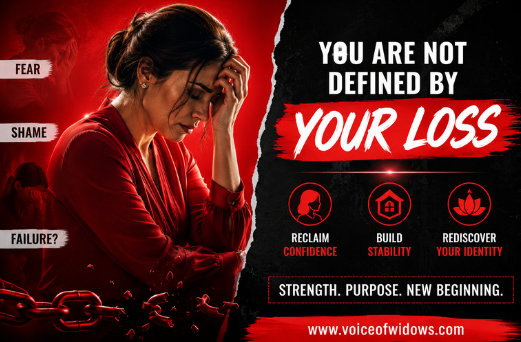
Why So Many Professional Widowed Women Experience Fear, Shame, and a Sense of “Failure” Today and the Hidden Forces Behind It (and How to Reclaim Confidence, Stability, and Identity Again)
In today’s fast-moving world, many professional widowed women find themselves facing an unexpected emotional and psychological weight that goes far beyond grief alone. While society often assumes that success, education, or career stability can shield someone from emotional collapse, the reality is far more complex. Fear, shame, and an internalized feeling of “failure” can quietly take root even in highly capable, financially independent women. These emotions are rarely spoken about openly, yet they shape decisions, confidence, relationships, and long-term life direction in powerful ways. This is not a story of weakness. It is a story of identity disruption, social pressure, emotional silence, and the invisible expectations placed on women who are expected to “stay strong” while rebuilding life after loss. Understanding why this happens is the first step toward changing it. The silent emotional burden behind professional strength Many professional women are conditioned to perform stability. They are expected to manage careers, families, finances, and emotional responsibilities without visible struggle. When widowhood enters this equation, the emotional shock is often compounded by societal expectations that do not pause for personal loss. Instead of being given space to process grief, many feel an immediate pressure to “function normally” again. This gap between internal emotional reality and external expectations creates a psychological split. On the outside, life may appear controlled. On the inside, there may be confusion, exhaustion, and emotional disorientation. This disconnect often becomes the first seed of shame: the belief that “I should be handling this better.” Why fear becomes dominant after loss Fear in this context is not only emotional—it is practical and existential. It often includes: Fear of financial instability, even when resources existFear of social judgment or being treated differentlyFear of starting over in identity, career direction, or relationshipsFear of being perceived as “incomplete” or “less than” in social spaces For many professional widowed women, the loss is not just of a partner, but of a shared future structure. Even strong career identity does not automatically replace emotional and relational grounding. The mind begins to scan for uncertainty everywhere, which increases anxiety and reduces confidence in decision-making. The hidden layer: shame and internalized expectations Shame is often the most silent emotion. It does not always appear as sadness or anger. Instead, it shows up as withdrawal, overthinking, hesitation, or self-criticism. Some of this shame is internally generated, but much of it is socially absorbed. Cultural narratives often define widowed women through limitation rather than possibility. Even in modern professional environments, subtle bias and unspoken assumptions can reinforce the feeling of being “redefined by loss.” Over time, this can lead to internal questioning such as: “Am I still seen the same way?” “Do I still belong in the same spaces?” “Have I lost value in the eyes of others or even myself?” These questions are not irrational—they are responses to environmental signals, not personal failure. Why the feeling of “failure” is actually misinterpretation The sense of failure many experience after widowhood is rarely about actual capability or achievement. It is more often a mismatch between expected life timelines and reality. Society tends to promote linear life narratives: education, career growth, marriage, stability, continuation. When life disrupts that structure, the brain often interprets deviation as failure rather than transformation. In truth, what is happening is not failure but forced reconstruction of identity under emotional pressure. That distinction is critical. One implies deficiency. The other implies adaptation. How to begin shifting this internal experience Rebuilding after widowhood in a professional context is not about “moving on quickly.” It is about rebuilding internal alignment so that external functioning does not come at the cost of emotional fragmentation. A few key shifts matter deeply: Reframing identity beyond relational statusInstead of seeing identity as defined by marital history, it helps to reconnect with personal values, skills, and long-term purpose that existed before and beyond the relationship. Separating societal perception from self-definitionMuch of shame is reinforced by imagined judgment. Learning to separate external assumptions from internal truth reduces emotional distortion. Allowing grief without performanceMany professionals try to “manage” grief like a task. But grief is not linear productivity—it is emotional integration. Space for processing is not optional; it is necessary for stability. Rebuilding decision confidence graduallyFear often reduces trust in personal judgment. Starting with small, low-risk decisions helps rebuild internal certainty over time. Re-establishing support systems without dependency shameSupport is not weakness. Isolation often intensifies fear and self-doubt. Healthy connection is part of emotional recovery, not a sign of regression. The deeper truth most people miss Widowhood in professional women does not erase capability. It disrupts emotional equilibrium in a way that forces identity reorganization. The fear, shame, and feeling of failure are not indicators of inadequacy—they are signals of transition without sufficient emotional scaffolding. When these emotions are understood instead of suppressed, they begin to lose authority over life choices. What remains underneath is not brokenness, but continuity of identity waiting to be restructured with clarity rather than pressure. The shift does not come from becoming someone new. It comes from integrating loss into identity without letting it define the entirety of it.
The Hidden Traps of Grief: What Not to Do When Healing From Loss
Grieving is one of the most profound and personal experiences a human can face. The loss of a loved one, the end of a relationship, or even the shattering of a dream can leave a person feeling adrift, overwhelmed, and emotionally raw. Yet, while grief is universal, many of us unknowingly fall into patterns that slow our healing, deepen our pain, or even create long-term emotional scars. Understanding what not to do while grieving is just as critical as knowing how to care for yourself in the midst of sorrow. 1. Do Not Suppress Your EmotionsOne of the most common mistakes is bottling up feelings. Society often pressures us to “be strong” or “move on,” but grief is not a race. Suppressing sadness, anger, guilt, or confusion can lead to long-term emotional and even physical consequences. Cry, scream, write, or speak about your feelings — let them flow instead of burying them. 2. Avoid Isolating Yourself CompletelyIt might feel natural to retreat from the world, but isolation can intensify grief. Human connection is a powerful tool for healing. Surround yourself with understanding friends, family, or support groups. Even a brief conversation or shared silence with someone who cares can remind you that you are not alone in your pain. 3. Do Not Rush the ProcessGrief has no timeline. Forcing yourself to “get over it” quickly or comparing your journey to others’ can create unnecessary pressure. Each person’s process is unique. Give yourself permission to take the time you need to grieve, reflect, and slowly rebuild. 4. Avoid Self-Destructive BehaviorsTurning to alcohol, drugs, excessive work, or other harmful coping mechanisms might feel like temporary relief, but they only delay healing and can create additional problems. Instead, focus on nurturing activities: journaling, walking in nature, meditation, or practicing gratitude for small daily blessings. 5. Do Not Ignore Professional Help if NeededGrief can sometimes lead to depression, anxiety, or prolonged emotional distress. Seeking therapy or counseling is not a sign of weakness; it is an act of courage. A professional can provide guidance, coping strategies, and a safe space to process intense emotions. 6. Avoid Overlooking Your Physical HealthEmotional pain often manifests physically — disrupted sleep, fatigue, or weakened immunity. Maintaining a basic routine with proper nutrition, hydration, and gentle exercise can support your emotional healing. Your body and mind are interconnected; caring for one aids the other. Grief is undeniably painful, but it is also an opportunity for transformation. By recognizing what not to do while grieving, you can protect yourself from unnecessary suffering and create a pathway toward acceptance, resilience, and renewed purpose. Remember: healing does not mean forgetting; it means learning to live fully while honoring what you have lost.