

In the world of research funding, numbers often appear neutral. Grant applications are reviewed, scored, and either approved or rejected. But behind this seemingly objective system lies a pattern that is becoming increasingly difficult to ignore: women researchers experience disproportionately higher grant rejection rates in many academic and scientific funding systems. This is not just a statistical concern. It is a structural issue that affects innovation, slows scientific progress, and quietly reshapes who gets to define the future of knowledge. The Hidden Reality Behind Grant Rejections On paper, grant review processes are designed to be fair. Panels evaluate proposals based on originality, methodology, feasibility, and impact. Yet multiple studies across academic institutions and funding bodies reveal that proposals led by women are often judged more harshly, especially when evaluators are aware of the applicant’s identity. The problem is not always explicit bias. In many cases, it is subtle: tone perception, leadership assumptions, and credibility framing. Research proposals written by women are more likely to be described as “less ambitious” or “too cautious,” even when the scientific merit is identical to those written by men. This creates a quiet but persistent disadvantage that compounds over time. Why This Matters More Than It Seems Grant funding is not just money. It is access. It determines who gets labs, who builds teams, who publishes influential papers, and who becomes a leader in their field. When women researchers face higher rejection rates, the impact extends far beyond individual careers: Entire fields lose diversity of thought Research priorities become skewed Innovation potential is reduced Early-career women scientists are pushed out of academia The system does not just filter proposals. It shapes the future of science itself. The Emotional Cost Behind the Data Behind every rejected grant is not just a failed application but often years of preparation, unpaid intellectual labor, and emotional investment. Many women researchers report the same pattern: repeated rejection despite strong peer feedback, delayed career progression, and the constant pressure of needing to “prove” competence more than their male counterparts. Over time, this leads to what many describe as silent attrition—highly capable researchers leaving academia not because they lack ability, but because the system repeatedly signals that their work is less valued. The Structural Gaps Nobody Talks About The issue is not simply individual bias. It is embedded in structural layers: Review panels lacking gender diversity Evaluation criteria favoring traditionally “masculine-coded” research language Network-based funding advantages that exclude newcomers Citation and visibility gaps that influence perceived credibility Institutional inertia resisting reform Even when policies are introduced to improve fairness, implementation gaps often dilute their impact. What Needs to Change Now Solving this problem is not about lowering standards. It is about correcting distortion in evaluation. Funding systems must move toward: Blind review processes wherever possible Transparent scoring criteria and feedback Active monitoring of gender-based funding outcomes Training reviewers to recognize unconscious bias patterns Supporting early-career women researchers with targeted funding pathways Without these changes, the gap will continue to widen silently under the appearance of neutrality. The Bigger Question We Must Ask If science is meant to be the pursuit of truth, then we must ask an uncomfortable question: How much knowledge are we losing simply because the system is not seeing talent equally? The issue of grant rejection rates among women researchers is not just an equality issue. It is a scientific integrity issue. Because when half of the intellectual potential faces hidden barriers, the entire system operates below its true capacity. Change is not optional anymore. It is overdue.
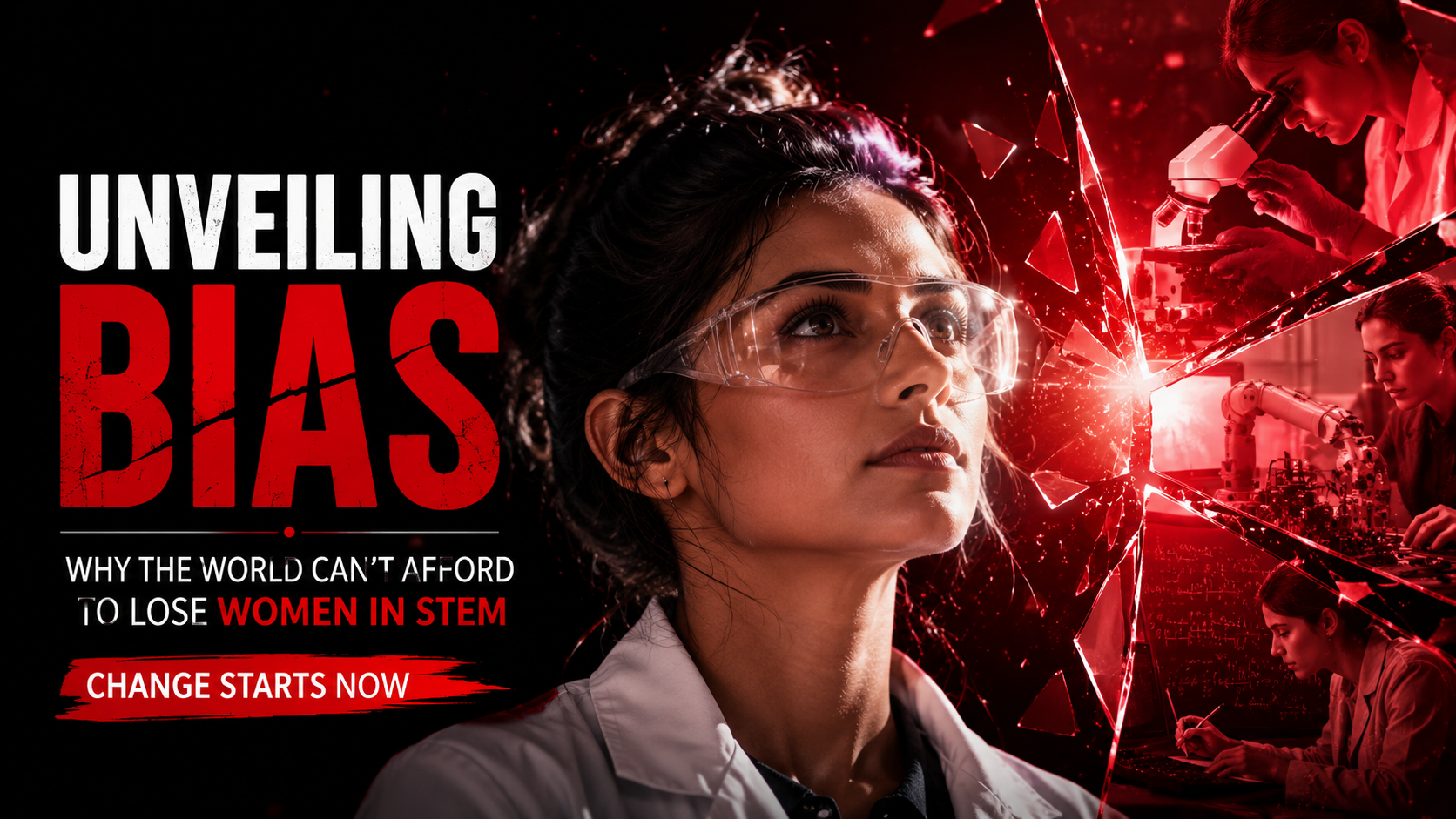
Unveiling Bias: Why the World Can’t Afford to Lose Women in STEM—and What Must Change Now
In every breakthrough that defines modern civilization—from artificial intelligence to medical innovation, from climate modeling to space exploration—there is a silent imbalance that continues to shape outcomes more than we admit. Women in STEM (Science, Technology, Engineering, and Mathematics) are still underrepresented, undervalued, and often overlooked despite their proven capabilities and contributions. This is not just a diversity issue. It is a global innovation crisis. The urgency is real, and the cost of ignoring it is growing every day. The Hidden Barrier No One Talks About Loud Enough Bias in STEM does not always appear as open discrimination. More often, it is subtle, structural, and deeply embedded in systems that appear neutral on the surface. It shows up when: Women’s ideas are less likely to be credited in research teams Leadership roles in tech and engineering are still overwhelmingly male-dominated Young girls are discouraged from pursuing math and science due to stereotypes Funding opportunities favor networks that exclude diverse voices Over time, these patterns create a pipeline problem—not because women lack ability, but because systems fail to retain and elevate them. Why This Matters More Than Ever in a Rapidly Changing World We are entering an era defined by artificial intelligence, biotechnology, automation, and space innovation. These fields are not just shaping industries—they are shaping humanity’s future. When half of the population is underrepresented in building that future, the consequences are far-reaching: Innovation becomes narrower and less inclusive Products and technologies risk being designed without diverse user perspectives Economic growth potential is left unrealized Global problem-solving capacity is weakened The question is no longer whether we can afford to support women in STEM. The real question is whether we can afford not to. The Early Drop-Off: Where the System Quietly Fails One of the most critical issues begins long before careers start. Many young girls show strong interest and performance in science and mathematics during early education. However, as they progress through school and into higher education, participation drops sharply. Why? Because interest alone is not enough when: Role models are scarce Classroom expectations are influenced by unconscious bias Confidence is undermined over time Career pathways are not clearly supported This is where the system quietly loses talent—not due to capability, but due to environment. The Workplace Reality: Progress That Is Still Incomplete Even for women who enter STEM careers, challenges often continue. Common barriers include: Unequal access to leadership opportunities Pay gaps that persist across industries Workplace cultures that lack inclusivity Higher scrutiny and lower tolerance for mistakes compared to peers Despite these challenges, women continue to lead groundbreaking work in fields like medicine, engineering, data science, and environmental research. The issue is not performance—it is recognition and opportunity. The Economic Argument That Cannot Be Ignored Supporting women in STEM is not just a moral or social priority. It is an economic necessity. Research consistently shows that diverse teams: Solve problems faster Produce more innovative solutions Improve organizational performance Enhance long-term profitability When industries exclude or limit women, they are effectively reducing their own competitive advantage. The global economy is evolving too fast for outdated talent systems to remain in place. What Real Change Actually Looks Like Awareness alone is not enough. Action must be structural, consistent, and measurable. Real progress includes: Early education reform that encourages girls in STEM from a young age Mentorship programs that connect students with female professionals in science and technology Transparent hiring and promotion systems that reduce bias Funding support for women-led research and startups Workplace policies that support retention, flexibility, and growth Change does not happen through isolated initiatives. It happens when inclusion becomes part of how systems operate by default. The Role of Society: Beyond Institutions and Into Culture While institutions play a major role, cultural attitudes are equally powerful. Stereotypes about “who belongs” in STEM still influence: Career choices Family encouragement Teacher expectations Peer perception Changing this requires consistent visibility of women succeeding in these fields—not as exceptions, but as normal leaders, innovators, and experts. Representation is not symbolic. It is transformative. A Future That Depends on Inclusion The future of STEM is not predetermined. It is being built right now—in classrooms, laboratories, tech companies, and research institutions around the world. If current patterns continue, the gap will persist. But if deliberate action is taken, the next generation could inherit a system that finally reflects true global talent. This is not about replacing one group with another. It is about unlocking the full capacity of human intelligence, creativity, and problem-solving. And that requires everyone. Final Thought The world does not lack talent. It lacks equal access to opportunity. Supporting women in STEM is not an optional improvement—it is a necessary correction for a system that is still evolving toward fairness and efficiency. The urgency is not in the future. It is already here.
Five Women’s Rights That Shape Freedom, Dignity, and the Future of Humanity
Introduction: Why women’s rights still demand urgent attention Around the world, the conversation about women’s rights continues to grow louder, stronger, and more urgent. Women have always been central to families, communities, economies, and cultures, yet their rights have historically been ignored, restricted, or denied. Even today, millions of women face barriers that prevent them from living freely, safely, and with dignity. Understanding the most important women’s rights is not only about acknowledging history. It is about recognizing the present reality and taking action to build a fairer future. Societies that protect women’s rights become healthier, wealthier, more peaceful, and more innovative. When women thrive, communities rise. This article explores five of the most important women’s rights that define equality, justice, and human dignity. These rights are not privileges. They are fundamental freedoms that every woman deserves regardless of culture, nationality, religion, or social status. 1. The right to education Education is one of the most powerful tools a woman can possess. It transforms lives, opens doors to opportunity, and breaks cycles of poverty. When a girl receives an education, she gains knowledge, confidence, and the ability to make informed decisions about her life. Yet millions of girls around the world are still denied access to education due to poverty, cultural barriers, early marriage, conflict, or discrimination. Without education, women are more vulnerable to exploitation, limited employment opportunities, and reduced participation in society. Educating women does not only empower individuals; it strengthens entire communities. Studies repeatedly show that educated women are more likely to invest in their families’ health, ensure their children attend school, and contribute to economic growth. Every classroom that welcomes girls is a step toward equality. Every book opened by a young girl is a quiet revolution against inequality. Protecting the right to education means investing in the future of humanity itself. 2. The right to live free from violence Safety is a basic human right. No woman should live in fear of violence in her home, workplace, community, or online spaces. Unfortunately, gender-based violence remains one of the most widespread human rights violations worldwide. Violence against women takes many forms, including domestic abuse, sexual harassment, human trafficking, forced marriage, and harmful cultural practices. These violations destroy lives, silence voices, and limit women’s ability to participate fully in society. Protecting women from violence requires strong laws, effective law enforcement, community awareness, and cultural change. It requires societies to reject harmful attitudes that normalize abuse or blame victims. When a woman can walk freely, speak freely, and live without fear, she gains the power to pursue education, careers, leadership, and dreams. Ending violence against women is not only a moral responsibility; it is a foundation for peaceful societies. 3. The right to equal pay and economic opportunity Economic independence is a cornerstone of empowerment. Women must have equal access to employment opportunities, fair wages, financial resources, and the ability to own property or start businesses. Despite progress, the gender pay gap still exists in many parts of the world. Women often earn less than men for the same work and face barriers to career advancement, leadership roles, and entrepreneurship. When women are denied economic equality, families and economies lose enormous potential. Women represent half of the global population and a powerful engine for economic growth. Unlocking their potential benefits everyone. Supporting women in the workforce means ensuring fair wages, safe workplaces, maternity protections, access to childcare, and equal opportunities for leadership. It means recognizing that economic justice is a human right, not a privilege. A financially empowered woman gains independence, security, and the ability to shape her own future. 4. The right to participate in political and social decision-making A society cannot call itself democratic if women are excluded from leadership and decision-making. Women have the right to vote, run for political office, participate in policymaking, and influence decisions that affect their lives. For centuries, women were denied political representation and treated as passive observers of governance. Although progress has been made, women remain underrepresented in parliaments, governments, and leadership positions across the world. When women participate in leadership, policies become more inclusive, balanced, and responsive to community needs. Women leaders often prioritize education, healthcare, social protection, and peace-building initiatives. Encouraging women’s participation in politics and public leadership is not simply about fairness. It is about creating stronger institutions and more representative societies. The voices of women must not only be heard. They must shape the decisions that define the future. 5. The right to health and bodily autonomy Women must have the right to make decisions about their own bodies, health, and well-being. This includes access to healthcare, maternal care, reproductive health services, and the ability to make personal medical decisions without coercion. Across the world, women still face barriers to healthcare services, particularly in rural or economically disadvantaged areas. Lack of access to proper medical care increases maternal mortality rates and prevents women from living healthy lives. Bodily autonomy also means that women have the right to consent, the right to reject forced practices, and the right to live with dignity and personal freedom. When women control their health choices, they gain the power to pursue education, careers, family planning, and personal aspirations. Health rights are deeply connected to economic freedom, social participation, and long-term well-being. Protecting women’s health is not just a medical issue. It is a matter of human dignity and fundamental rights. The urgent responsibility of our generation Women’s rights are human rights. Yet progress does not happen automatically. Every generation must actively protect, strengthen, and expand these freedoms. The five rights discussed here represent pillars of equality: education, safety, economic opportunity, political participation, and health autonomy. Without these rights, true equality cannot exist. Governments must create stronger laws. Institutions must enforce protections. Communities must challenge harmful traditions. Families must raise daughters with confidence and sons with respect for equality. Most importantly, individuals must refuse silence when injustice occurs. The future of women’s rights depends on awareness, courage, and action. Every conversation,
From Silence to Strength: How Women Achieved Equality and Why the Fight Still Demands Action
How did women achieve equality?Women achieved equality through centuries of resistance, sacrifice, courage, organized movements, legal battles, education, economic participation, and relentless voices that refused to stay silent. Equality was not handed over. It was demanded. It was fought for. It was earned. But equality is not a finished story. It is still being written. This article explores how women achieved equality, the movements that changed history, the global impact of those struggles, and why the responsibility now belongs to this generation. The Long Road From Exclusion to Empowerment For centuries, women across the world were denied fundamental rights. They were excluded from voting, owning property, accessing higher education, leading businesses, and participating in politics. In many societies, their identities were legally tied to fathers or husbands. The idea of gender equality did not begin with modern campaigns. It began in quiet resistance — women educating themselves in secret, leading revolutions behind the scenes, organizing communities, and challenging unfair systems. Real change started when voices became movements. The Rise of the Women’s Suffrage Movement One of the most defining milestones in women’s equality was the women’s suffrage movement. In countries like the United States, the United Kingdom, and New Zealand, women organized massive campaigns demanding the right to vote. The ratification of the 19th Amendment in 1920 in the United States granted women the right to vote. In 1893, New Zealand became the first self-governing country to allow women to vote in national elections. These victories were not peaceful gifts. Women were arrested. Mocked. Imprisoned. Some were force-fed during hunger strikes. Yet they continued. The right to vote was not just about ballots. It was about recognition. It was about being seen as full citizens. Education: The Foundation of Equality Education became the most powerful weapon in achieving gender equality. When women gained access to schools and universities, everything changed. Educated women entered professions previously closed to them — law, medicine, science, journalism, business leadership. Knowledge dismantled stereotypes that claimed women were intellectually inferior. Today, in many parts of the world, women outperform men academically. Yet in some regions, girls still struggle for access to basic education. This proves equality requires constant vigilance. When you educate a woman, you elevate a generation. Workplace Rights and Economic Independence Economic independence was another turning point. During world wars, women filled industrial jobs while men were deployed. They proved competence beyond traditional domestic roles. Later movements demanded equal pay for equal work, maternity protections, anti-discrimination laws, and workplace safety reforms. The feminist movements of the 1960s and 1970s amplified demands for equal employment opportunities and reproductive rights. Policies began to shift. Laws began to protect. Yet today, the global gender pay gap still exists. Leadership representation remains unequal. Equality in law does not always mean equality in practice. Global Human Rights and International Recognition The global conversation around women’s equality intensified in the 20th century. Organizations like United Nations formally recognized women’s rights as human rights. The Convention on the Elimination of All Forms of Discrimination Against Women (CEDAW), adopted in 1979, became an international bill of rights for women. International Women’s Day, celebrated every March 8, became a global reminder that equality is a collective mission, not a regional issue. Women’s equality moved from being a “women’s issue” to a human development priority. How Social Movements Changed Culture In recent decades, digital activism accelerated change. Movements such as #MeToo exposed systemic abuse and demanded accountability across industries. Social media gave ordinary women extraordinary power. Stories that once remained hidden became global headlines. Culture shifted. Conversations about consent, workplace harassment, representation, and inclusion became mainstream. Equality was no longer whispered. It was trending. Key Factors That Helped Women Achieve Equality To answer clearly and directly: Women achieved equality through: Organized social movements and activism Legal reforms and constitutional amendments Access to education and literacy Economic participation and entrepreneurship Political representation and voting rights International human rights frameworks Media visibility and digital advocacy Collective solidarity across generations Each factor built on the other. Equality was never a single event. It was a chain reaction of courage. Is Equality Fully Achieved Today? This is the urgent question. In many countries, women lead corporations, governments, and global institutions. Female presidents, prime ministers, scientists, athletes, and entrepreneurs are reshaping leadership models. Yet: Gender pay gaps persist Violence against women remains widespread Representation in top political offices is still limited Access to education and healthcare remains unequal in many regions Equality has advanced, but it is not universal. The fight is not over. Why This Generation Must Care You are living in the results of someone else’s sacrifice. The rights women enjoy today — voting, working, studying, owning property, speaking freely — were paid for by generations who endured humiliation, imprisonment, and discrimination. Progress can move forward. But it can also move backward. History proves one thing: rights unprotected can be rights undone. Gender equality is not just about women. It is about economic growth, social stability, innovation, and justice. Countries with higher gender equality show stronger economic performance and better social outcomes. This is not only a moral issue. It is a development issue. What Action Looks Like Today If you are asking, “What can I do?” — here is the answer: Support equal pay policies Encourage girls’ education Challenge gender stereotypes in daily conversations Promote women into leadership roles Advocate for safe workplaces Vote for policies that protect human rights Teach the next generation about equality Equality grows where awareness lives. The Emotional Truth Behind every law passed was a woman who refused silence.Behind every right gained was a story of resistance.Behind every opportunity today stands a legacy of courage. Equality was not achieved in comfort. It was achieved in confrontation. And the question is no longer how women achieved equality. The question now is:Will we protect it?Will we expand it?Will we defend it when it is challenged? History is watching.

The Forgotten Voices: How Kashmir’s Half-Widows Are Silently Denied Their Basic Property Rights
In the heart of Kashmir, where mountains echo resilience and rivers whisper stories of loss, there exists a haunting silence — the silence of the half-widows. These are the women whose husbands have disappeared in conflict, leaving them trapped between hope and despair, between social identity and legal invisibility. For decades, they have waited, not just for their loved ones, but for justice, recognition, and their most basic human right — the right to property. A Life Suspended Between Two Worlds For a Kashmiri woman whose husband goes missing, life does not move forward. She is neither considered a widow nor treated as a wife. This in-between status — known as a “half-widow” — strips her of legal, financial, and emotional stability.Under existing laws and societal norms, property rights depend heavily on the husband’s status — alive or dead. When his fate remains unknown, the woman remains in limbo. She cannot inherit land, transfer ownership, or claim her share. Bureaucracy hides behind technicalities, and families, at times, hide behind customs that deny women their due. What begins as a personal tragedy becomes a systemic injustice — one that quietly erases the dignity and rights of thousands of Kashmiri women. The Weight of Waiting Many half-widows in Kashmir live decades without closure. They fight a daily battle — emotionally, financially, and socially. Without their husband’s death certificate, they cannot claim property, remarry, or even access government support in many cases.In a region where conflict has redefined normalcy, these women remain invisible victims of legal loopholes and cultural constraints. Their struggles are not just about land or inheritance — they are about identity, belonging, and survival. The law may speak of equality, but its silence on their plight is deafening. Without reforms that recognize the unique realities of half-widows, the promise of justice remains an illusion. Society’s Role: Tradition or Suppression? Beyond legal failure lies a deeper, more painful truth — the societal mindset. Many families deny half-widows their rights under the pretext of protection or reputation. They are told to wait “a few more years,” to stay silent, to remain patient.But patience is not justice.When a woman loses access to her home, land, or savings, she loses more than property — she loses agency. Denying her property rights is denying her independence, dignity, and voice. A Call for Urgent Reform It is time to break the silence.Kashmir cannot claim progress while half-widows continue to be denied their legal and moral rights. Policymakers, activists, and society at large must step forward with courage and compassion. Legal reforms must establish clear timelines for declaring missing persons and empower half-widows to claim inheritance rights without bureaucratic hurdles. Community awareness must challenge traditional biases and encourage families to support women’s legal entitlements. Civil society and NGOs must continue documenting their stories and advocating for their inclusion in public policy. Every land right denied to a half-widow is a wound to justice. Every silence maintained is complicity. The Human Cost of Neglect Behind every statistic is a story — a mother raising children alone, a woman fighting for a roof over her head, a life left in uncertainty. The half-widows of Kashmir remind us that the cost of conflict is not only measured in lives lost but also in lives left behind. Recognizing their property rights is not charity — it is justice long overdue. It is time the system saw them not as “half” of anything, but as full citizens deserving of dignity, rights, and peace. Act Now — Because Justice Delayed Is Justice Denied Let this not be another story forgotten in the pages of reports and policy debates. The women of Kashmir have waited long enough. It’s time to listen, to act, and to rewrite the laws of silence. Their right to property is their right to exist.