
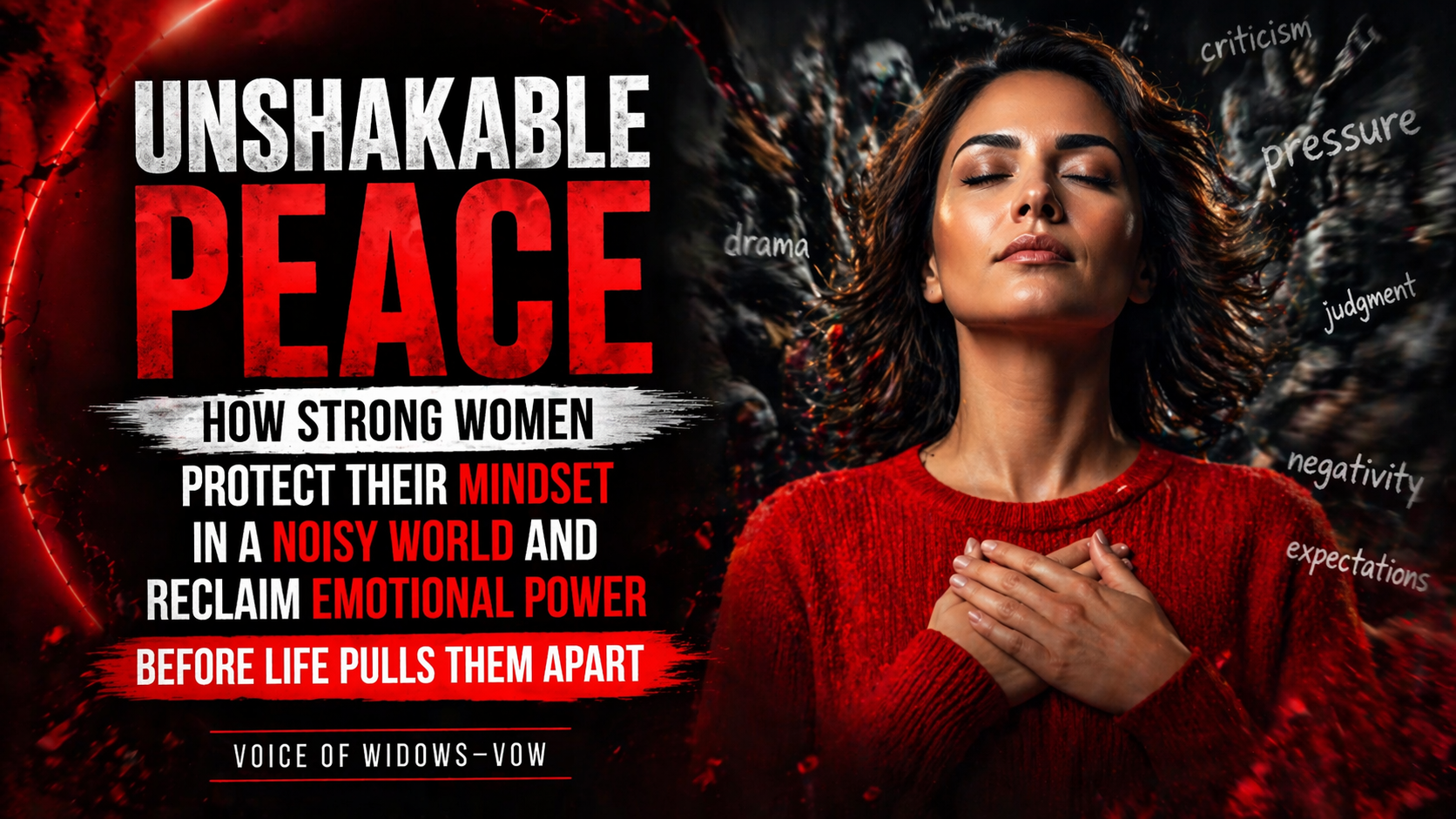
The Silent Battle No One Talks About In today’s world, noise is constant. Opinions, expectations, pressure, comparisons, emotional demands from everywhere. And in the middle of it all, a strong woman is expected to stay composed, productive, kind, available, and unshaken. But behind that strength is often exhaustion that no one sees. Protecting your peace is not a luxury anymore. It is a survival skill. And for many women, it becomes the difference between living intentionally and living on emotional autopilot. The truth is simple but uncomfortable. If you don’t guard your mind, the world will shape it for you. Why Protecting Your Peace Is the New Power Move Peace is not about escaping life. It is about controlling what gets access to your emotional space. A strong woman is not the one who tolerates everything. She is the one who understands what destroys her inner clarity and chooses differently. When your peace is protected: You think clearly instead of reacting emotionally You make decisions from strength, not pressure You stop repeating cycles of emotional exhaustion You regain control over your time, energy, and identity Without peace, even success feels heavy. With peace, even chaos becomes manageable. How Strong Women Lose Their Peace Without Realizing It It rarely happens overnight. It happens in small, invisible moments: Saying yes when everything inside says no Staying in conversations that drain energy Overexplaining boundaries Consuming negativity daily through people or media Carrying emotional responsibility for everyone Slowly, the mind becomes overcrowded. And when the mind is crowded, clarity disappears. The danger is not stress itself. The danger is normalizing stress as your identity. The Mindset Shift: From Emotional Access to Emotional Authority A strong woman does not let everyone have access to her inner world. Not every opinion deserves attention.Not every situation deserves reaction.Not every person deserves explanation. This shift is powerful: From “I must respond”To “I choose what deserves my energy” From “I need to be understood”To “I understand myself enough” From “I can handle everything”To “I will handle only what aligns with my peace” This is where emotional strength becomes real. Practical Ways to Protect Your Peace Daily 1. Set boundaries that don’t require explanation Your peace does not need permission. If something drains you, it is already enough reason to step back. 2. Reduce emotional noise Not everything needs your attention. Be selective with conversations, content, and environments. 3. Create mental space every day Silence is not emptiness. It is recovery. Even 10–15 minutes of intentional quiet can reset your emotional system. 4. Stop over-identifying with roles You are not only what you do for others. You are also what you preserve for yourself. 5. Learn emotional detachment without emotional shutdown You can care without carrying. You can listen without absorbing. You can love without losing yourself. The Hard Truth About Growth and Peace Many people think growth means doing more, achieving more, being more available. But real growth often looks like subtraction: Less noise Fewer obligations Smaller circles Clearer priorities Stronger internal discipline A strong woman is not defined by how much she can endure. She is defined by how quickly she returns to herself after life tries to pull her away. Why This Matters More Than Ever Modern life is designed to keep you reactive. If you are constantly reacting, you are never truly leading your life. Protecting your peace is not about isolation. It is about intention. Because the cost of unprotected peace is high: Emotional burnout Decision fatigue Loss of self-identity Constant comparison Inner emptiness despite outer activity And the recovery is always harder than the prevention. Final Thought: Your Peace Is Not Negotiable At some point, every strong woman has to decide: Do I keep explaining my boundaries, or do I start enforcing them?Do I keep absorbing chaos, or do I start choosing clarity?Do I keep surviving my life, or do I start protecting my peace like it matters? Because it does. And once you start protecting your peace, you don’t just change your mindset. You change your entire life experience.
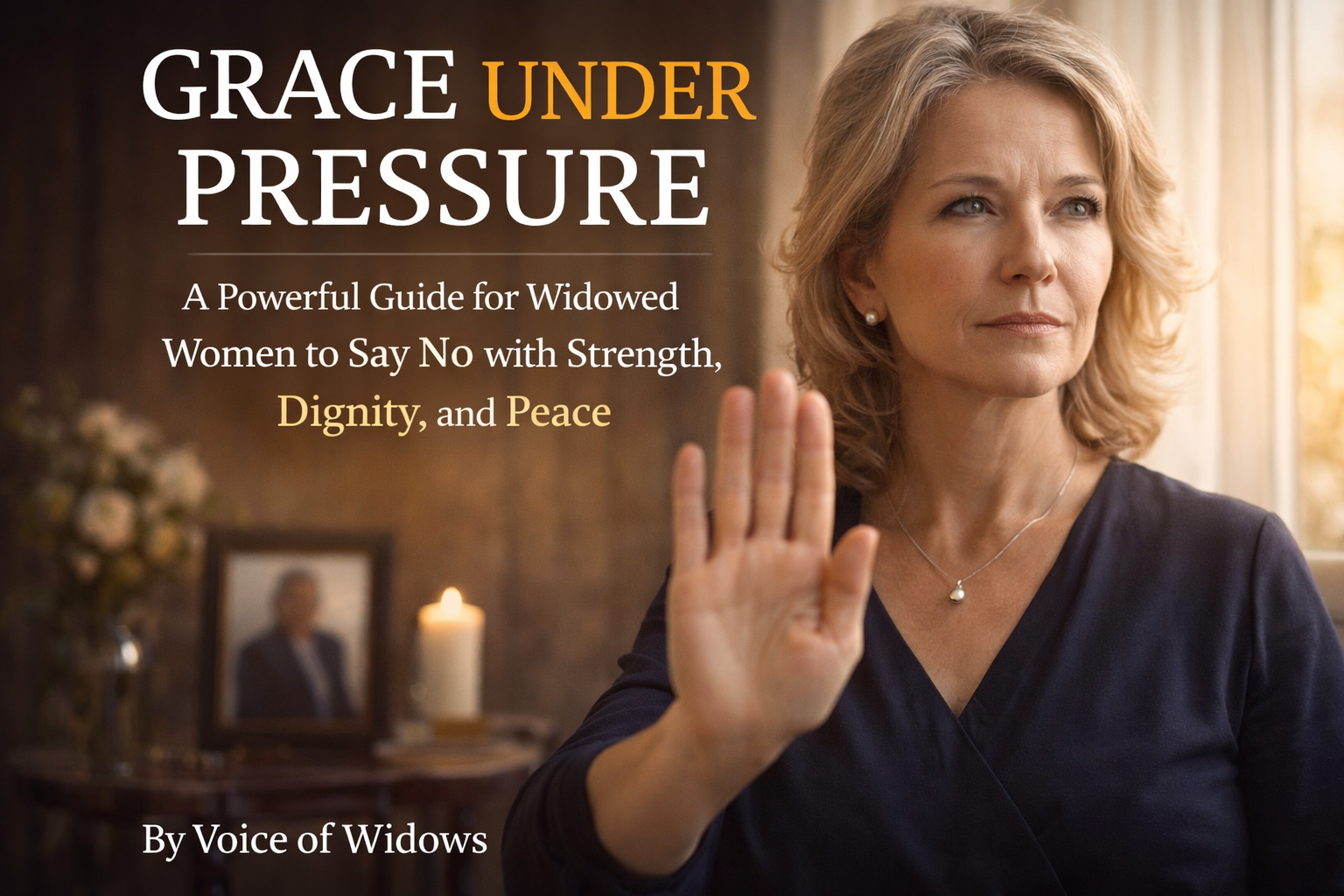
Grace Under Pressure: A Powerful Guide for Widowed Women to Say No with Strength, Dignity, and Peace
In a world that often expects women to carry endless responsibilities, saying “no” can feel like breaking an unspoken rule. For a widowed woman, this pressure can be even heavier. People may assume you are available, resilient beyond limits, or obligated to help because of your life situation. But here is the truth you must hold onto: your time, energy, and emotional well-being are not public property. They are sacred. This is not just an article. This is your permission slip. This is your turning point. Why Saying No Matters More Than Ever After loss, your life shifts in ways others may never fully understand. You are rebuilding, healing, surviving—and possibly still showing up for others. But constantly saying yes when your heart is tired creates silent damage. Every unnecessary yes is a hidden no to your own healing. You are not here to exhaust yourself trying to meet every expectation. You are here to protect your peace and rebuild your life with intention. The Emotional Barrier: Why It Feels So Hard Let’s be real. Saying no is not just about words—it’s about emotions. Fear of being judged Fear of losing relationships Fear of seeming weak or unkind Pressure to prove strength after loss But understand this deeply: strength is not in saying yes to everything. Strength is in knowing when to stop. A Smooth, Respectful Process to Say No Without Guilt Here is a simple, graceful framework you can follow anytime you need to decline work or requests: 1. Acknowledge with Respect Start by appreciating the person or opportunity. Example:“Thank you so much for thinking of me…” This shows kindness without commitment. 2. Be Honest but Boundaried You don’t need to over-explain your life. Keep it clear and grounded. Example:“At this point in my life, I need to be mindful of my commitments and energy.” 3. Say No Clearly Avoid confusing language. Be firm, yet gentle. Example:“I won’t be able to take this on right now.” No long justifications. No guilt-driven explanations. 4. Offer an Alternative (Optional, Not Obligatory) Only if you genuinely want to. Example:“You might want to consider reaching out to someone else who can fully commit.” 5. Close with Grace End positively, keeping the relationship intact. Example:“I truly appreciate your understanding and wish you the best with it.” Ready-to-Use Message Templates Use these whenever you feel unsure: Professional Decline:“Thank you for reaching out to me. I truly appreciate the opportunity. However, I won’t be able to commit to this at the moment as I am focusing on my current priorities. I hope you understand.” Soft Emotional Boundary:“I value your trust in me, but I need to prioritize my personal space and well-being right now. I won’t be able to take this on.” Firm but Kind:“I won’t be able to do this, but I sincerely wish you success with it.” The Inner Shift You Must Make This is where transformation happens. Stop asking:“Will they be upset?” Start asking:“Will I be at peace?” Because peace is your new priority. Not approval. Not validation. Not overextending. Urgency You Cannot Ignore If you continue saying yes out of guilt: You will burn out emotionally You will delay your healing You will lose control over your time You will silently suffer But if you start saying no with clarity: You regain control You rebuild self-respect You protect your mental health You create space for meaningful opportunities This is not a small change. This is a life shift. You Are Allowed to Choose Yourself Being a widow does not mean becoming endlessly available.It does not mean sacrificing your boundaries.It does not mean carrying everyone else’s expectations. It means you have already carried enough. Now, it’s time to carry yourself—with strength, dignity, and self-respect. Final Thought Every time you say no with grace, you are not closing a door—you are protecting your future. You are not rejecting people.You are choosing yourself. And that is powerful.