

Why Are Widowed Women Still Living in Fear? A woman loses her husband, and in a single moment, her entire world changes. Along with grief, many widows inherit something they never asked for: fear. Fear of financial uncertainty. Fear of social judgment. Fear of loneliness. Fear of exploitation. Fear of an uncertain future. In a world that speaks loudly about equality and progress, millions of widowed women still live silently behind closed doors, carrying emotional wounds and anxieties that society often refuses to acknowledge. The question we must ask ourselves is not whether widows are suffering. The real question is this: Why are widowed women still living with fear in the twenty-first century? The Grief That Never Fully Leaves Losing a life partner is one of the most painful experiences a human being can endure. Marriage is not merely a legal relationship. It is companionship, support, shared responsibilities, dreams, and emotional security. When a husband dies, a widow does not simply lose a spouse. She often loses her closest friend, her emotional anchor, and in many cases, her financial protector. While people around her slowly return to their normal lives, she continues fighting battles that nobody can see. Many widows spend years learning how to survive emotionally while carrying grief that never completely disappears. Financial Fear Becomes a Daily Reality For countless widowed women, financial insecurity becomes an immediate and frightening challenge. Many suddenly become solely responsible for: Paying bills Raising children Managing debts Handling legal documentation Maintaining a household Securing education for their children Women who previously depended on their husbands’ income may find themselves facing overwhelming responsibilities without adequate financial resources. This uncertainty creates constant anxiety. Questions repeatedly enter their minds: How will I support my family? Will I lose my home? Can I afford my children’s education? What happens if I become sick? Financial fear is one of the biggest reasons widowed women continue to live with constant stress and insecurity. Social Stigma Still Exists Despite social progress, widowhood remains surrounded by misconceptions in many communities. Some widows experience exclusion from social events. Some face unwanted pity. Others are unfairly blamed for circumstances beyond their control. Many feel invisible. Even more painful is when society begins to define a woman entirely by her loss rather than recognizing her strengths, abilities, and identity. A widow should never be treated as someone whose life has ended. She is still a mother, daughter, professional, leader, entrepreneur, friend, and valuable member of society. Yet social attitudes often make widows feel isolated and vulnerable. The Fear of Loneliness Loneliness can become one of the deepest wounds of widowhood. After years of sharing everyday experiences with a partner, silence suddenly fills the home. Simple moments become painful reminders: Eating alone Making decisions alone Celebrating milestones alone Facing illness alone Many widows admit that nights are often the hardest because grief becomes louder in silence. Humans are designed for connection, and prolonged loneliness can significantly affect emotional well-being and overall quality of life. Raising Children Alone Creates Enormous Pressure Widowed mothers frequently carry responsibilities that once belonged to two people. They become providers. They become protectors. They become emotional support systems. They become decision-makers. They become both mother and father. The pressure can be overwhelming. Many mothers suppress their own pain because they believe they must remain strong for their children. Yet inside, they continue living with fear and uncertainty. Fear of Exploitation and Vulnerability Widowed women can become targets of exploitation. Some face financial manipulation. Others encounter property disputes. Some experience workplace discrimination. Others struggle with harassment or coercive situations. When emotional vulnerability meets economic insecurity, fear naturally increases. Every society has a responsibility to protect widowed women from abuse, exploitation, and discrimination. No woman should have to fear becoming vulnerable simply because she lost her spouse. Mental Health Challenges Are Often Ignored The emotional impact of widowhood extends far beyond sadness. Many widows experience: Depression Anxiety Sleep difficulties Chronic stress Emotional exhaustion Loss of confidence Unfortunately, mental health support remains inaccessible or socially discouraged in many communities. People often tell widows to be strong and move on. But healing does not happen according to a schedule. Grief demands compassion, understanding, and support. Ignoring emotional pain only deepens suffering. Why Society Must Pay Attention Now Widowed women are not asking for sympathy. They are asking for dignity. They are asking for equal opportunities. They are asking for understanding. They are asking for security. They are asking for the freedom to rebuild their lives without fear. Every family, institution, and community has a role to play. Support systems should include: Emotional counseling Financial education Employment opportunities Legal assistance Community support networks Protection against discrimination Access to healthcare and mental health resources When widowed women are empowered, entire families and communities become stronger. The Conversation We Can No Longer Ignore The fear experienced by widowed women is not a personal failure. It is often the result of social neglect, inadequate support systems, and persistent stereotypes. The measure of a compassionate society is not how it treats people during moments of celebration. It is how it supports individuals during their darkest hours. Widowed women deserve more than sympathy. They deserve respect. They deserve opportunities. They deserve security. Most importantly, they deserve to live without fear. Perhaps the real question is not why widowed women are still afraid. The real question is this: What are we doing today to ensure that no widow has to face tomorrow alone?
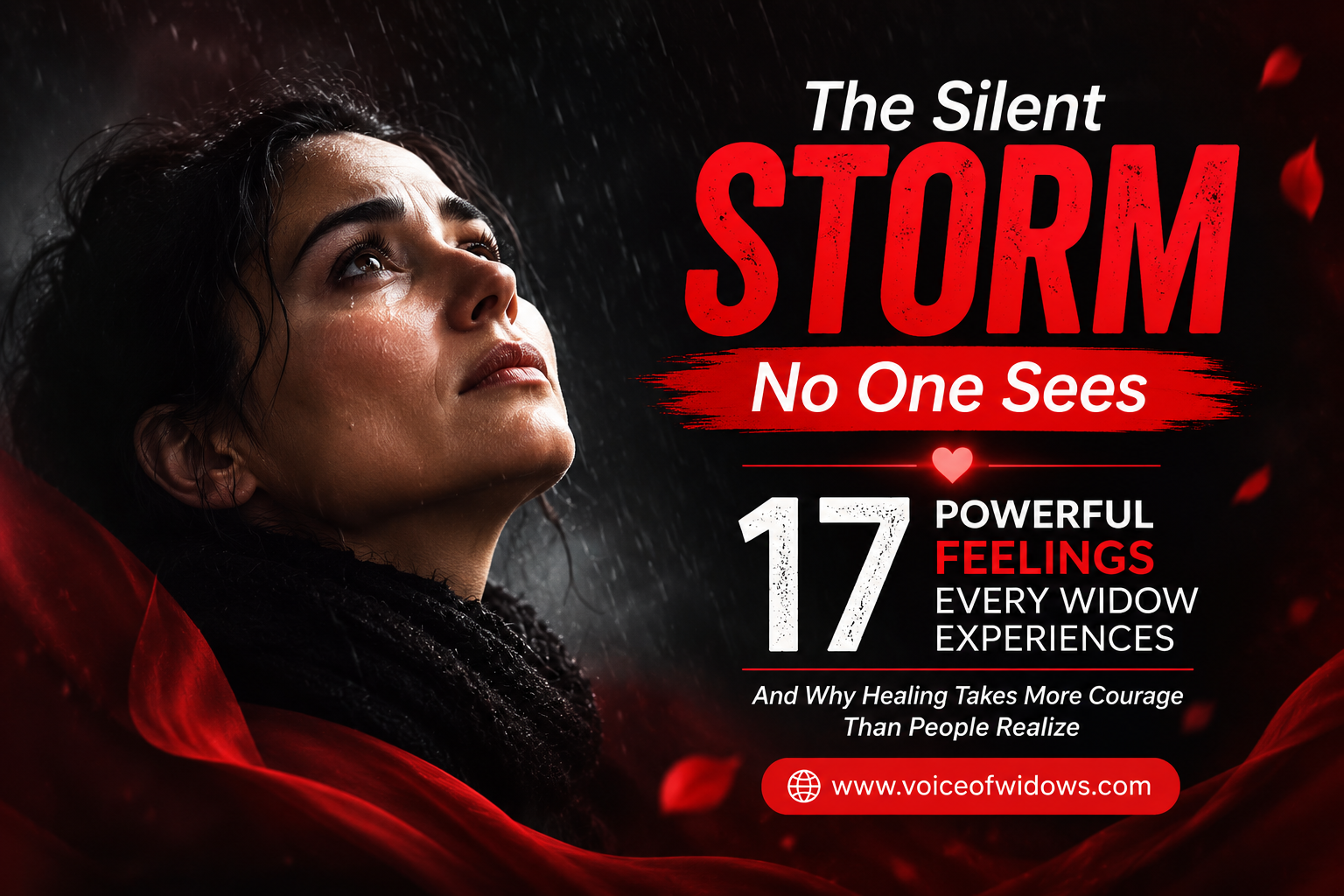
The Silent Storm No One Sees: 17 Powerful Feelings Every Widow Experiences And Why Healing Takes More Courage Than People Realize
A woman can prepare for many challenges in life, but few experiences compare to the emotional earthquake of losing a life partner. Widowhood is not simply about losing a husband; it is about losing a companion, a confidant, a future, shared dreams, daily routines, and a part of one’s identity. Behind every widow is a story that often remains untold. While friends and family may offer support during the first few weeks, many widows continue fighting silent battles long after the condolences stop arriving. Society often expects healing to happen quickly, yet grief follows no calendar. The emotional journey of widowhood is complex, unpredictable, and deeply personal. Some days bring strength and hope. Other days bring overwhelming sadness and uncertainty. Understanding these emotions can help widows feel less alone and help others provide meaningful support. Understanding the emotional reality of widowhood Grief is not a straight line. It moves in waves. A widow may feel acceptance one day and intense sorrow the next. These emotional shifts are normal and reflect the profound impact of losing a spouse. Below are seventeen powerful feelings many widows experience during their journey. 1. Shock The initial loss often feels unreal. Even when a spouse has been ill for a long time, the reality of death can be difficult to comprehend. Many widows describe feeling numb, disconnected, or unable to process what has happened. The mind struggles to accept a life-changing reality overnight. 2. Deep sadness Sadness becomes a constant companion during the early stages of widowhood. Simple moments can trigger tears—a favorite song, a familiar scent, an empty chair at dinner, or a photograph from happier times. This sadness reflects the depth of love that existed. 3. Loneliness One of the most painful aspects of widowhood is loneliness. The absence of daily conversations, shared routines, and companionship creates a silence that many find overwhelming. Even when surrounded by people, a widow may feel profoundly alone. 4. Fear of the future The future suddenly becomes uncertain. Questions begin to emerge: How will I manage financially? Who will support me emotionally? Can I handle life’s responsibilities alone? Fear often accompanies major life transitions, and widowhood is among the most significant. 5. Anger Many widows experience anger. They may feel angry about the illness, circumstances, medical challenges, or simply the unfairness of losing someone they love. Anger is a natural response to profound loss. 6. Guilt Guilt frequently appears during grief. Widows may replay conversations, decisions, or moments from the past, wondering if they could have done something differently. Many carry burdens that were never theirs to carry. 7. Confusion Widowhood often creates emotional and mental confusion. The brain is processing intense stress while trying to adjust to a completely different reality. Simple decisions can suddenly feel difficult. 8. Anxiety Many widows experience heightened anxiety. The uncertainty of life after loss can lead to constant worry about finances, health, family responsibilities, and future stability. Anxiety is often a reflection of the significant changes taking place. 9. Emotional exhaustion Grieving requires enormous emotional energy. Widows often report feeling physically and mentally drained, even when they have done very little during the day. Healing itself can be exhausting work. 10. Isolation Many widows feel disconnected from others. Friends may not understand their pain. Social invitations may decrease. Conversations can feel awkward. This sense of isolation can deepen grief if left unaddressed. 11. Loss of identity Many women have spent years or decades as wives. When a spouse dies, questions about identity often arise. Who am I now? What does my future look like? What role do I play in the world? Rediscovering oneself becomes an important part of healing. 12. Regret Widows may regret missed opportunities, unfinished conversations, or plans that never became reality. These feelings can linger for years if not acknowledged and processed. 13. Jealousy This emotion is rarely discussed but is surprisingly common. Seeing happy couples together can trigger feelings of envy or sadness. This reaction does not make a widow selfish; it reflects the longing for what has been lost. 14. Hope Amid the pain, hope eventually begins to emerge. Small moments of joy, meaningful friendships, personal growth, and new opportunities can slowly remind widows that life still holds possibilities. Hope often arrives quietly. 15. Strength Many widows discover resilience they never knew they possessed. Managing households, finances, family responsibilities, and personal healing reveals an inner strength that often surprises them. Strength is not the absence of pain; it is moving forward despite it. 16. Gratitude Over time, gratitude can coexist with grief. Many widows begin appreciating the memories, lessons, and years shared with their spouse. The pain of loss remains, but appreciation for the love experienced becomes stronger. 17. Acceptance Acceptance does not mean forgetting. It means acknowledging reality while continuing to live meaningfully. A widow learns that she can carry love and loss together. Acceptance represents a new chapter rather than an ending. Why understanding widowhood matters Millions of women around the world navigate widowhood every year. Yet many continue suffering in silence because society often misunderstands grief. People may encourage widows to “move on” before they are ready. Others may avoid discussing the loss altogether. Both responses can leave widows feeling unheard and unsupported. Understanding these emotions creates compassion. It reminds us that healing takes time and that every widow’s journey is unique. How widows can begin rebuilding their lives While grief never completely disappears, many widows find ways to move forward with purpose and hope. Some helpful steps include: Seeking emotional support from trusted friends and family. Joining widow support groups. Practicing self-care and self-compassion. Creating healthy daily routines. Pursuing new interests and personal goals. Allowing themselves permission to heal at their own pace. Honoring memories while embracing future possibilities. The goal is not to forget the person who was lost. The goal is to learn how to carry that love into the next chapter of life. The hidden truth about widowhood The strongest widows are not those who never
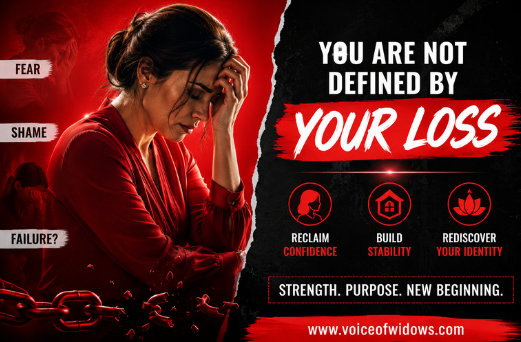
Why So Many Professional Widowed Women Experience Fear, Shame, and a Sense of “Failure” Today and the Hidden Forces Behind It (and How to Reclaim Confidence, Stability, and Identity Again)
In today’s fast-moving world, many professional widowed women find themselves facing an unexpected emotional and psychological weight that goes far beyond grief alone. While society often assumes that success, education, or career stability can shield someone from emotional collapse, the reality is far more complex. Fear, shame, and an internalized feeling of “failure” can quietly take root even in highly capable, financially independent women. These emotions are rarely spoken about openly, yet they shape decisions, confidence, relationships, and long-term life direction in powerful ways. This is not a story of weakness. It is a story of identity disruption, social pressure, emotional silence, and the invisible expectations placed on women who are expected to “stay strong” while rebuilding life after loss. Understanding why this happens is the first step toward changing it. The silent emotional burden behind professional strength Many professional women are conditioned to perform stability. They are expected to manage careers, families, finances, and emotional responsibilities without visible struggle. When widowhood enters this equation, the emotional shock is often compounded by societal expectations that do not pause for personal loss. Instead of being given space to process grief, many feel an immediate pressure to “function normally” again. This gap between internal emotional reality and external expectations creates a psychological split. On the outside, life may appear controlled. On the inside, there may be confusion, exhaustion, and emotional disorientation. This disconnect often becomes the first seed of shame: the belief that “I should be handling this better.” Why fear becomes dominant after loss Fear in this context is not only emotional—it is practical and existential. It often includes: Fear of financial instability, even when resources existFear of social judgment or being treated differentlyFear of starting over in identity, career direction, or relationshipsFear of being perceived as “incomplete” or “less than” in social spaces For many professional widowed women, the loss is not just of a partner, but of a shared future structure. Even strong career identity does not automatically replace emotional and relational grounding. The mind begins to scan for uncertainty everywhere, which increases anxiety and reduces confidence in decision-making. The hidden layer: shame and internalized expectations Shame is often the most silent emotion. It does not always appear as sadness or anger. Instead, it shows up as withdrawal, overthinking, hesitation, or self-criticism. Some of this shame is internally generated, but much of it is socially absorbed. Cultural narratives often define widowed women through limitation rather than possibility. Even in modern professional environments, subtle bias and unspoken assumptions can reinforce the feeling of being “redefined by loss.” Over time, this can lead to internal questioning such as: “Am I still seen the same way?” “Do I still belong in the same spaces?” “Have I lost value in the eyes of others or even myself?” These questions are not irrational—they are responses to environmental signals, not personal failure. Why the feeling of “failure” is actually misinterpretation The sense of failure many experience after widowhood is rarely about actual capability or achievement. It is more often a mismatch between expected life timelines and reality. Society tends to promote linear life narratives: education, career growth, marriage, stability, continuation. When life disrupts that structure, the brain often interprets deviation as failure rather than transformation. In truth, what is happening is not failure but forced reconstruction of identity under emotional pressure. That distinction is critical. One implies deficiency. The other implies adaptation. How to begin shifting this internal experience Rebuilding after widowhood in a professional context is not about “moving on quickly.” It is about rebuilding internal alignment so that external functioning does not come at the cost of emotional fragmentation. A few key shifts matter deeply: Reframing identity beyond relational statusInstead of seeing identity as defined by marital history, it helps to reconnect with personal values, skills, and long-term purpose that existed before and beyond the relationship. Separating societal perception from self-definitionMuch of shame is reinforced by imagined judgment. Learning to separate external assumptions from internal truth reduces emotional distortion. Allowing grief without performanceMany professionals try to “manage” grief like a task. But grief is not linear productivity—it is emotional integration. Space for processing is not optional; it is necessary for stability. Rebuilding decision confidence graduallyFear often reduces trust in personal judgment. Starting with small, low-risk decisions helps rebuild internal certainty over time. Re-establishing support systems without dependency shameSupport is not weakness. Isolation often intensifies fear and self-doubt. Healthy connection is part of emotional recovery, not a sign of regression. The deeper truth most people miss Widowhood in professional women does not erase capability. It disrupts emotional equilibrium in a way that forces identity reorganization. The fear, shame, and feeling of failure are not indicators of inadequacy—they are signals of transition without sufficient emotional scaffolding. When these emotions are understood instead of suppressed, they begin to lose authority over life choices. What remains underneath is not brokenness, but continuity of identity waiting to be restructured with clarity rather than pressure. The shift does not come from becoming someone new. It comes from integrating loss into identity without letting it define the entirety of it.
Five Women’s Rights That Shape Freedom, Dignity, and the Future of Humanity
Introduction: Why women’s rights still demand urgent attention Around the world, the conversation about women’s rights continues to grow louder, stronger, and more urgent. Women have always been central to families, communities, economies, and cultures, yet their rights have historically been ignored, restricted, or denied. Even today, millions of women face barriers that prevent them from living freely, safely, and with dignity. Understanding the most important women’s rights is not only about acknowledging history. It is about recognizing the present reality and taking action to build a fairer future. Societies that protect women’s rights become healthier, wealthier, more peaceful, and more innovative. When women thrive, communities rise. This article explores five of the most important women’s rights that define equality, justice, and human dignity. These rights are not privileges. They are fundamental freedoms that every woman deserves regardless of culture, nationality, religion, or social status. 1. The right to education Education is one of the most powerful tools a woman can possess. It transforms lives, opens doors to opportunity, and breaks cycles of poverty. When a girl receives an education, she gains knowledge, confidence, and the ability to make informed decisions about her life. Yet millions of girls around the world are still denied access to education due to poverty, cultural barriers, early marriage, conflict, or discrimination. Without education, women are more vulnerable to exploitation, limited employment opportunities, and reduced participation in society. Educating women does not only empower individuals; it strengthens entire communities. Studies repeatedly show that educated women are more likely to invest in their families’ health, ensure their children attend school, and contribute to economic growth. Every classroom that welcomes girls is a step toward equality. Every book opened by a young girl is a quiet revolution against inequality. Protecting the right to education means investing in the future of humanity itself. 2. The right to live free from violence Safety is a basic human right. No woman should live in fear of violence in her home, workplace, community, or online spaces. Unfortunately, gender-based violence remains one of the most widespread human rights violations worldwide. Violence against women takes many forms, including domestic abuse, sexual harassment, human trafficking, forced marriage, and harmful cultural practices. These violations destroy lives, silence voices, and limit women’s ability to participate fully in society. Protecting women from violence requires strong laws, effective law enforcement, community awareness, and cultural change. It requires societies to reject harmful attitudes that normalize abuse or blame victims. When a woman can walk freely, speak freely, and live without fear, she gains the power to pursue education, careers, leadership, and dreams. Ending violence against women is not only a moral responsibility; it is a foundation for peaceful societies. 3. The right to equal pay and economic opportunity Economic independence is a cornerstone of empowerment. Women must have equal access to employment opportunities, fair wages, financial resources, and the ability to own property or start businesses. Despite progress, the gender pay gap still exists in many parts of the world. Women often earn less than men for the same work and face barriers to career advancement, leadership roles, and entrepreneurship. When women are denied economic equality, families and economies lose enormous potential. Women represent half of the global population and a powerful engine for economic growth. Unlocking their potential benefits everyone. Supporting women in the workforce means ensuring fair wages, safe workplaces, maternity protections, access to childcare, and equal opportunities for leadership. It means recognizing that economic justice is a human right, not a privilege. A financially empowered woman gains independence, security, and the ability to shape her own future. 4. The right to participate in political and social decision-making A society cannot call itself democratic if women are excluded from leadership and decision-making. Women have the right to vote, run for political office, participate in policymaking, and influence decisions that affect their lives. For centuries, women were denied political representation and treated as passive observers of governance. Although progress has been made, women remain underrepresented in parliaments, governments, and leadership positions across the world. When women participate in leadership, policies become more inclusive, balanced, and responsive to community needs. Women leaders often prioritize education, healthcare, social protection, and peace-building initiatives. Encouraging women’s participation in politics and public leadership is not simply about fairness. It is about creating stronger institutions and more representative societies. The voices of women must not only be heard. They must shape the decisions that define the future. 5. The right to health and bodily autonomy Women must have the right to make decisions about their own bodies, health, and well-being. This includes access to healthcare, maternal care, reproductive health services, and the ability to make personal medical decisions without coercion. Across the world, women still face barriers to healthcare services, particularly in rural or economically disadvantaged areas. Lack of access to proper medical care increases maternal mortality rates and prevents women from living healthy lives. Bodily autonomy also means that women have the right to consent, the right to reject forced practices, and the right to live with dignity and personal freedom. When women control their health choices, they gain the power to pursue education, careers, family planning, and personal aspirations. Health rights are deeply connected to economic freedom, social participation, and long-term well-being. Protecting women’s health is not just a medical issue. It is a matter of human dignity and fundamental rights. The urgent responsibility of our generation Women’s rights are human rights. Yet progress does not happen automatically. Every generation must actively protect, strengthen, and expand these freedoms. The five rights discussed here represent pillars of equality: education, safety, economic opportunity, political participation, and health autonomy. Without these rights, true equality cannot exist. Governments must create stronger laws. Institutions must enforce protections. Communities must challenge harmful traditions. Families must raise daughters with confidence and sons with respect for equality. Most importantly, individuals must refuse silence when injustice occurs. The future of women’s rights depends on awareness, courage, and action. Every conversation,
From Silence to Strength: How Women Achieved Equality and Why the Fight Still Demands Action
How did women achieve equality?Women achieved equality through centuries of resistance, sacrifice, courage, organized movements, legal battles, education, economic participation, and relentless voices that refused to stay silent. Equality was not handed over. It was demanded. It was fought for. It was earned. But equality is not a finished story. It is still being written. This article explores how women achieved equality, the movements that changed history, the global impact of those struggles, and why the responsibility now belongs to this generation. The Long Road From Exclusion to Empowerment For centuries, women across the world were denied fundamental rights. They were excluded from voting, owning property, accessing higher education, leading businesses, and participating in politics. In many societies, their identities were legally tied to fathers or husbands. The idea of gender equality did not begin with modern campaigns. It began in quiet resistance — women educating themselves in secret, leading revolutions behind the scenes, organizing communities, and challenging unfair systems. Real change started when voices became movements. The Rise of the Women’s Suffrage Movement One of the most defining milestones in women’s equality was the women’s suffrage movement. In countries like the United States, the United Kingdom, and New Zealand, women organized massive campaigns demanding the right to vote. The ratification of the 19th Amendment in 1920 in the United States granted women the right to vote. In 1893, New Zealand became the first self-governing country to allow women to vote in national elections. These victories were not peaceful gifts. Women were arrested. Mocked. Imprisoned. Some were force-fed during hunger strikes. Yet they continued. The right to vote was not just about ballots. It was about recognition. It was about being seen as full citizens. Education: The Foundation of Equality Education became the most powerful weapon in achieving gender equality. When women gained access to schools and universities, everything changed. Educated women entered professions previously closed to them — law, medicine, science, journalism, business leadership. Knowledge dismantled stereotypes that claimed women were intellectually inferior. Today, in many parts of the world, women outperform men academically. Yet in some regions, girls still struggle for access to basic education. This proves equality requires constant vigilance. When you educate a woman, you elevate a generation. Workplace Rights and Economic Independence Economic independence was another turning point. During world wars, women filled industrial jobs while men were deployed. They proved competence beyond traditional domestic roles. Later movements demanded equal pay for equal work, maternity protections, anti-discrimination laws, and workplace safety reforms. The feminist movements of the 1960s and 1970s amplified demands for equal employment opportunities and reproductive rights. Policies began to shift. Laws began to protect. Yet today, the global gender pay gap still exists. Leadership representation remains unequal. Equality in law does not always mean equality in practice. Global Human Rights and International Recognition The global conversation around women’s equality intensified in the 20th century. Organizations like United Nations formally recognized women’s rights as human rights. The Convention on the Elimination of All Forms of Discrimination Against Women (CEDAW), adopted in 1979, became an international bill of rights for women. International Women’s Day, celebrated every March 8, became a global reminder that equality is a collective mission, not a regional issue. Women’s equality moved from being a “women’s issue” to a human development priority. How Social Movements Changed Culture In recent decades, digital activism accelerated change. Movements such as #MeToo exposed systemic abuse and demanded accountability across industries. Social media gave ordinary women extraordinary power. Stories that once remained hidden became global headlines. Culture shifted. Conversations about consent, workplace harassment, representation, and inclusion became mainstream. Equality was no longer whispered. It was trending. Key Factors That Helped Women Achieve Equality To answer clearly and directly: Women achieved equality through: Organized social movements and activism Legal reforms and constitutional amendments Access to education and literacy Economic participation and entrepreneurship Political representation and voting rights International human rights frameworks Media visibility and digital advocacy Collective solidarity across generations Each factor built on the other. Equality was never a single event. It was a chain reaction of courage. Is Equality Fully Achieved Today? This is the urgent question. In many countries, women lead corporations, governments, and global institutions. Female presidents, prime ministers, scientists, athletes, and entrepreneurs are reshaping leadership models. Yet: Gender pay gaps persist Violence against women remains widespread Representation in top political offices is still limited Access to education and healthcare remains unequal in many regions Equality has advanced, but it is not universal. The fight is not over. Why This Generation Must Care You are living in the results of someone else’s sacrifice. The rights women enjoy today — voting, working, studying, owning property, speaking freely — were paid for by generations who endured humiliation, imprisonment, and discrimination. Progress can move forward. But it can also move backward. History proves one thing: rights unprotected can be rights undone. Gender equality is not just about women. It is about economic growth, social stability, innovation, and justice. Countries with higher gender equality show stronger economic performance and better social outcomes. This is not only a moral issue. It is a development issue. What Action Looks Like Today If you are asking, “What can I do?” — here is the answer: Support equal pay policies Encourage girls’ education Challenge gender stereotypes in daily conversations Promote women into leadership roles Advocate for safe workplaces Vote for policies that protect human rights Teach the next generation about equality Equality grows where awareness lives. The Emotional Truth Behind every law passed was a woman who refused silence.Behind every right gained was a story of resistance.Behind every opportunity today stands a legacy of courage. Equality was not achieved in comfort. It was achieved in confrontation. And the question is no longer how women achieved equality. The question now is:Will we protect it?Will we expand it?Will we defend it when it is challenged? History is watching.

The Powerful Benefits Of Being Ambitious And Why Your Life Depends On It
Ambition is not a personality trait. It is a decision. A deep inner agreement with yourself that your life will not be small, silent, or settled for less than what you are capable of becoming. Ambition is the fire that separates those who wait from those who build, those who dream from those who execute, and those who survive from those who lead. In a world where comfort is marketed as success and mediocrity is normalized, being ambitious is often misunderstood. But the truth is simple and urgent. Without ambition, growth stops. Progress slows. Potential dies quietly. If you want your life, career, business, or legacy to matter, ambition is not optional. It is essential. This is not motivation for a moment. This is a wake-up call. Ambition Gives Direction to Your Life Without ambition, life becomes reactive. You respond to situations instead of designing outcomes. Ambition gives your life a clear direction. It forces you to ask important questions. Where am I going. Who am I becoming. What am I building that will outlive me. Ambitious people do not wake up randomly. They wake up with intention. They make choices aligned with long-term goals instead of short-term comfort. Direction creates discipline. Discipline creates results. When ambition is missing, confusion takes over. When ambition is present, clarity follows. Ambition Unlocks Hidden Potential Most people live far below their actual capabilities. Not because they lack talent, intelligence, or resources, but because they lack ambition. Ambition pulls hidden strength out of you. It forces you to stretch beyond fear, beyond excuses, beyond self-doubt. You do not discover your limits by staying comfortable. You discover them by chasing something bigger than who you are today. Ambition demands growth. Growth demands effort. Effort transforms potential into performance. Ambition Builds Mental Strength Ambition trains your mind to endure pressure, rejection, failure, and uncertainty. When you are ambitious, quitting is no longer an option. You learn how to adapt, recalibrate, and move forward even when things fall apart. This mental resilience becomes your greatest asset. It allows you to stay focused when others panic. It allows you to rise when others retreat. It allows you to lead when others follow. Ambition does not make life easier. It makes you stronger. Ambition Creates Financial Independence Let us be honest. Financial struggle is not romantic. It is stressful, limiting, and exhausting. Ambition fuels the desire to build skills, create opportunities, and pursue income growth beyond survival. Ambitious individuals invest in learning, take calculated risks, and build multiple streams of value. They do not wait for permission to earn more. They position themselves for it. Money alone is not success, but lack of ambition almost guarantees financial limitation. Ambition Separates Leaders from Followers Leaders are not born. They are driven. Ambition pushes people to take responsibility instead of blaming circumstances. It pushes them to solve problems instead of complaining about them. When ambition meets purpose, leadership emerges. Not loud leadership. Real leadership. The kind that inspires action, trust, and transformation. Every impactful movement, company, and vision in history was built by ambitious individuals who refused to stay silent or small. Ambition Keeps You Relevant in a Fast-Changing World The world is evolving faster than ever. Skills expire. Industries change. Technology replaces routine work. Those without ambition fall behind quickly. Ambitious people continuously upgrade themselves. They learn. They adapt. They stay curious and competitive. They do not rely on past achievements to secure future relevance. Ambition is the engine of lifelong learning. Ambition Turns Dreams into Deadlines Dreams without ambition remain fantasies. Ambition gives deadlines to dreams. It creates urgency. It refuses procrastination. It replaces someday with now. Ambitious people understand time is non-refundable. They act before motivation feels perfect. They move even when confidence is incomplete. Ambition respects time. That is why it wins. Ambition Inspires Others Without Permission One ambitious individual can change the energy of an entire environment. When people see someone chasing growth relentlessly, it challenges their excuses. It raises standards. It sparks belief. Ambition is contagious. It gives silent permission to others to dream bigger and act bolder. You do not need to announce ambition. Results announce it for you. The Danger of Living Without Ambition The absence of ambition does not look dramatic. It looks like settling. Like postponing dreams. Like accepting less while convincing yourself it is enough. Years pass quietly. Regret grows silently. And one day, the realization hits hard. I could have done more. I should have tried. Ambition prevents regret. It ensures that even if you fail, you fail knowing you gave everything. Choose Ambition Before It Is Too Late Ambition is not arrogance. It is self-respect. It is the refusal to betray your potential. You do not need approval to be ambitious. You do not need perfect conditions. You need a decision. Decide that your life will expand. Decide that your work will matter. Decide that comfort will not control you. Because the cost of ambition is effort. But the cost of no ambition is a lifetime of what-ifs. The choice is urgent. The time is now.

The Future of Work: How AI Is Revolutionizing the Way We Work
In the past decade, the workplace has undergone seismic shifts. Technology has always been a driver of change, but Artificial Intelligence (AI) is redefining the very nature of work. From automation to data-driven decision-making, AI is no longer a futuristic concept; it is a present-day reality transforming careers, businesses, and industries globally. Whether you are a business leader, an employee, or an entrepreneur, understanding how AI is reshaping work is no longer optional—it is essential for survival and growth. AI in the Workplace: More Than Automation Many people still think of AI as just robots replacing human jobs. While automation is a part of it, AI goes far beyond simple task execution. It enhances human intelligence, improves efficiency, and empowers decision-making. Smart Data Analysis: AI algorithms can analyze massive datasets within seconds, providing insights that would take humans weeks or months to uncover. Businesses can now make faster, more informed decisions, reducing risk and increasing profitability. Personalized Workflows: AI-driven tools can customize workflows for individual employees, increasing productivity and minimizing burnout. Imagine a system that learns how you work best and optimizes your day automatically. Predictive Insights: From forecasting market trends to anticipating customer needs, AI allows businesses to act proactively rather than reactively. This predictive power can be the difference between leading the market or falling behind. Emotional Intelligence Meets AI The fear that AI will replace humans entirely is understandable, but the reality is different. AI augments human capabilities, allowing people to focus on strategic, creative, and emotional aspects of work—areas where humans excel. Customer Experience: AI chatbots handle routine queries, freeing human teams to tackle complex problems and provide a personalized touch. Employee Engagement: AI tools can monitor work patterns, detect stress levels, and provide actionable recommendations to boost well-being and productivity. Collaboration: AI platforms enable seamless collaboration across global teams, breaking down communication barriers and making remote work more effective than ever. The synergy between human creativity and AI precision is where the future of work truly lies. Urgent Action for Businesses and Professionals Ignoring AI is no longer an option. The question is not if AI will impact your work, but how prepared you are to adapt. For Businesses: Integrate AI tools to streamline operations, enhance decision-making, and improve customer satisfaction. Companies that adopt AI early gain a competitive edge. For Professionals: Upskill and reskill. Learn AI literacy, data analytics, and machine learning basics. The professionals who thrive in the AI era will be those who collaborate with AI, not compete against it. For Entrepreneurs: Identify AI-driven opportunities to innovate. Whether it’s launching smarter products or using AI to understand customer behavior, early adoption can set you apart. The window to act is now. Businesses and individuals that hesitate risk falling behind as AI adoption accelerates across industries. The Global Impact of AI on Work AI is not just transforming individual businesses; it is reshaping entire economies. According to research, AI could contribute up to $15 trillion to the global economy by 2030. Countries and organizations investing in AI are seeing faster growth, higher efficiency, and improved innovation. But with opportunity comes responsibility. Ethical use of AI, ensuring data privacy, and mitigating bias are critical considerations. AI is a tool, and how we wield it determines whether it empowers humanity or disrupts it negatively. Conclusion: Embrace AI or Be Left Behind The future of work is intelligent, efficient, and human-centric. AI is not a replacement for human potential—it is a powerful partner that can unlock new levels of productivity, creativity, and opportunity. Take action today: learn AI tools, adopt AI-driven strategies in your business, and embrace continuous learning. The world is changing fast, and those who wait too long will be left behind. AI is not coming—it is already here. The question is, will you lead the change or watch from the sidelines?

Breaking Free: How Widows Can Overcome Social Stigma and Reclaim Their Lives
Breaking Free: How Widows Can Overcome Social Stigma and Reclaim Their Lives Widowhood is often portrayed as a life sentence of grief, isolation, and judgment. Society may impose silent rules on how a widow should behave, dress, or even think. These unspoken expectations create barriers, stigmas, and a sense of being “less than” in the eyes of others. But here’s the truth: your life does not end with loss—your journey is just beginning. The emotional weight of losing a spouse is immense. It comes with grief, anxiety, loneliness, and societal scrutiny. Many widows internalize these pressures, believing they must shrink themselves to fit society’s idea of “acceptable behavior.” But staying silent or passive only prolongs suffering. It’s time to act. It’s time to reclaim your voice, your identity, and your life. Understand the Stigma and Why It Exists Social stigma against widows often stems from outdated cultural beliefs: Blame and judgment: Some communities unfairly assign guilt or responsibility to the widow. Isolation: Widows are often excluded from social events or community activities. Economic disadvantage: Loss of a spouse can also mean a loss of financial security, increasing dependency and vulnerability. Recognizing these barriers is the first step toward breaking them. Once you understand the stigma, you gain power over it, rather than letting it control your life. Actionable Steps to Overcome Stigma 1. Rebuild Your Emotional Strength Start with self-compassion. Grief is natural, and healing takes time. Journaling your feelings, attending therapy, or joining support groups can help you process emotions and build resilience. 2. Educate Yourself and Others Knowledge is power. Learn about your rights, legal protections, and community resources. Educate those around you—family, friends, or colleagues—about what support a widow truly needs. Awareness reduces judgment. 3. Develop Financial Independence Economic security is a cornerstone of confidence. Explore opportunities for employment, entrepreneurship, or skill development. Financial independence is not just about money; it’s a declaration of self-worth. 4. Redefine Your Identity Widowhood is a part of your story, not the entirety of it. Engage in hobbies, pursue passions, and reconnect with your dreams. Your life can be vibrant, fulfilling, and meaningful—beyond societal labels. 5. Find Your Support Network Community is crucial. Surround yourself with people who respect and uplift you. Widows’ associations, online groups, and mentoring programs can provide encouragement and shared experiences. 6. Challenge Social Norms Speak out against discriminatory practices. Every small action counts—from asserting your choices to mentoring other widows. By challenging stigma publicly, you create a ripple effect that empowers others too. Urgency: Why Acting Now Matters The longer the stigma persists unchallenged, the more it erodes confidence and well-being. Every day spent in silence allows outdated beliefs to gain ground. Taking decisive action today can transform grief into growth, isolation into community, and stigma into empowerment. Inspirational Perspective Remember, your journey is not about fitting into society’s mold—it’s about reshaping it. Every step toward self-love, independence, and visibility is a victory. You are not defined by loss but by your courage to rise, speak, and reclaim your life. Call to Action Do not wait for society to accept you. Accept yourself first. Start today. Join a support network, take a course, explore your passions, or share your story. Your strength can inspire change not just in your life, but in the lives of countless other widows silently battling stigma.

Healing the Heart: How Self-Compassion Empowers Widows to Overcome Rejection and Reclaim Their Lives
Introduction: The Silent Struggle of Widows Losing a life partner is one of the most profound emotional challenges anyone can face. For many widows, the grief is compounded by social pressures, judgment, and even rejection—from family, society, or potential relationships. This emotional weight can feel unbearable, leaving women questioning their self-worth. But there is a powerful tool that widows often overlook: self-compassion. Self-compassion is more than self-kindness—it is a deliberate practice of treating yourself with care, understanding, and patience during moments of pain or failure. For widows, cultivating self-compassion can transform rejection into growth, loneliness into resilience, and grief into a path toward empowerment. 1. Understanding Rejection and Its Emotional Impact Rejection is not only painful; it can shake the foundation of identity, especially for widows who have already experienced profound loss. Feeling rejected may trigger: Self-doubt: questioning one’s value and worthiness Isolation: withdrawing from social interactions to avoid judgment Emotional stagnation: difficulty moving forward due to persistent sadness or guilt Without intentional coping strategies, these feelings can spiral into depression or prolonged grief. Recognizing the emotional toll is the first step in reclaiming personal power. 2. The Role of Self-Compassion in Healing Self-compassion allows widows to counteract the harsh self-criticism that often accompanies rejection. According to research by Dr. Kristin Neff, self-compassion consists of three key components: Self-kindness: Treating yourself as you would a close friend in times of pain Common humanity: Recognizing that suffering is a shared human experience Mindfulness: Observing emotions without judgment or over-identification By practicing self-compassion, widows can: Reduce the intensity of negative emotions Build resilience against future rejection Foster emotional healing and self-acceptance 3. Actionable Steps to Cultivate Self-Compassion Widows can actively use self-compassion to navigate rejection with these practical steps: Step 1: Acknowledge Your PainAllow yourself to feel hurt without judgment. Journaling emotions or speaking with a trusted friend or counselor can help process these feelings. Step 2: Reframe Rejection as GrowthInstead of internalizing rejection as personal failure, see it as an opportunity to learn, grow, and redefine boundaries. Ask yourself: “What can this experience teach me about my needs and values?” Step 3: Practice Daily AffirmationsSpeak kind and nurturing words to yourself every day. Examples include: “I am worthy of love and respect.” “It is okay to take my time healing.” Step 4: Engage in Supportive CommunitiesJoining widow support groups, online forums, or workshops can provide a sense of belonging and validation, reinforcing the principle of common humanity. Step 5: Prioritize Self-CareSelf-compassion is reinforced through self-care: proper rest, nutrition, gentle exercise, mindfulness, and hobbies that bring joy and fulfillment. 4. Overcoming Social Stigma Through Empowerment Widows often face societal judgment or unsolicited advice, which can exacerbate feelings of rejection. Self-compassion provides the inner strength to: Resist harmful comparisons with others Set healthy boundaries with family or peers Build confidence in navigating new social or romantic relationships By nurturing self-love, widows not only manage rejection but also emerge more empowered, resilient, and emotionally independent. 5. The Long-Term Benefits of Self-Compassion for Widows Embracing self-compassion is not a quick fix—it is a lifelong practice that gradually transforms the way widows experience life after loss: Emotional resilience: Greater ability to handle rejection, criticism, or loneliness Increased self-esteem: Strengthened self-worth independent of external validation Healthier relationships: Choosing connections that honor and respect personal boundaries Personal growth: Turning grief and rejection into lessons of courage and empowerment Conclusion: Reclaim Your Life Through Self-Compassion Rejection is painful, but it does not define your worth. For widows, practicing self-compassion can be a life-changing approach to emotional healing and personal empowerment. By acknowledging your pain, embracing your humanity, and treating yourself with kindness, you can navigate rejection with grace and strength. Start today. Begin your journey toward self-compassion, and transform rejection into resilience, heartbreak into growth, and loneliness into self-empowerment. Your life, your worth, and your happiness are waiting.
Rising After the Fall: How to Reduce the Sting of Rejection and Keep Moving Forward with Power
Rejection can feel like a full-body blow. It interrupts your momentum, drains your confidence, and makes you question your worth. Yet, every successful person you admire has walked through the same fire. What separates those who rise from those who collapse is not luck but strategy, inner strength, and the courage to take the next step even when everything feels heavy. The truth is simple: Rejection is not a verdict. It is a redirection. And what you do right now determines whether this moment breaks you or builds you. Understanding the Sting Before You Heal It Rejection hurts because it attacks the deepest parts of your identity. You may feel inadequate, disappointed, frustrated, or even ashamed. These emotions are real, but they are not final.The pain doesn’t come from the event itself but from the meaning you attach to it. Instead of asking, Why wasn’t I enough?Shift the question to:What can I learn, refine, and return stronger with? This shift alone moves you from emotional reaction to empowered action. Rejection Is Data, Not Definition Every no contains insight.Every closed door teaches you something.Every setback reveals your next step. Your task is to decode rejection rather than internalize it. Ask yourself:What specifically can I improve?Where can I sharpen my skills?What needs to change—not in who I am, but in how I show up? This transforms rejection from a wound into a roadmap. Detach Your Worth from the Outcome One of the most powerful steps in reducing the sting is learning to separate your identity from the result. A failed relationship does not mean you are unlovable.A declined application does not mean you are incapable.A rejected proposal does not mean your ideas lack value. Your worth is not up for negotiation. Only your strategy is. When you anchor your identity internally—not in other people’s responses—you become unstoppable. Allow Yourself to Feel, Then Choose to Rise Suppressing emotions never heals them.Let yourself feel the disappointment, but don’t let it imprison you. Once the emotional wave passes, make a conscious decision:I will rise. I will adjust. I will take the next step forward. Healing begins when you accept the pain but refuse to stay in it. Turn Rejection Into Momentum Rejection becomes powerful when you use it to fuel your next move.Here’s how: 1. Reflect honestlyIdentify what worked, what didn’t, and what you can refine. 2. Reorganize your approachShift your strategy, communication, or timing. 3. Rebuild your energyStrength returns when self-belief returns. 4. Recommit to your visionA single rejection does not dismantle your purpose. Every champion rises not because the path is smooth, but because the mission is too important to abandon. Surround Yourself With People Who Elevate You Isolation amplifies pain.Connection reduces it. Seek mentors, friends, communities, or groups that reinforce your growth.Share your thoughts with people who reflect courage back to you.This doesn’t just strengthen your emotions—it sharpens your perspective. Your Next Chapter Is Waiting for You Rejection isn’t the end.It’s the moment before everything real begins. There are opportunities you haven’t seen yet.People who will value what others overlooked.Paths waiting for your courage.Doors that will open only because one door closed. You are not behind.You are not defeated.You are being prepared. Take the next step boldly.Your story isn’t stopping here.It is just starting to rise.