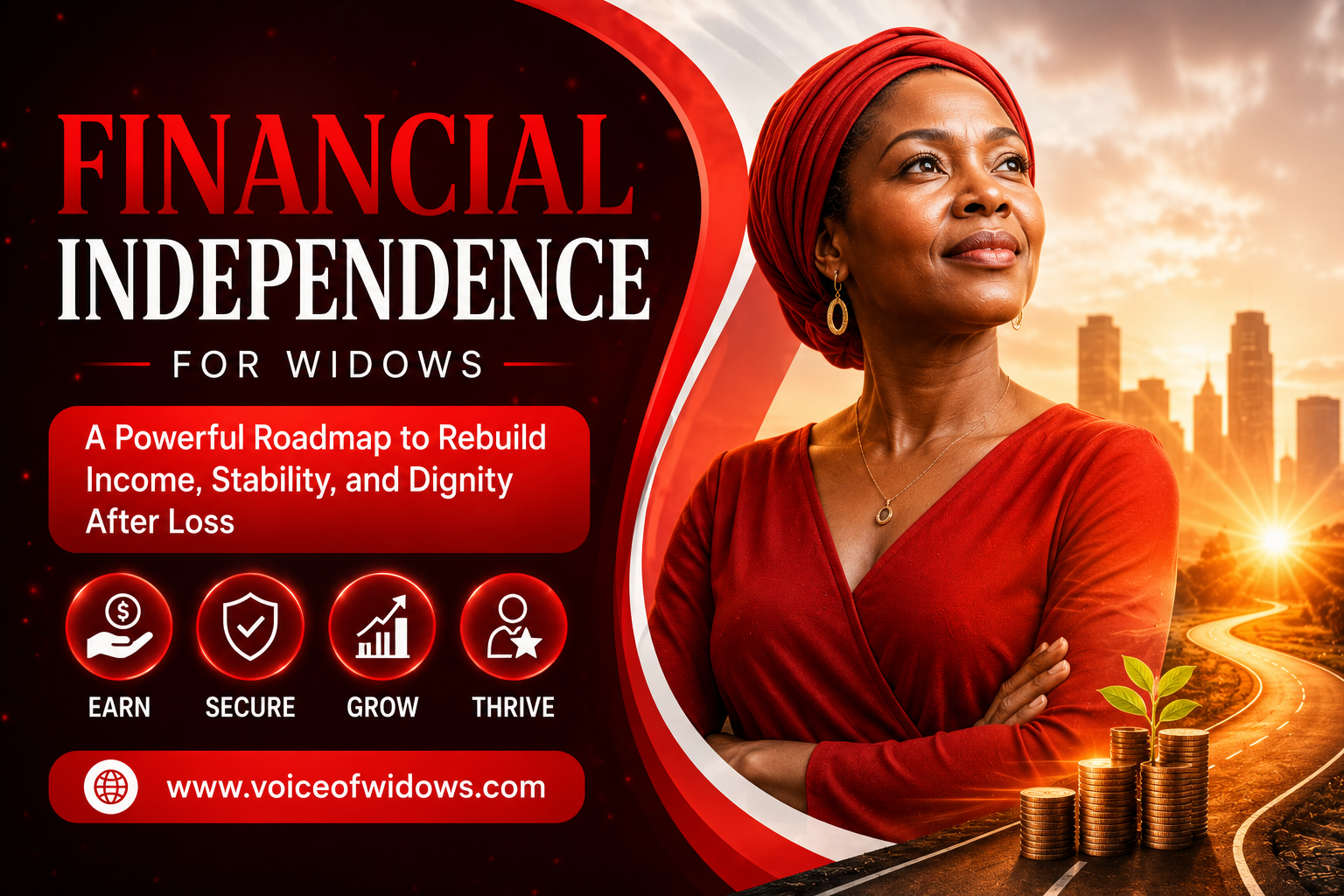
Financial Independence for Widows: A Life-Changing Guide to Reclaim Control, Income, and Emotional Strength
Financial independence for widows is not just a financial goal. It is a survival framework, a rebuilding strategy, and in many cases, a complete reinvention of life after emotional and economic disruption. When a spouse passes away, the impact is not only emotional but deeply financial—income streams change, responsibilities shift suddenly, and long-term planning often becomes unclear overnight.
This guide is designed to help widows transition from uncertainty to stability, and from stability to independence, using practical steps, emotional resilience, and long-term financial strategies that actually work in real life.
Understanding the Reality: Why Financial Independence Becomes Urgent
Many widows face immediate financial challenges such as:
- Sudden loss of household income
- Debt responsibilities continuing despite reduced earnings
- Lack of awareness about insurance, pensions, or legal entitlements
- Limited investment knowledge or financial decision-making experience
- Emotional stress affecting financial clarity
The urgency is real. Without structured action, financial pressure can grow silently and severely over time. That is why rebuilding must begin early, even in the middle of emotional recovery.
Step 1: Stabilize Your Immediate Financial Situation
The first priority is not wealth creation—it is stability.
Start by organizing:
- All active bank accounts
- Insurance policies and claim eligibility
- Government benefits or widow support schemes
- Outstanding loans or credit obligations
- Monthly essential expenses
Create a simple monthly survival budget that focuses only on necessities: food, housing, healthcare, transportation, and utilities.
This phase is about control, not expansion.
Step 2: Identify and Activate Income Sources
Financial independence begins when income is no longer dependent on a single source.
Widows today can explore multiple realistic income streams such as:
- Remote or freelance work based on skills
- Small home-based businesses
- Teaching, tutoring, or coaching services
- Government or NGO-supported skill programs
- Digital income opportunities like writing, design, or consulting
Even modest income sources create psychological relief and financial breathing space.
The key is consistency, not scale at the beginning.
Step 3: Secure Legal and Financial Entitlements
One of the most overlooked steps is claiming rightful financial support.
This may include:
- Life insurance payouts
- Pension or retirement benefits
- Property inheritance rights
- Bank nominee claims
- Government widow assistance programs
Many widows delay or miss these benefits due to lack of awareness or documentation issues. Immediate verification is essential because these funds often become the foundation of long-term stability.
Step 4: Build a Simple but Strong Financial Plan
Once immediate pressure is managed, the focus shifts to rebuilding structure.
A strong financial plan includes:
- Emergency savings fund (minimum 3–6 months of expenses)
- Low-risk investment options for steady growth
- Debt repayment strategy if applicable
- Basic insurance coverage for health and life protection
- Long-term income sustainability planning
This stage is about shifting from survival mode to growth mode.
Step 5: Learn Financial Literacy as a Core Life Skill
Financial independence is impossible without understanding money.
Widows should prioritize learning:
- Basic budgeting and cash flow management
- Safe investment options vs risky schemes
- Banking systems and digital finance tools
- Interest rates, savings growth, and inflation impact
- Fraud and financial scam awareness
Financial literacy is not optional here. It is protection, empowerment, and independence combined.
Step 6: Emotional Strength and Decision Clarity
Financial decisions made under emotional distress often lead to long-term instability.
It is important to:
- Avoid impulsive financial decisions
- Seek advice from trusted, verified advisors
- Take time before large investments or property decisions
- Maintain a support system of family or community groups
Emotional recovery and financial rebuilding are deeply connected. One cannot succeed without the other.
Step 7: Long-Term Goal Building for Independence
True independence is achieved when income becomes predictable and life becomes self-sustaining.
Long-term goals may include:
- Building passive income sources
- Expanding skills into higher-paying opportunities
- Starting small scalable businesses
- Investing in education or certifications
- Creating retirement security plans
The goal is not just survival—it is dignity, confidence, and freedom.
Final Thought: Independence Is a Process, Not an Event
Financial independence for widows does not happen overnight. It is a gradual rebuilding process that transforms uncertainty into structure and structure into freedom. Every small step—every budget, every income source, every informed decision—adds up to long-term stability.
What matters most is not where you start, but the decision to start rebuilding at all.