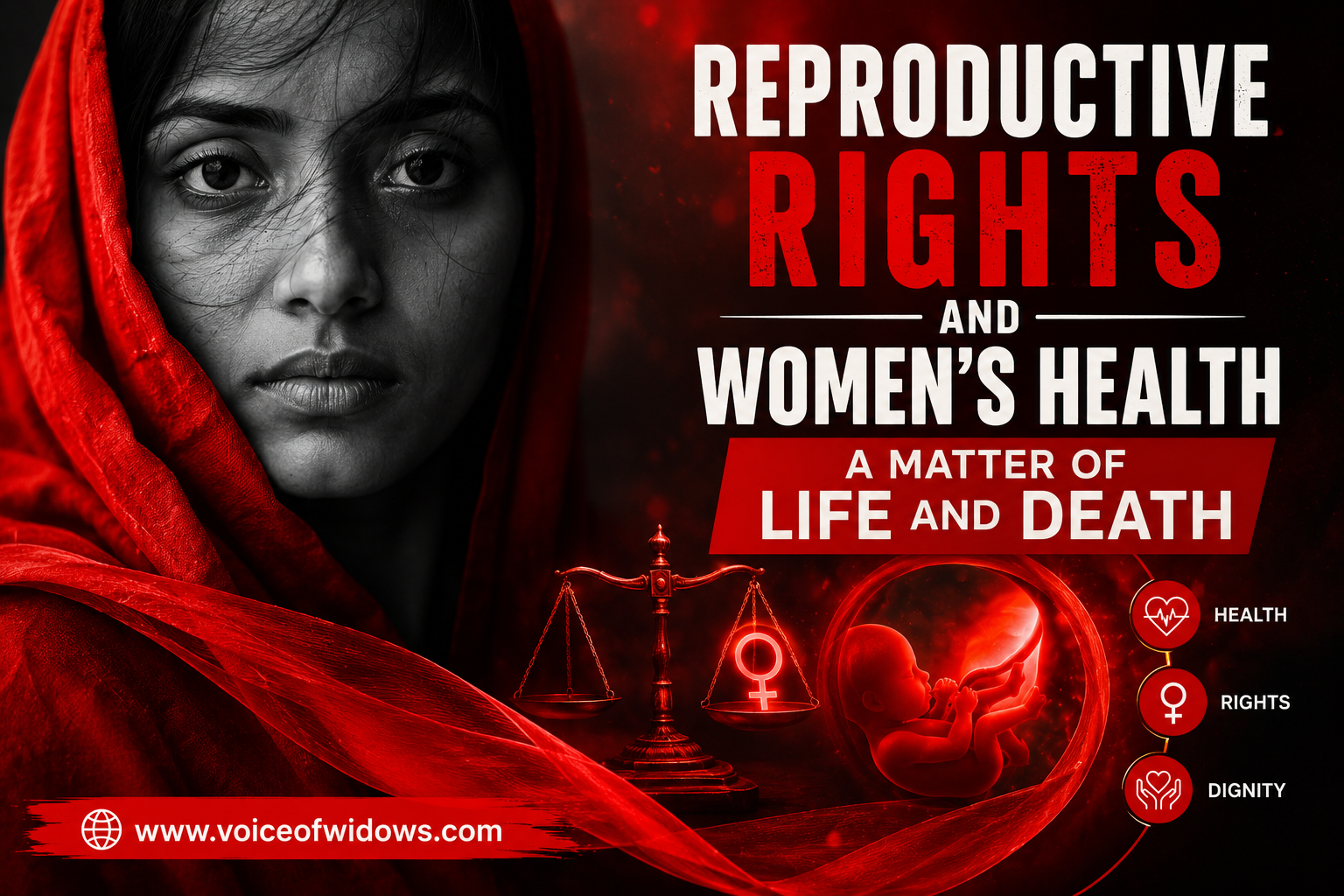
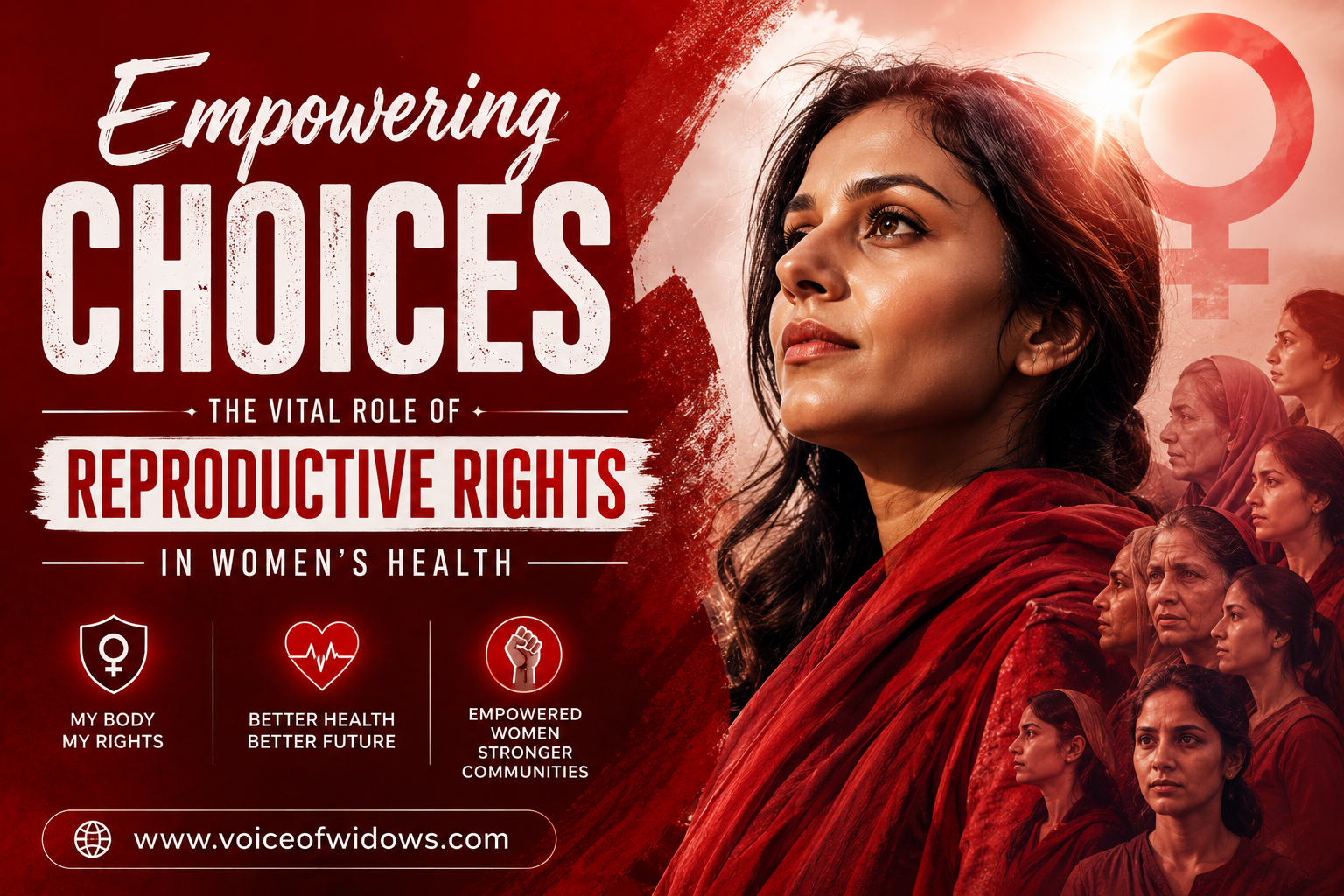
Why reproductive rights are no longer just a debate, but a global health emergency
Reproductive rights are not a distant political concept anymore. They sit at the center of women’s health, economic stability, education, and even survival. When a woman loses control over her reproductive choices, the impact does not stop at her body. It extends into her future, her family’s wellbeing, and the society she is part of.
Across many regions, access to reproductive healthcare is becoming uncertain, uneven, or restricted. This creates a silent crisis that often goes unnoticed until it directly affects someone’s life. The urgency is real, and it is growing.
This is not just about policy. It is about dignity, autonomy, and the right to make informed decisions about one’s own body.
The hidden cost of losing control over reproductive health
When reproductive rights are limited, the consequences are not abstract. They are measurable, emotional, and deeply personal.
Women without access to reproductive healthcare often face:
Increased risk of unsafe medical practices
Higher maternal health complications
Interrupted education and career paths
Long-term financial instability
Mental health challenges such as anxiety and trauma
Each of these outcomes builds on the other, creating a cycle that is difficult to break. A single lack of access can reshape an entire life trajectory.
The cost is not only individual. Families, communities, and economies also feel the ripple effect when women cannot safely plan their futures.
Why reproductive health is central to overall wellbeing
Reproductive health is not separate from general health. It is a foundation.
A woman’s ability to access safe healthcare, contraception, prenatal care, and medical guidance directly influences:
Physical wellbeing
Emotional stability
Educational opportunities
Workforce participation
Long-term health outcomes
When reproductive healthcare is strong, societies become stronger. When it is restricted, inequalities widen.
This is why global health experts consistently emphasize reproductive rights as essential healthcare, not optional care.
The emotional reality behind reproductive decisions
Beyond data and policy, there is a deeply human layer often ignored in public discussion.
Every reproductive decision carries emotional weight. It involves hope, fear, planning, and uncertainty. Women are often forced to make these decisions under pressure, without adequate information, support, or medical access.
The emotional burden includes:
Fear of losing control over life choices
Anxiety about future stability
Social pressure and judgment
Lack of safe medical guidance
Isolation during critical decision-making moments
These experiences are rarely visible, but they are widely lived.
A society that ignores this emotional reality is only seeing part of the truth.
The link between reproductive rights and economic independence
Economic independence is strongly tied to reproductive autonomy. When women can decide if and when to have children, they are more likely to:
Complete education
Enter and remain in the workforce
Build stable careers
Achieve financial independence
On the other hand, lack of reproductive control often leads to interrupted education and reduced earning potential over time.
This is not just a personal issue. It directly influences national productivity and long-term economic growth.
Why access is uneven across the world
One of the most critical issues today is inequality in access.
Even within the same country, access to reproductive healthcare can vary based on:
Geography (urban vs rural areas)
Income levels
Education
Cultural norms
Healthcare infrastructure
This uneven distribution creates a system where rights exist in theory but not always in practice.
The result is a global patchwork of access, where a woman’s health outcomes may depend more on where she lives than what she needs medically.
The role of education in reproductive empowerment
Education is one of the strongest tools for protecting reproductive rights.
When women and girls are educated about their bodies, health options, and medical choices, they are more likely to:
Seek timely medical care
Understand contraception options
Make informed decisions
Avoid preventable health risks
However, in many places, reproductive education remains limited or stigmatized. This creates information gaps that can lead to long-term harm.
Empowerment begins with knowledge.
Why this issue demands immediate attention
Reproductive rights are not a future concern. They are a present reality affecting millions every day.
The urgency comes from:
Rising restrictions in certain regions
Limited healthcare infrastructure in vulnerable areas
Increasing misinformation
Growing inequality in access to care
Ignoring this issue does not make it disappear. It only increases long-term harm.
The more delayed the response, the deeper the consequences become.
What meaningful change looks like
Real change in reproductive health does not come from a single solution. It requires a combination of actions:
Expanding access to healthcare services
Improving reproductive education
Strengthening medical infrastructure
Ensuring safe and legal medical options
Removing stigma around women’s health discussions
Most importantly, it requires recognizing reproductive rights as essential human rights.
A future shaped by choice, not limitation
A society that protects reproductive rights is a society that invests in freedom, equality, and health.
When women have full control over their reproductive decisions, the outcomes are clear:
Healthier families
Stronger economies
Better education outcomes
More stable communities
Greater gender equality
This is not a theoretical ideal. It is a proven reality where access is protected and prioritized.
The future depends on how seriously we treat this issue today.
Final reflection
Reproductive rights are not about one issue or one group. They are about the fundamental right to make informed, safe, and autonomous choices about one’s own body.
The urgency is not in the future. It is now. Every delay deepens inequality and widens the gap between those who have access and those who do not.
Protecting reproductive rights means protecting life choices, dignity, and the foundation of women’s health itself.